Phasmophobia Resonance Update: Stunning 3-Tier Dowsing Rods and the Ultimate Unity 6 Overhaul
The Phasmophobia Resonance update launches today, November 24, 2026, free on PC via Steam, PlayStation 5, PS VR2, and Xbox Series X|S. It adds Dowsing Rods for finding the Bone, a reworked Sound Sensor map, expanded Voice Recognition commands, custom random map pools, and the game’s long-awaited move to the Unity 6 engine — plus Xbox Play Anywhere support. Kinetic Games has not announced a launch time, and the full patch notes arrive with the update itself.
Resonance started life as two separate projects — a content update and an engine migration — built in parallel before Kinetic Games decided shipping them weeks apart would be a headache for everyone. The studio folded them into one patch, named it, and announced the date on November 17, 2026. It’s the biggest technical shake-up Phasmophobia has had in years, and the first update that changes how you talk to the ghost, not just how you hunt it.
What is the Phasmophobia Resonance update?
The Phasmophobia Resonance update is a free content and engine update for Kinetic Games’ four-player co-op ghost-hunting game, launching November 24, 2026, on Steam, PS5, PS VR2, and Xbox Series X|S. It bundles the Unity 6 engine move with Dowsing Rods, a reworked Sound Sensor, expanded Voice Recognition, custom map pools, a conduct warning system, and Xbox Play Anywhere.
Resonance matters because of what it is not: no new map, no new ghost. Instead it rebuilds the tools every investigation already uses. The Bone finally gets its own tracking tool. The Sound Sensor, which the studio admits is rarely used, gets a map worth reading. And Voice Recognition stops being a party trick and starts being a way to boss the ghost around.
Phasmophobia has been in Early Access since 2020 and has sold more than 30 million copies — one of the biggest independent horror games ever made. A game that big and that old accumulates technical debt the way old houses accumulate dust. Resonance is Kinetic Games paying some of it down before the road to 1.0 begins.
When does the Phasmophobia Resonance update launch?
The Phasmophobia Resonance update launches November 24, 2026, on PC via Steam, PlayStation 5, PS VR2, and Xbox Series X|S, free for everyone who owns the game. Kinetic Games announced the date on November 17, 2026, with no launch time given, so it could go live at any point during the day. Full patch notes arrive at launch.
That missing launch time is worth planning around. Don’t promise your group a 6 p.m. start — the update could land in the morning or late in the evening. The Steam announcement says full patch notes come with the release, not before it, so the fine detail waits for launch day.
| What | When | Where |
|---|---|---|
| Phasmophobia Resonance update | November 24, 2026 | Steam, PS5, PS VR2, Xbox Series X|S |
| Announcement | November 17, 2026 | Steam, via Kinetic Games |
| Development Preview #22 | November 2, 2026 | kineticgames.co.uk |
| Full patch notes | At launch, November 24 | Steam |
| Unity 6 move (original target) | October 2026 | Slipped to November, then merged into Resonance |
| Phasmophobia 1.0 | Late 2027 | No firm date yet |
How do Dowsing Rods work in Phasmophobia?
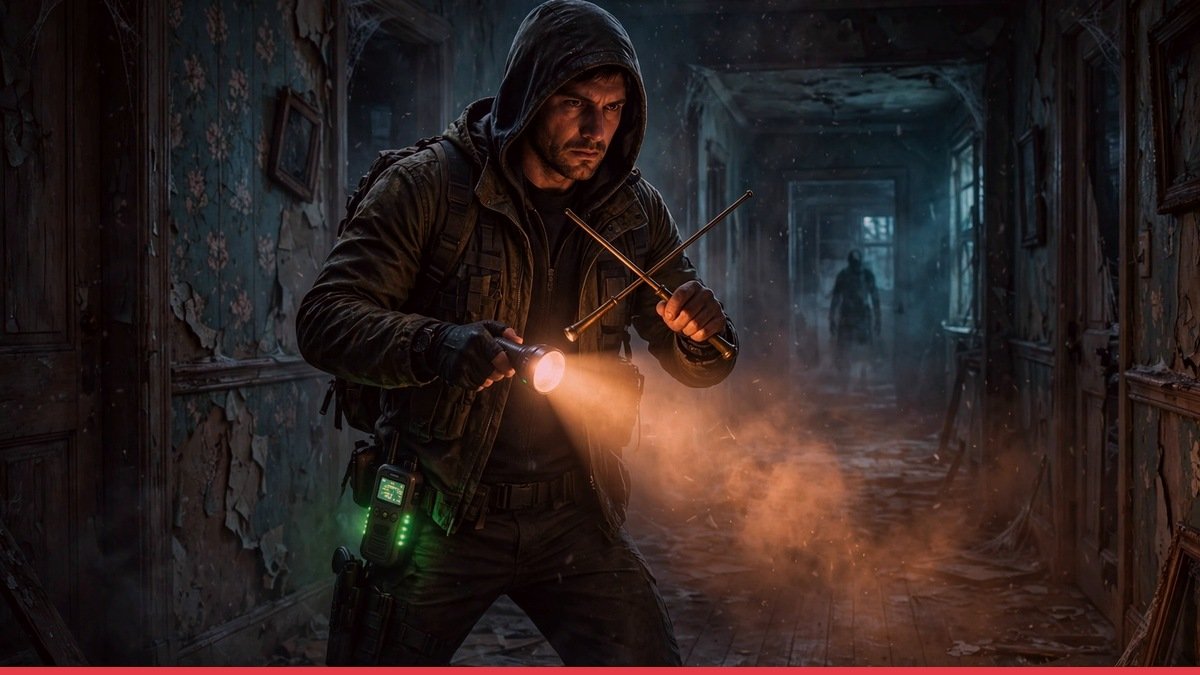
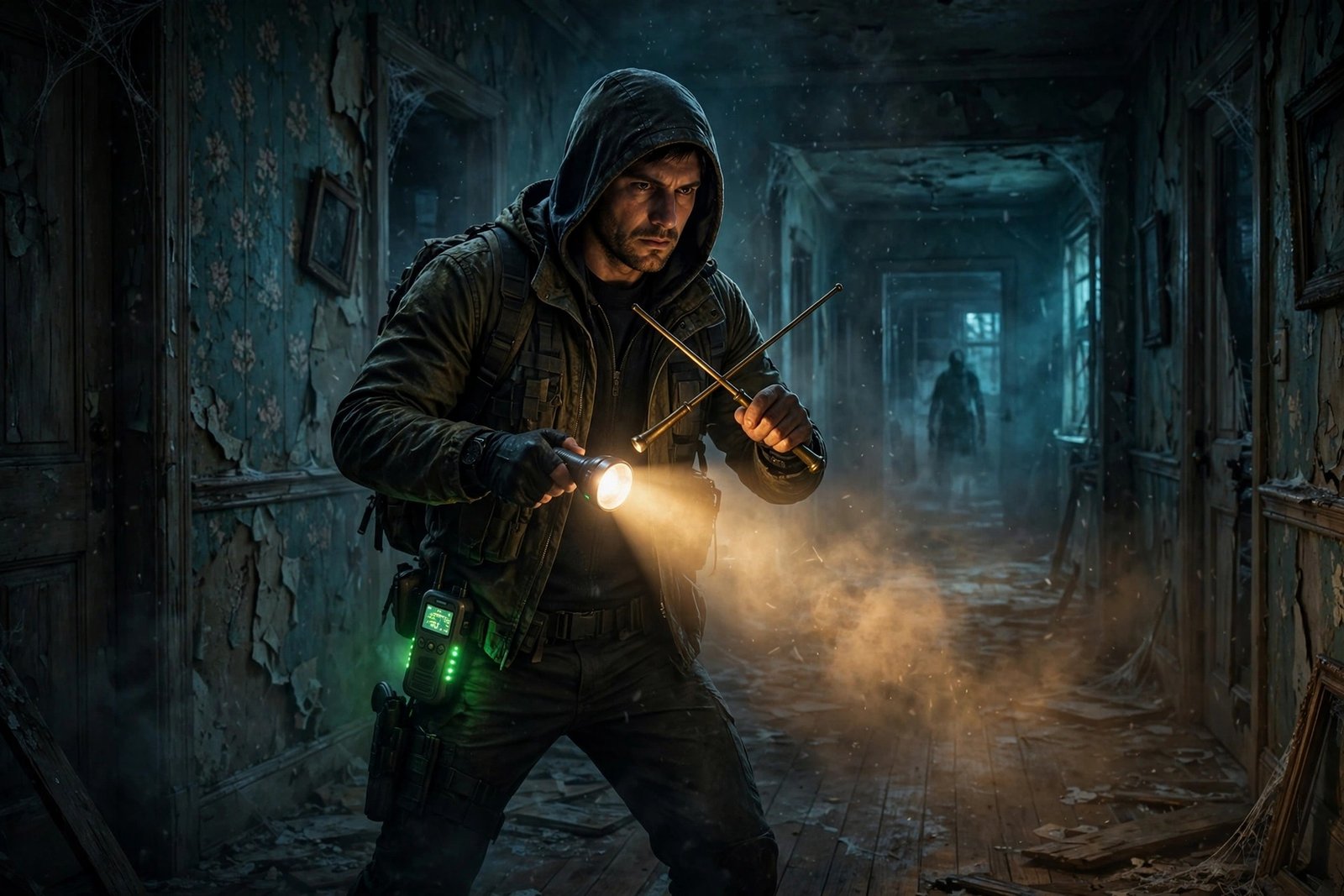
Dowsing Rods are new Phasmophobia equipment for locating the Bone, in three tiers: Tier 1 points in the Bone’s general direction, higher tiers are progressively more accurate, and Tier 3 tells you which floor it’s on. They matter most on large maps like Brownstone High School, where the Bone can hide in dozens of rooms across multiple floors.
The Bone is the most annoying objective in Phasmophobia. You can identify the ghost, nail every evidence type, and still burn ten minutes wandering a high school, checking rooms one by one, while your sanity drains. The Dowsing Rods exist to kill that ten minutes: you hold them, they react, and they narrow the search — the higher the tier, the narrower it gets.
So which tier should you buy? Tier 1 is the budget option: it tells you the Bone is somewhere in that direction, which is enough on a small map like 6 Tanglewood Drive, where “that direction” covers two or three rooms. Tier 2 tightens the reading, and Tier 3 is the one that changes large maps — it names the floor. On Brownstone High School, knowing the floor cuts the search by two-thirds before you take a single step. Big maps: Tier 3. Small houses: Tier 1 does the job for less.
Kinetic Games hasn’t published the loadout prices yet — the exact numbers arrive with the launch patch notes, so don’t budget your in-game cash until then. The rods are standard equipment, bought like any other tool. Kinetic Games’ CEO and game director Daniel Knight says the studio wants every item in a hunter’s kit to earn its place: “We want to ensure every item in our Ghost Hunters’ kits can add as much value as possible in investigations, and the Resonance update has been an exciting opportunity not only to freshen up Sound Sensors and Voice Recognition, but to add a completely new piece of equipment with the Dowsing Rods.”
What changed with the Sound Sensor in Resonance?
The Sound Sensor gets a reworked map in the Phasmophobia Resonance update: icons now show what kind of sound was picked up, with looping sounds sticking around and one-off sounds pinging once and disappearing. Only same-floor sounds are identified, and the map can help identify the ghost type from its movement speed — especially during a Hunt.
Kinetic Games is unusually honest about why this rework exists. The Sound Sensor, the studio wrote in Development Preview #22, “is rarely used,” and the goal is to make it “a valuable part of a Ghost Hunter’s loadout.” That’s a polite way of saying the old sensor was a waste of a slot. The old map showed you a sound happened somewhere and left you guessing. The new map tells you what kind of sound it was, and whether it’s still happening.
The looping-versus-one-off split is the part that changes real decisions. A looping sound — a phone ringing, a radio playing — stays on the map while it continues, so you can walk toward it. A single sound — a door slam, a thrown object — pings once and vanishes. Before Resonance, both looked the same. Now the difference between “the ghost is making noise over there right now” and “it made a noise five minutes ago” is the difference between a useful tool and a decoration.
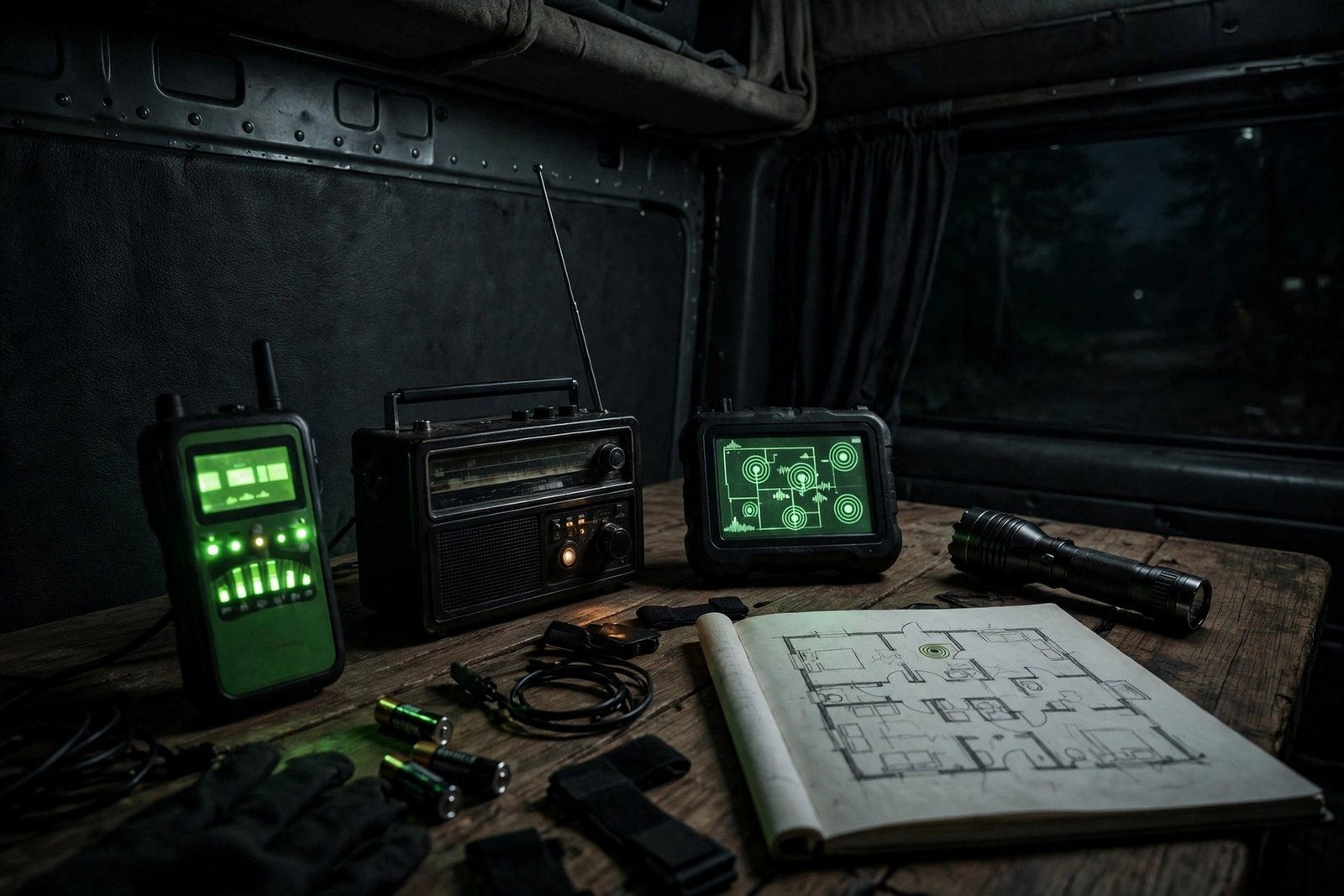
The same-floor rule matters just as much. Sound traveled through floors in the old sensor, so a noise two floors up could send you sprinting to the wrong end of the building. Resonance limits the sensor to your floor, so the map finally tells the truth about where you are. Combined with the movement-speed read — faster ghosts cross the map faster, and that speed is a fingerprint — the sensor becomes a genuine identification tool, and during a Hunt it can narrow the ghost type before you’ve gathered a single piece of evidence.
None of this makes the Sound Sensor mandatory. It makes it defensible. If your group has a spare loadout slot, the sensor now earns it on big maps, where sound is the only signal that crosses rooms. On small maps, it’s still a luxury. Solo, the new map is worth more than a second camera. Good audio matters more than ever with this rework, and our best gaming headsets guide has the pairs for hearing a ghost’s footsteps before you see them.
What can you tell the ghost with Voice Recognition now?
Resonance expands Phasmophobia Voice Recognition so you can instruct the ghost to interact with nearby objects such as doors and switches, throw objects, or give a sign of its presence. A new Journal page lists every usable phrase, so you can check what the system actually understands instead of shouting into the dark and hoping something happens.
This is the change that will produce the most clips. Voice Recognition has been part of Phasmophobia since the beginning — you say the ghost’s name, you ask it questions, sometimes it answers through the Spirit Box. But until Resonance, you couldn’t tell it what to do. Now you can. Tell the ghost to open a door, and watch the door. Tell it to throw something, and listen for the crash. Tell it to give you a sign, and see what it does. The ghost can still refuse — but for the first time, you’re giving orders instead of asking questions.
The Journal page is the quiet hero of this feature. Kinetic Games is adding a page to the in-game Journal listing the usable Voice Recognition phrases, and the studio’s own joke is the most honest line in the preview: “no more shouting into the void in the hope you get it right.” Anyone who has yelled “give us a sign” at a silent room for three minutes knows what that means. The exact list arrives with the patch notes — open the Journal on day one and read what’s actually there. Start with the safe commands — a door, a light switch — and save “throw something” for when you want a scare.
Two details matter for players who don’t use a microphone. The new commands also work in Text mode, where you type the phrases instead of speaking them. And VR players using Text mode get the commands on their Sanity watch, so they can trigger them without fumbling for a keyboard in a headset. VR is where Phasmophobia is scariest, and where typing is hardest — putting the commands on the wrist keeps VR players in the game.
What does the move to Unity 6 actually change?
The Phasmophobia Unity 6 update moves the game to the latest version of its engine, bringing more realistic lighting, expanded graphics and quality settings, VR Eye Adaptation, eight color-blindness options, lower CPU, GPU, VRAM, and RAM usage, and fixes for memory leaks and common crashes. Kinetic Games says the real gains can only be judged once players have the update.
Will your game run better? Kinetic Games says it expects the move to “greatly improve the overall performance of Phasmophobia for all players across CPU, GPU, VRAM and RAM usage, while also fixing any memory leaks.” Then the studio adds the sentence that matters more: “We’re expecting this to be a significant improvement, but one we can only truly gauge when the update is in your hands.” That’s honest, and it’s why this article won’t promise you a frame rate. Nobody has played the Unity 6 build at scale yet — the performance question gets its answer on November 24, when millions of players load the update at once.
What you can see, on day one, is the lighting. Unity 6 lets Kinetic Games rebuild how light works, and the preview’s comparison shots — 6 Tanglewood Drive in heavy rain, in snow, at sunrise — show the difference: warmer lamps, colder moonlight, fog that actually feels like fog. For a horror game, lighting isn’t decoration. A darker hallway is a scarier hallway.
The settings menu grows too. Resonance adds graphics presets, an extreme shadow quality setting, and overall quality presets, so weaker machines can trade shadows for frames and strong machines can push the other way. VR players get an Eye Adaptation option for bright and dark areas inside a headset. And the accessibility list is genuinely thorough: eight color-blindness options — Protanopia, Protanomaly, Deuteranopia, Deuteranomaly, Tritanopia, Tritanomaly, Achromatopsia, and Achromatomaly — covering the full range instead of a single token filter.
Underneath all of it, the engine move is future-proofing. Kinetic Games calls it exactly that: an exercise in opening up potential “especially in the run up to Phasmophobia 1.0 later next year and our plans beyond that point.” Unity 6 isn’t a feature. It’s the foundation the next year of updates stands on.
What is Xbox Play Anywhere in Phasmophobia?
Phasmophobia Xbox Play Anywhere means that if you own the digital edition of Phasmophobia on Xbox, you can play it on any device that supports Xbox Play — PC, laptops, the ROG Ally, and Xbox Series X|S — with the Resonance update. Your purchase carries across, so one digital copy covers every supported device instead of one console.
For Xbox players, this is the most practical change in Resonance, and it has nothing to do with ghosts. Buy Phasmophobia once on Xbox, digitally, and you can hunt on your PC when you’re at your desk, on a laptop when you’re traveling, and on a handheld like the ROG Ally when you’re on the couch. The save and the purchase follow you. That’s the whole pitch, and it’s a good one — Phasmophobia is a game people play in short, intense sessions with friends, and the device you play on is often whichever one is closest. If you’re setting up a handheld for the first time, our best gaming controllers guide covers the pads that fit long sessions.
Two limits are worth knowing. First, Play Anywhere covers the digital edition — a disc doesn’t carry the same entitlement, so check which version you own before assuming your copy travels. Second, this is a purchase entitlement, not a new cross-play announcement: Phasmophobia already supports cross-play, and Play Anywhere is about where your copy works, not who you can hunt with. If you already own the game on Steam, nothing changes — you already play on PC. The winners are Xbox digital owners who also have a PC or a handheld.
The timing is no accident. Phasmophobia’s console audience has grown fast since the game arrived on PlayStation 5 and Xbox Series X|S, and a handheld like the ROG Ally is exactly where a portable horror session belongs — headphones on, lights off, ghost in the walls. Resonance is the first update that makes your Xbox copy follow you to every screen you own.
What else changes in Resonance — and what is still to come?
Resonance also adds custom random map pools, a player-conduct warning system, and bug fixes. Pick multiple locations for your own random map pool, with quick-select buttons for small, medium, and large maps. Code of Conduct violators get a warning instead of an immediate ban, unless the violation is severe.
Custom map pools fix a small, daily annoyance. Before Resonance, random meant random — any map in the game, including the ones your group hates. Now you pick the pool. Hate the high school? Leave it out. Love small houses? Build a pool of small maps only. The quick-select buttons make it a two-second job, and the dice keeps the old behavior for players who want everything. The warning system works the same way: a warning before a ban gives people a chance to change, and telling reporters when action was taken closes the loop that usually ends in silence. Severe violations still get an immediate ban.
What’s not in Resonance matters too. The Player Character Visual Update — more than 30 new cosmetics, each with color and texture variants, plus a better Customisation Shop and improved character models — was planned to ship with Resonance. Kinetic Games pulled it, saying the team needed more time, and that keeping Resonance “solid and stable” mattered more than shipping everything at once. There’s no new date. And the 42 Edgefield Road rework is coming later — the preview teases it with one screenshot and a question: “What went down at 42 Edgefield Road?”
Beyond Resonance, the road is clear and long. Phasmophobia 1.0 is now planned for late 2027, according to Development Preview #22 and reporting from Eurogamer on November 21. The Nintendo Switch 2 version still has no date. Resonance isn’t the end of the road — it’s the update that makes it passable: a new engine, better tools, and a game that finally lets you talk back to the thing hunting you. That’s the full picture as of November 24, 2026 — everything Kinetic Games has confirmed, with the Unity 6 performance question still open until players get their hands on it.
Phasmophobia Resonance Update FAQ
When does the Phasmophobia Resonance update release?
The Phasmophobia Resonance update releases November 24, 2026, on PC via Steam, PlayStation 5, PS VR2, and Xbox Series X|S. Kinetic Games announced the date on November 17, 2026, with no launch time announced. Full patch notes arrive at launch.
Is the Phasmophobia Resonance update free?
Yes — Resonance is free for everyone who owns Phasmophobia, which itself costs $19.99 on Steam. It includes the Unity 6 move, Dowsing Rods, the reworked Sound Sensor, expanded Voice Recognition, custom map pools, and Xbox Play Anywhere at no extra cost.
How do Dowsing Rods work in Phasmophobia?
Dowsing Rods are new equipment for finding the Bone. Tier 1 points in the Bone’s general direction, higher tiers are progressively more accurate, and Tier 3 tells you which floor the Bone is on. They are most useful on large maps like Brownstone High School. Prices arrive with the launch patch notes.
What is Xbox Play Anywhere in Phasmophobia?
Xbox Play Anywhere means owners of the digital Xbox edition of Phasmophobia can play on PC, laptops, the ROG Ally, and Xbox Series X|S with a single purchase. It arrives with the Resonance update on November 24, 2026. Disc owners should check their edition, as the entitlement covers the digital edition.
Will the Phasmophobia Resonance update improve performance?
Kinetic Games expects the Unity 6 move to improve performance across CPU, GPU, VRAM, and RAM usage and fix memory leaks and crashes. But the studio says gains can only be judged once players have it, so treat any performance promise as unproven until November 24.
When is Phasmophobia 1.0 coming out?
Phasmophobia 1.0 is planned for late 2027, according to Development Preview #22 and Eurogamer reporting from November 21, 2026. The full release slipped from an earlier target, and the Nintendo Switch 2 version still has no announced date for now.
Keep exploring: if tonight’s hunt has you rethinking your setup, our best gaming headsets guide picks the pairs for hearing every footstep — and our best gaming gear guide for 2026 covers the full kit for a long night of hunting.
Kinetic Games announced the November 24, 2026 release date on November 17, 2026, and Development Preview #22 has the full breakdown — Dowsing Rods tiers, the Sound Sensor rework, the Voice Recognition phrases page, the Unity 6 changes, and the road to 1.0 in late 2027.