Blastheim Idle ARPG: Stunning 20% Stake Powers Zizaran’s Ultimate Second-Screen Game
Key facts:
What it is: Blastheim is a Nordic-inspired idle ARPG built for a second screen, from Path of Exile streamer Zizaran, former Dota 2 pro Philip Nazroth, and German indie studio Reija.
When it was revealed: Zizaran unveiled it on his Twitch livestream on Friday, November 13, 2026; the joint-venture press release followed on November 19.
Price: roughly $5 is the target — and it is NOT confirmed. The price may change before launch.
Release date: none. The game is in early development, coming to PC via Steam, with wishlists open now.
The headline term: Zizaran holds more than a 20% stake and can veto any monetization change, per PCGamesN’s reporting.
A streamer just bought himself a veto over his own game. That’s the part of the Blastheim announcement that matters most, and it’s the part most coverage buried under the headline. Zizaran, one of Path of Exile’s best-known voices, isn’t lending his name to a licensed tie-in. He’s a co-owner of the game, with a stake above 20% and the power to block any monetization change he doesn’t like — and the game itself, the Blastheim idle ARPG, is a second-screen game set in a broken Nordic world.
What is Blastheim?
Blastheim is an idle action RPG designed to run on a second monitor while you play something else, built around real ARPG depth instead of the shallow loops idle games usually settle for. Your hero fights, dodges, and loots on their own, while you make the decisions that matter — builds, gear, and crafting.
The idea comes from a frustration Zizaran has talked about for years. Traditional idle RPGs ask almost nothing of you, and in return they give you almost nothing to think about — no mechanical depth, no progression worth planning around. The Blastheim idle ARPG is his answer to that complaint: a game accessible enough to sit on a second screen, but deep enough to deserve your full attention when you give it.
Here’s the part that makes the concept land. The Blastheim idle ARPG isn’t trying to replace your main game. It’s trying to sit beside it — literally, on your second monitor — while you grind maps in Path of Exile or wait for a raid to fill. Your little hero keeps working in the background, and every second out there is supposed to feel like progress. There’s no pressure to keep up and no punishment for looking away.
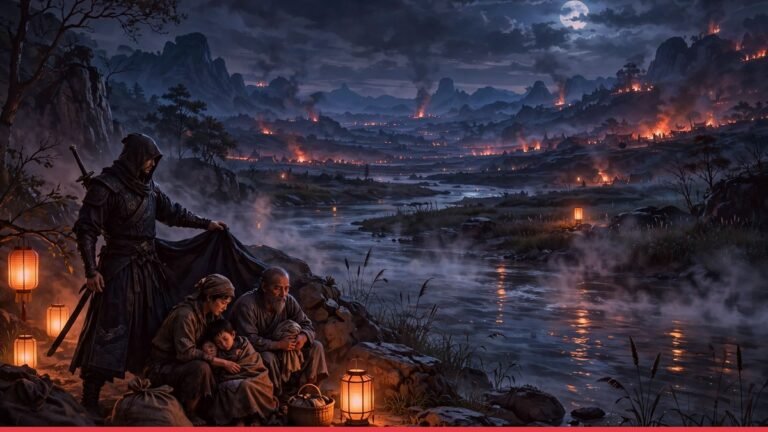
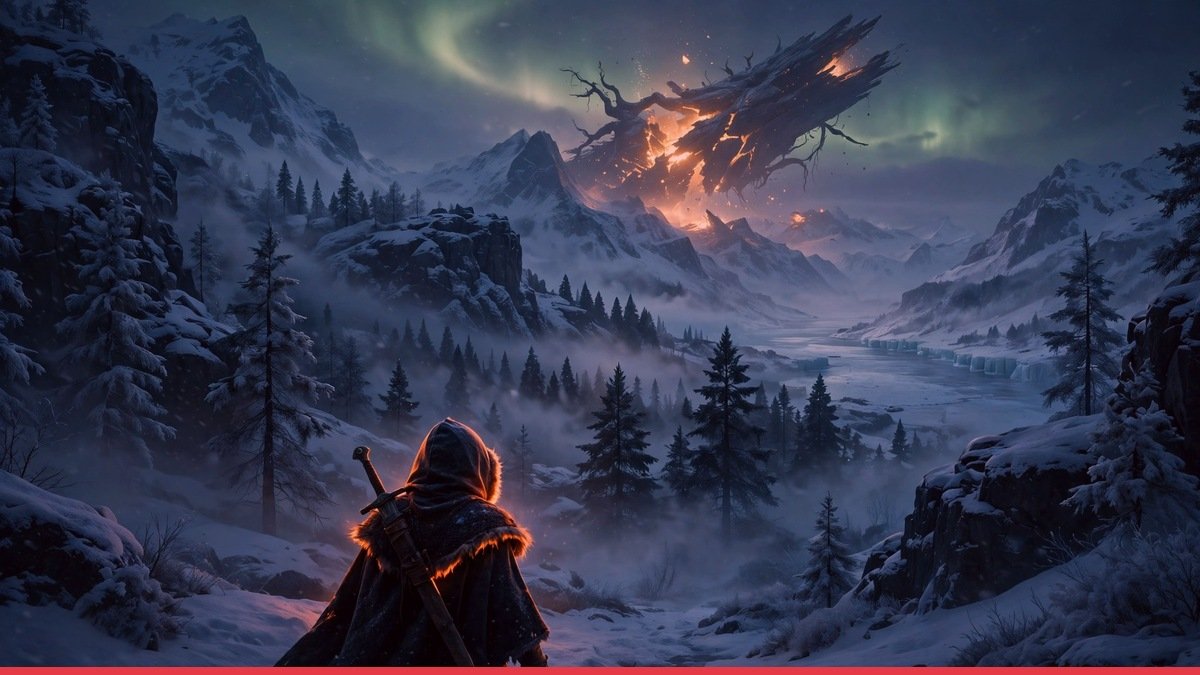
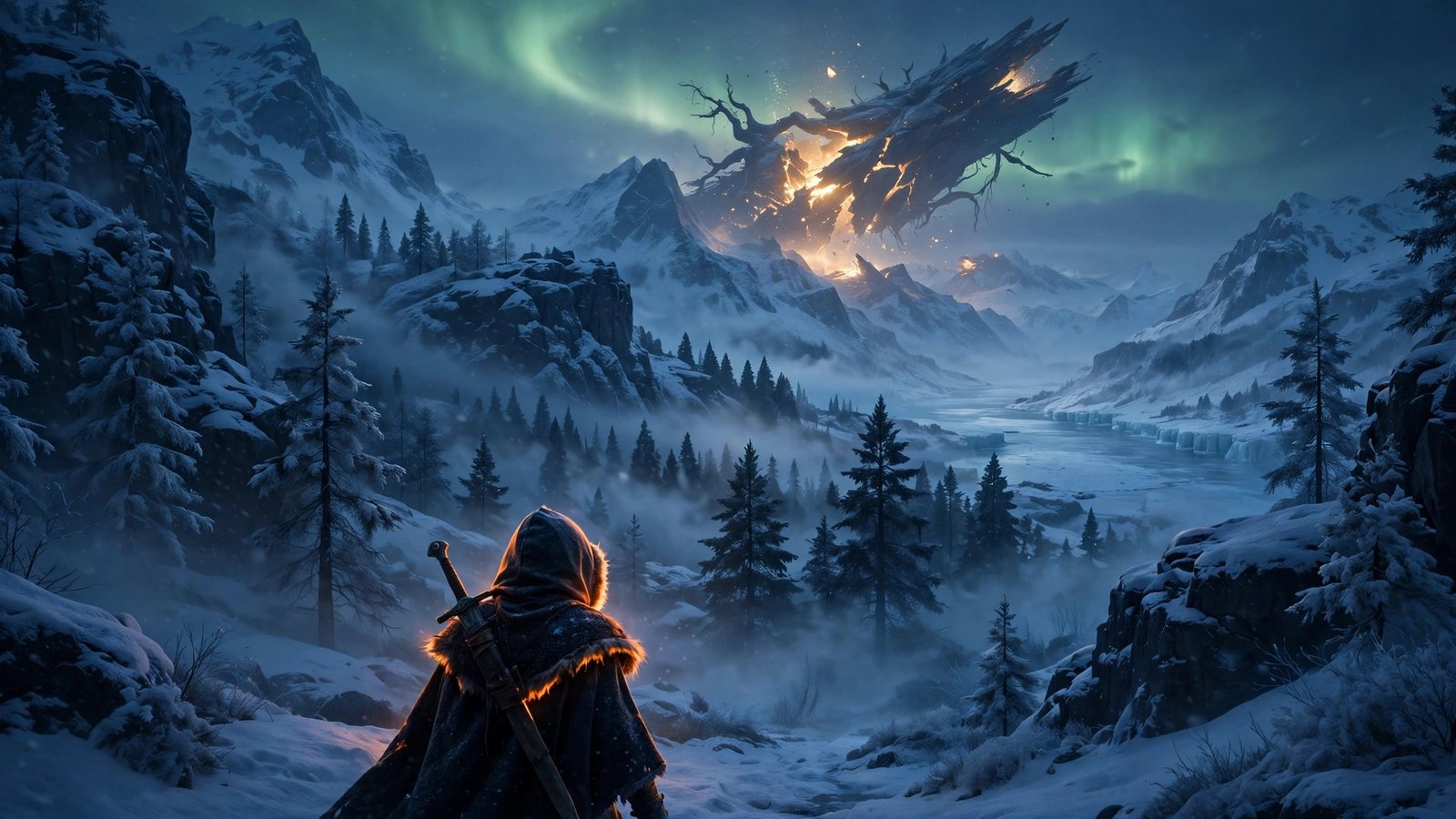
The setting does a lot of the work. Blastheim plays in a fictional Nordic world where the Tree of Life has died and shattered the world into pieces. Your task is to journey into the fragments of that broken world, rebuild your realm, and grow a new World Tree. It’s a clean setup for an idle game — a long, slow rebuilding project that fits a hero who works while you’re busy.
Who is making Blastheim?
Blastheim is a joint venture between three parties: Zizaran, former professional Dota 2 player Philip Nazroth, and Reija, an independent German studio based in Karlsruhe and Berlin. The GamesPress press release announcing the joint venture frames it as a partnership of equals, not a celebrity endorsement — Zizaran is a co-owner with a real stake and a real veto.
Zizaran is the name most readers will know. He’s a veteran Path of Exile streamer and content creator, famous for deep-diving ARPG mechanics on stream, with a community that trusts his judgment on builds, loot, and balance. A streamer who has spent years explaining why a skill tree works is exactly the person to stress-test an idle ARPG’s systems — his audience would notice within a week if the numbers didn’t add up. Zizaran said it plainly: “Blastheim is the game I have always wanted to play.”
Nazroth brings a different angle. As a former Dota 2 professional, his background is split-second decision-making under pressure — the instincts that make a game’s moment-to-moment choices feel right even when you’re only half watching. The Blastheim Zizaran partnership pairs that competitive sense with Zizaran’s systems obsession, and Reija supplies the studio: a small German team working in gameplay programming, art, and music, founded in 2018, with five games released on Steam since 2023. Two in-house artists handle the game’s asset creation, per PCGamesN’s reporting.
Small matters here, because the money behind Blastheim is modest and mixed. The project is backed by the German federal games funding program, and by investors that include industry veterans and passionate ARPG fans, many of whom also contribute their expertise during development. The partners intend to establish Blastheim as an independent game company as the project grows, subject to securing additional funding or demonstrating strong market traction.
When is the Blastheim release date?
There is no Blastheim release date. The game is in early development, it is confirmed for PC via Steam, and the release window will be announced at a later date. This is an announcement of a project, not a game you can download tonight — wishlists are open now, and that’s the only action available today.
The timeline so far is short and worth getting right, because early coverage got it wrong. Blastheim was unveiled during Zizaran’s Twitch livestream on Friday, November 13, 2026 — the same day Path of Exile’s Covens of Umbra league launched, which is either a coincidence or the sharpest possible timing for an ARPG announcement. The formal joint-venture press release followed on Thursday, November 19. The wider coverage wave, including PCGamesN’s report, landed on Sunday, November 22 — the day the press caught up, not the day Zizaran showed the game.
What happens next is community-shaped, by the team’s own account. Zizaran plans to share regular behind-the-scenes updates, design discussions, and progress milestones on Twitch and social media, and playtests are beginning soon, with the developers asking for feedback from the players who will actually run the game on their second monitors. If you like the idea, add the Blastheim Steam wishlist entry now and let the playtests tell you whether the depth is real. A wishlist costs nothing, and for a dateless game in early development, it’s the only vote that counts.
How much will Blastheim cost?
Blastheim has no confirmed price. PCGamesN reported a roughly $5 target, but that figure is explicitly unconfirmed — the team has not locked pricing, and the target may change before release. Treat $5 as the ambition, not the price tag. If you see the number quoted without that warning, the quote is wrong.
Five dollars would be a statement if it holds. Most indie ARPGs launch between $15 and $30, and idle games on Steam cluster around $5 to $10 — so a $5 Blastheim idle ARPG would sit at the cheap end of its own genre, not the middle. That matters because the price is part of the design: a game built to run beside your main game can’t ask for main-game money. At roughly $5, the ask becomes “try it on your second monitor” instead of “trust us with thirty dollars.”
But the number is doing a second job too. A $5 target tells you how small the team intends to stay. Two in-house artists, one streamer-co-owner, one ex-pro, one small studio, federal funding, and a handful of veteran investors — a project built to survive on modest sales, not one that needs a million copies to break even. The risk runs the other way: if the price creeps up to $10 or $15 by launch, the low-friction pitch weakens, and the game has to justify itself on depth alone.
Will Blastheim be pay-to-win?
No — Blastheim will not be pay-to-win, if the team’s stated plan holds. PCGamesN reported that the game is PvE only and will avoid pay-to-win microtransactions beyond stash-tab monetization, the Path of Exile model: pay for storage space, not power. Seasons are planned, and a player trade mechanic is on the table if it proves viable.
The promise has teeth because of who holds them. Zizaran holds more than a 20% stake in Blastheim and has full veto rights over every monetization change, per PCGamesN’s reporting. Not an advisory role — a veto, over every monetization change. If the studio proposes a paid power item or a loot box, one person can kill it, and that person is the streamer whose reputation is built on calling out bad ARPG monetization on stream.
That structure is the real difference between this Blastheim idle ARPG and the usual streamer game announcement. Most creator-led games sell the creator’s taste; Blastheim sells the creator’s power to say no. The 20% stake means Zizaran profits when the game does well, and the veto lets him block shortcuts that pay off short-term and kill the game long-term. It’s a governance answer to a trust problem — and the trust problem is real, because idle games have a long history of starting fair and drifting toward pay-to-skip once the launch buzz fades.
None of this is a guarantee. A veto protects against monetization changes; it doesn’t protect against a game that simply isn’t fun, or a team that runs out of money, or a $5 target that can’t pay for the seasons it promises. The honest read is narrower: Blastheim’s monetization risk is lower than a typical idle ARPG’s, because the person with the most to lose from a pay-to-win turn can stop it.
How does the second-screen gameplay actually work?
The Blastheim idle ARPG is built around one loop: your hero journeys on their own through icy landscapes, fighting monsters, gathering resources, and collecting loot automatically, while you step in through a skill bar when the moment calls for it. You don’t steer the hero every second — you glance over and take an active role when a fight turns.
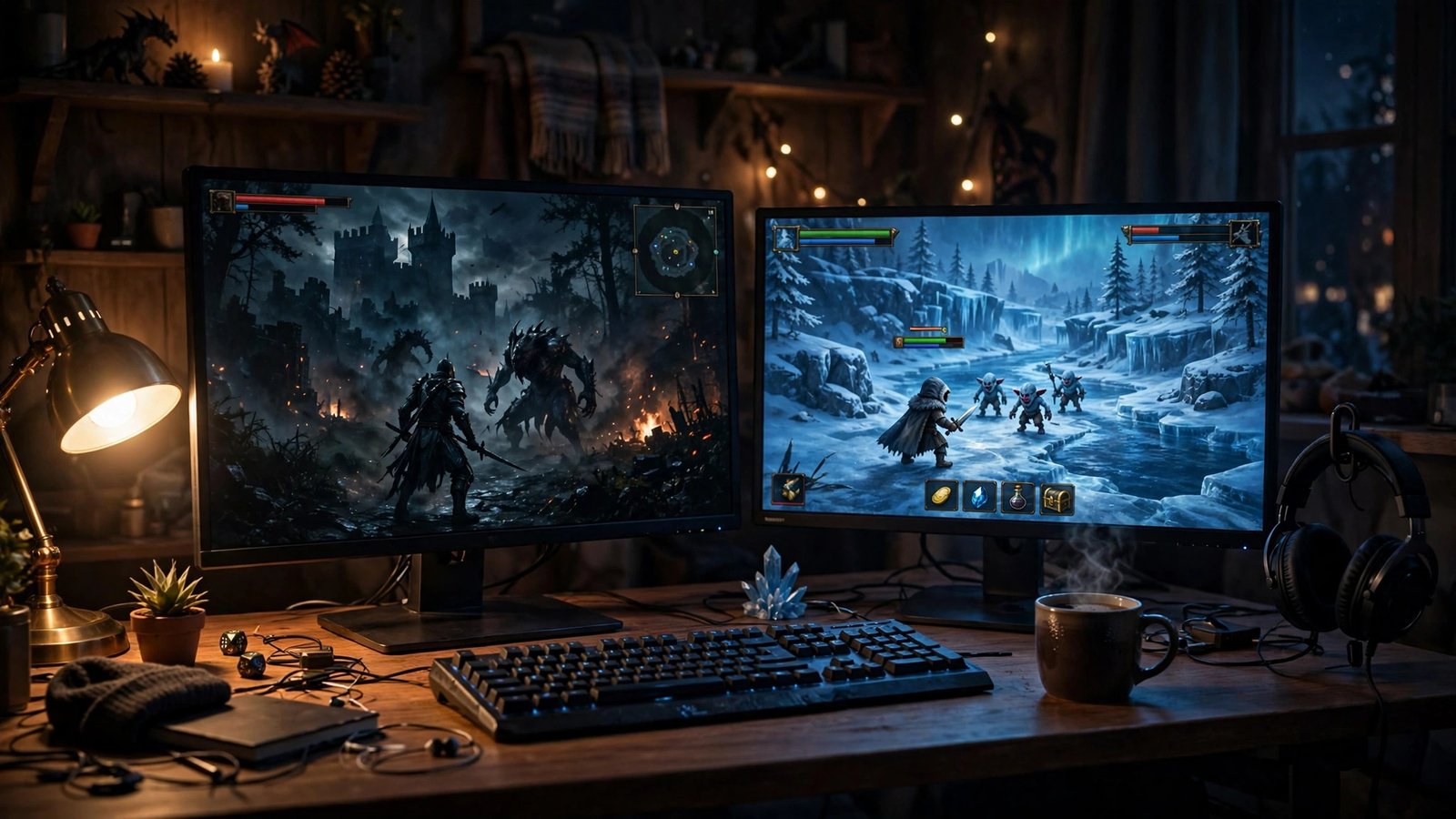
Depth is the whole argument, so it’s worth spelling out what “depth” means here. Underneath the auto-battling sits the full machinery of a proper ARPG: builds, loot, crafting, and long-term progression, according to the game’s own site. The press release says the same thing in plainer terms — the game is designed to run on a second monitor while still offering deep interaction through build and gear decisions. The hero’s journey is automatic; the thinking is yours.
That split — automatic action, manual decisions — is what separates Blastheim from the idle games Zizaran has criticized. Most idle RPGs automate the thinking too, reducing the player to a collector of bigger numbers. Blastheim automates the walking and the swinging, and keeps the judgment calls. Whether that balance works in practice is the question the coming playtests have to answer. A skill bar that never matters is decoration. A build system with one right answer is a spreadsheet.
The setup question is practical, and it’s the one players should sort out before launch. A second-screen game lives or dies on the rig around it: a second monitor with a clean viewing angle, audio you can actually hear when your main game goes quiet, and a layout that doesn’t make you crane your neck every time the hero finds loot. Sound matters more than it seems — the glance that tells you something happened is usually the sound cue first. Our best gaming headsets guide rounds up the pairs that keep a quiet second-screen game audible without drowning out the main one.
What is Blastheim’s world, and what do you do in it?
Blastheim is set in a Nordic world shattered by the death of the Tree of Life, and your job is to put it back together. Per the game’s own site, the Tree of Life is dead, the world lies in pieces, and you journey into its broken fragments, rebuild your realm, and grow a new Tree of Life.
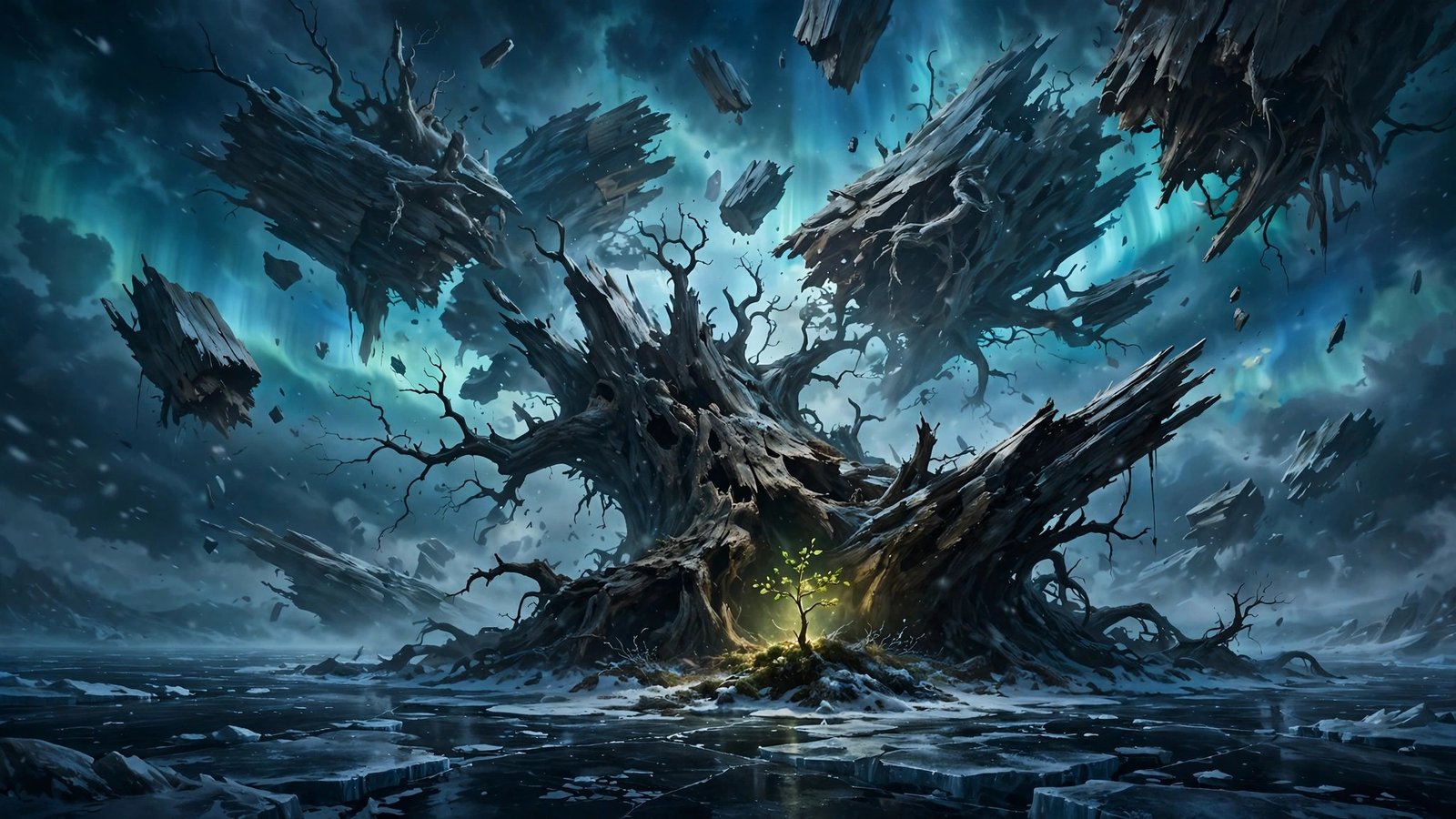
That premise fits the idle format better than most fantasy setups do. Rebuilding a realm is slow work by nature — it happens in increments, between other things, over weeks — and a game that runs on your second screen is built for exactly that rhythm. The fragments give progression a shape: each one a small expedition, a little more world restored, a reason to look over and see what your hero found.
What we don’t know yet about the Blastheim idle ARPG dwarfs what we do. The team hasn’t shown the fragment structure, the realm-building systems, the crafting depth, or the season structure beyond the plan to have seasons. The Steam listing describes the game as an auto-battle ARPG, and the site confirms builds, loot, crafting, and long-term progression — but the specifics (how many fragments, how seasons reset progress, whether trade works across seasons) are all unannounced. The official site at blastheim.com is the place to watch — short today, growing as the playtests produce something worth showing.
One concrete detail is worth noting for PC players. The Steam page lists minimum specs that any modern gaming PC clears easily: Windows 10 64-bit, a 2.5 GHz processor, 8 GB of RAM, a GTX 1060, DirectX 10, and 1 GB of storage. A second-screen game has to be light — it’s sharing your machine with your main game — and these specs say the team knows it.
Why do streamers keep making their own games?
Streamers keep making their own games because they keep hitting the same wall: the games they love don’t respect the way they actually play. Zizaran spends his life in ARPGs, and the game he wanted — an idle ARPG with real depth that runs beside Path of Exile — didn’t exist, so he’s building it.
But the pattern has a graveyard, and it’s worth naming before the hype does its work. Dr Disrespect co-founded Midnight Society in 2021 with former Call of Duty creative strategist Robert Bowling and Halo designer Quinn Delhoyo, promising the most community-focused PvP game ever made. The studio’s extraction shooter Deadrop never released, and Midnight Society shut down in January 2025, a little over three years after it started, after firing its famous co-founder. The lesson isn’t that streamers can’t make games — it’s that a big audience and a big promise don’t survive a big scope. Midnight Society aimed at AAA. Blastheim aims at a $5 idle game on a second monitor.
Blastheim’s structure looks like it learned that lesson. The scope is small: one hero, one shattered world, one second screen. The price target is low: roughly $5, not $70. The team is small: a studio of young talent and experienced developers, two in-house artists, and a streamer-co-owner who can veto the monetization drift that kills idle games. The funding is mixed: federal games funding plus veteran investors, not a token sale or an NFT pass. Every one of those choices is a bet against the Midnight Society failure mode — small instead of AAA, cheap instead of premium, governed instead of hyped.
The honest verdict is a wishlist, not a preorder. This Blastheim idle ARPG is early, dateless, and footage-free, and the seven details that make it exciting — the stake, the veto, the $5 target, the stash-tab-only monetization — all trace back to one report relayed by one site. What the game has, right now, is a clear idea, a credible team, a structure built to protect the idea, and a playtest loop that will prove or disprove the depth claim within months. That’s more than most announcements offer. Wishlist it, watch the playtests, and judge the game when there’s a game to judge. A controller helps for the moments you do lean in — our best gaming controllers guide picks the pads built for long, low-intensity sessions like the ones Blastheim is made for.
Blastheim FAQ
Is Blastheim free to play?
No. The Blastheim idle ARPG is a paid game with a roughly $5 price target reported by PCGamesN — but that target is unconfirmed and may change before launch. The monetization plan beyond the purchase is stash-tab sales only, with no pay-to-win microtransactions, per the same report, and no free-to-play version has been announced.
What platforms is Blastheim coming to?
Blastheim is confirmed for PC via Steam only. No console version has been announced, and the Steam page lists single-player play with modest minimum specs: Windows 10 64-bit, 8 GB of RAM, and a GTX 1060. The game is not yet available on Steam, and the planned release date is listed as to be announced.
Who is Zizaran?
Zizaran is a Path of Exile streamer and content creator, one of the best-known voices in the ARPG community, famous for deep mechanical analysis on Twitch. For Blastheim he is a co-developer and co-owner, not a promoter: he holds more than a 20% stake and can veto any monetization change, per PCGamesN’s reporting.
Will Blastheim have player trading?
A player trade mechanic is planned if it proves viable, per PCGamesN’s reporting — which means it is an intention, not a confirmed feature. The team has not said how trading would work, whether it would cross seasons, or what limits it would carry. Treat it as a roadmap item until the playtests confirm it.
Will Blastheim have seasons?
Yes, seasons are planned for Blastheim, per PCGamesN’s reporting. The team has not announced how long a season lasts, what resets between seasons, or whether seasonal progress carries into a permanent mode. Seasons fit the idle ARPG format — fresh starts keep the second-screen loop from going stale — but the details are still to come.
How do I add Blastheim to my Steam wishlist?
Open the Blastheim Steam wishlist page for app 5495450 on Steam, sign in, and click “Add to your wishlist.” The game is not yet available and has no release date, so the wishlist is the only way to get notified when it launches. Zizaran asked viewers to wishlist it during the November 13 reveal stream.
Keep exploring: if Blastheim has you thinking about the setup it deserves, our best gaming gear guide for 2026 walks through the whole kit — and our best gaming controllers guide lists the pads that fit a slow second-screen night.
As of November 23, 2026: Blastheim was unveiled on Zizaran’s Twitch stream on November 13, 2026, the joint-venture press release is dated November 19, and the game is in early development for PC via Steam with no release date. The stake, veto, price-target, and monetization details come from PCGamesN’s reporting as relayed by Wisevoter, and the roughly $5 figure is an unconfirmed target, not a price.