Dice A Million just dropped the curtain on Early Access with a 1.1 patch that finally lets the roguelike deckbuilder stand on its own.
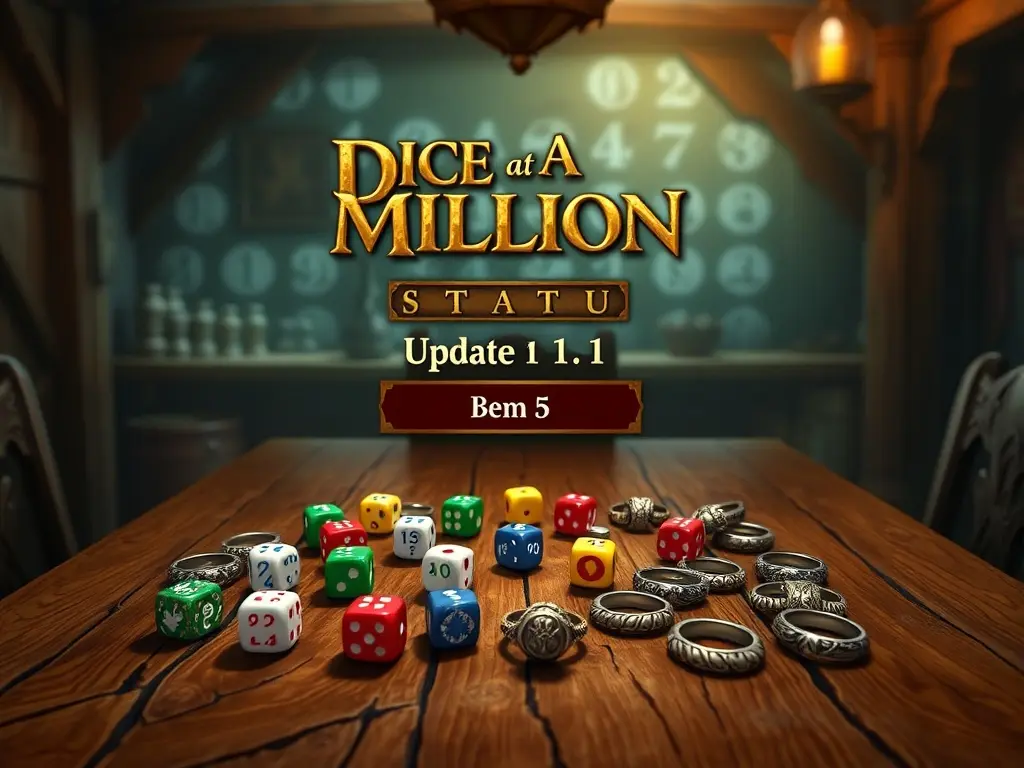
Early Access Exit and the Numbers Behind Update 1.1
Developer Heisenberg declared the Steam Early Access window closed this week, and the project now ships as a fully stamped 1.0 build with the 1.1 content patch layered on top. The update totals 17 new dice, 12 new rings, and a rebuilt tutorial that addresses the most common complaint in the Early Access review queue.
The timing matters. Dice A Million spent roughly a year in paid Early Access and used that window to absorb community feedback through Steam discussions and Discord threads. The 1.1 patch represents a direct response to the loudest asks: clearer tooltips, an actual act structure, and endgame runs that reward aggressive drafting rather than greedy hoarding.
According to the initial report, key details define the core progression. Heisenberg also pushed a free demo alongside the update so lapsed players can sample the new content without reinstalling the full client.
Players who own the Early Access build will receive Update 1.1 automatically. The developer confirmed no price increase accompanies the launch, a smart call in a saturated indie roguelike market where Slay the Spire 2 and Balatro already dominate attention.
Dice A Million Content Breakdown: 17 Dice and 12 Rings
The Dice A Million update delivers the largest single content drop since launch. Every new die introduces a distinct dice-face economy that interacts with the ring system, and the design clearly rewards players who learn face-value math rather than brute-forcing rolls.
Standout dice include the Cipher die, which grants bonus multiplier scaling based on consecutive even-face rolls, and the Fracture die, which splits damage across multiple targets at the cost of single-target burst. Rings now ship with proc conditions tied to specific die families, opening combo ceilings that Early Access veterans never reached.
Hardware matters more than the marketing page admits. A 165Hz 1ms display renders Dice A Million’s new dice and ring effects with sharp, fluid clarity during extended roguelike runs. Players chasing high-score screenshots or streaming the 1.1 patch should prioritize adaptive-sync panels to keep the dice bounce animations readable at 165 frames per second.
The ring expansion is where the roguelike deckbuilder identity sharpens. Twelve rings means roughly 144 base combinations before accounting for die synergies, and the build variety now competes directly with genre leaders. Heisenberg also added three new ring rarities, pushing the highest tier beyond the Early Access ceiling.
Mechanic Reworks and Balance Pressure on Existing Builds
Beyond raw content, Dice A Million received structural changes that reshape every successful Early Access build. The act structure now enforces a hard checkpoint at the end of act two, forcing players to commit to a build direction before reaching the final boss rather than pivoting on the last fight.
Old synergy stacks got trimmed. The Iron Curtain die, which dominated the Early Access leaderboard, now rolls a maximum of three faces instead of five, and the Greed ring lost its flat bonus multiplier in exchange for a conditional proc. These nerfs hit high-score runs directly and reset the competitive meta.
Fresh mechanics include a dice-burn system where players can sacrifice die faces for shop currency, and a ring-socket limit that forces inventory triage. Both mechanics punish the hoarding playstyle that dominated Early Access leaderboards and reward players who read encounter matchups two fights ahead.
The patch positions the project against competing indie releases, and the timing tracks with broader 2026 launch patterns covered in our Scavland 2026 indie Early Access preview. Dice A Million now enters the same conversation as Scavland, Blood of Dawnwalker, and the WSCI 2026 League of Legends Tier 2 event slate covered across our competitive coverage.
Dice A Million Replay Loop, Gear, and Hardware Fit
The Dice A Million 1.1 patch doubles down on the roguelike deckbuilder loop that defines the genre. Every run now seeds three boss modifiers instead of one, and the new endless mode unlocks after completing the campaign with all five starting classes.
Audio design matters during long sessions. Lossless 2.4GHz wireless audio delivers immersive feedback for Dice A Million’s expanded mechanics during long deckbuilding sessions. The ring-proc chimes and dice impact thumps carry meaningful gameplay information, so latency-sensitive players should pair wireless headsets that hold a stable sub-20ms connection.
Leaderboard reset is confirmed. Every Early Access score was wiped with the 1.0 transition, and the new patch adds regional filters so players can chase hometown rankings rather than fighting global speedrunners on every board. Daily seeded runs also rotate, giving competitive ladders a fixed schedule.
Performance tested across mid-range hardware shows stable 144fps on GTX 1660 Super builds at 1080p, with the new VFX layer adding roughly 8 percent GPU load over the Early Access branch. The patch ships with native ultrawide support, a longtime community request finally answered at launch.
What Indie Roguelike Launch Means Versus the 2026 Slate
Dice A Million stepping out of Early Access lands in a brutal 2026 release window. Balatro still prints revenue, Slay the Spire 2 commands the deckbuilder conversation, and studios with eight-figure marketing budgets control storefront real estate.
Indie launches succeed or die on the first 72 hours of review velocity. Dice A Million carries a Strong rating on Steam with roughly 4,200 user reviews, a healthy baseline that supports the no-price-increase launch decision. The 1.1 patch content density suggests Heisenberg prepared a launch buffer rather than relying on Early Access goodwill alone.
Positioning matters here. The broader indie market context, including hits like the milestone reached by our coverage of Blood of Dawnwalker crossing one million copies, shows that 2026 rewards projects with clear hooks and replay loops. Dice A Million offers both.
Our competitive coverage of the WSCI 2026 LoL Tier 2 event reveal tracks alongside this launch as another example of mid-tier projects punching above their marketing weight. Dice A Million fits that exact 2026 pattern: lean budget, dense mechanics, and a community that carried the project during Early Access.
Frequently Asked Questions
- What does Dice A Million Update 1.1 add?
- Dice A Million Update 1.1 adds 17 new dice, 12 new rings, a rebuilt tutorial, three new boss modifiers per run, an endless mode, and native ultrawide support alongside the official Early Access exit.
- Did the Dice A Million price change at launch?
- No. Developer Heisenberg confirmed the Steam price stays at the Early Access level, and existing owners receive the 1.1 patch automatically at no extra cost.
- Were Early Access leaderboards wiped?
- Yes. All Early Access high scores were cleared with the 1.0 transition, and the 1.1 patch adds regional leaderboard filters plus daily seeded runs.
- What hardware runs Dice A Million Update 1.1 well?
- A GTX 1660 Super or equivalent handles 144fps at 1080p with the new VFX layer, and adaptive-sync 165Hz monitors are recommended for clarity on dice-bounce and ring-proc animations.
- Is Dice A Million worth buying in 2026?
- The 1.1 content density, no-price-hike launch, and roguelike deckbuilder hook make Dice A Million a strong pick for players hunting replay value between larger 2026 releases.