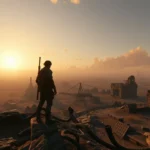
Blood of Dawnwalker cleared one million copies sold worldwide, and the milestone lands harder than most launch-week tallies recorded in the first half of 2026. Rebellion’s dark fantasy action RPG entered a brutally crowded release calendar stacked against it, yet exited the gate with enough velocity to reset expectations for first-party studio launches outside the major publisher umbrella. The figure carries weight because it arrived without a platform exclusive, without aggressive pre-order bundling, and without a live-service monetisation hook subsidising the marketing budget. Raw word-of-mouth did the lifting.
Numbers like this signal something more specific than a successful marketing campaign. They confirm sustained purchase intent across multiple storefronts over several weeks, not a front-loaded spike fading into digital obscurity. Tracking data showed the title retaining chart position week-over-week on storefronts, an unusual pattern for a single-player narrative title without recurring engagement loops. The studio deserves credit for engineering a hit through combat design and atmosphere rather than monetisation volume.
According to the initial report, key details define the core progression. Rebellion confirmed the threshold internally before any external announcement, suggesting confidence in the underlying sales telemetry rather than reliance on circumstantial estimates. That distinction matters: studio-verified milestones shift investor narratives and influence future budget allocation across the publisher’s portfolio, particularly for original IP operating outside established franchises.
Blood of Dawnwalker Sales Performance and Market Positioning
Blood of Dawnwalker sales figures reflect a specific market reality. Dark fantasy action RPGs occupy a contested lane, competing directly against established franchises, remasters, and live-service extraction titles. Hitting the one-million threshold within the early sales window places the title in conversation with mid-tier AAA launches rather than AA underdogs. Consumers paid full price, completed significant campaign arcs, and continued purchasing through word-of-mouth momentum.
The commercial outcome stems from mechanical clarity rather than thematic novelty. Combat uses a stamina-governed sword system paired with vampiric abilities tied to a day-night cycle, forcing players to weigh risk and reward during every encounter. Stealth sections reward patience, while boss encounters punish reckless aggression. Each subsystem communicates its rules without tutorials interrupting the flow. Players learn through failure, then adapt.
A dedicated gaming headset provides clear spatial audio during critical stealth missions. Enemy footstep cues, environmental audio layers, and combat audio signals remain distinct across the frequency range. Players benefit from directional precision during dark corridors and open combat arenas.
Critics highlighted the inventory weight system and the blood-meter mechanic as primary differentiators. The inventory weight system forces carry decisions that ripple through encounter pacing, while the blood-meter governs ability activation costs. Neither mechanic reinvents the genre, but the integration produces encounters that feel intentional rather than scripted. Player choices carry visible consequence across combat, traversal, and narrative branches.
Rebellion Dawnwalker Success and Studio Strategy
Rebellion Dawnwalker success carries institutional weight for the Oxford-based studio. Best known for Sniper Elite and Zombie Army, the publisher diversified into original supernatural IP, a high-risk pivot that frequently derails mid-sized studios chasing genre prestige. The one-million threshold validates the studio’s capacity to execute outside its established comfort zone. Investors tracking Rebellion’s pipeline now possess evidence that internal studios can ship genre-defining hits beyond licensed franchises.
Production decisions explain the commercial performance. Vertical integration at Rebellion allowed tight coordination between art direction, level design, and narrative writing without publisher interference. Combat animations, environmental storytelling, and character progression were locked early in production, reducing feature creep. Players received a cohesive product rather than a stitched patchwork of mechanics pulled from competing trend reports.
Industry coverage from insider gaming reporting on the sales milestone confirms the studio’s strategic positioning. Workforce allocation during the final production sprint prioritised performance optimisation and bug stability over scope expansion. That decision preserved the launch window, protected review aggregate scores, and supported sustained sales momentum rather than a front-loaded spike.
Sequel potential now sits firmly on the table. First-party studios hitting one million copies with original IP typically receive greenlit sequels within twelve to eighteen months. Expansion through DLC represents the more probable short-term outcome, allowing Rebellion to monetise the existing player base while preparing the next major production cycle. Either path generates revenue without compromising the studio’s reputation for delivering finished products.
Blood of Dawnwalker RPG Mechanics and Hardware Considerations
Blood of Dawnwalker RPG mechanics operate across four interlocking systems: the day-night cycle, the blood economy, the stamina combat framework, and the faction reputation tracker. Each system feeds data into the others, producing encounter scenarios that shift based on player state. A high blood count unlocks stronger abilities while increasing detection risk during stealth segments. Reputation standings alter NPC dialogue, shop inventories, and certain boss fight parameters. Players cannot optimise everything simultaneously, and that limitation defines the experience.
Performance targets determine whether players experience the design as intended. The PC build supports uncapped framerates with DLSS and FSR integration, while console builds target sixty frames per second on current-generation hardware. Resolution scaling fluctuates based on environmental density. Players running high-refresh displays during combat encounter spikes benefit from VRR-compatible output modes.
High-refresh displays ensure fluid frame pacing throughout competitive encounters. Stable frame delivery matters during boss attack patterns requiring precise dodge timing. Players chasing mechanical mastery require displays capable of presenting every animation frame without input lag compounding execution errors.
Accessibility settings surprised critics reviewing the launch build. Rebindable inputs, adjustable subtitle sizing, colour-blind filters, and a dedicated high-contrast mode expanded the player base beyond the typical action RPG audience. Photography mode added social media virality potential, generating organic promotional content across platforms. Every accessibility addition doubled as a marketing asset.
Dawnwalker Sales Milestone and Industry Implications
Dawnwalker sales milestone achievements reset expectations for original IP launches in 2026. The dark fantasy action RPG shipped during a release window crowded with major franchise entries, yet captured sufficient consumer attention to cross seven figures. Competitor studios now possess concrete evidence that original supernatural IP can compete against established franchises when execution quality meets marketing precision. The title functions as a case study for publishers weighing original IP investment against licensed franchise extensions.
Broader industry coverage of the commercial performance data illustrates the ripple effects across the 2026 calendar. Several competing studios accelerated post-launch support schedules after observing Dawnwalker’s retention metrics. Live-service competitors adjusted roadmap priorities to avoid head-to-head release dates. The launch reshaped competitive positioning across the dark fantasy subgenre.
Long-term reception hinges on expansion content quality. Players who completed the base campaign within the first month now await substantive post-launch content validating continued engagement. DLC pricing, narrative scope, and mechanical additions will determine whether the one-million figure doubles within twelve months or plateaus near current numbers. Rebellion’s track record across previous franchises suggests disciplined expansion pacing rather than exploitative monetisation cycles.
Commercial momentum rarely translates directly into sequel confirmation, yet one million copies sold removes financial risk from the equation. Expect official expansion announcements within the next quarter, followed by sequel teases once expansion content shipping concludes. The dark fantasy action RPG space now hosts a confirmed commercial player, and competitors must respond accordingly. The genre conversation has shifted, and Rebellion holds the microphone.
Frequently Asked Questions
- What makes Blood of Dawnwalker a commercial success?
- Blood of Dawnwalker crossed one million copies sold worldwide, combining tight combat mechanics, a blood-meter system, and disciplined execution that sustained sales momentum across multiple weeks without relying on live-service monetisation hooks or aggressive bundling strategies.
- How long did it take the title to hit one million copies?
- Studio confirmation placed the milestone inside the early sales window, with retention metrics supporting sustained purchases across storefronts rather than a front-loaded launch spike fading after week one.
- What genre does the game belong to?
- It operates as a dark fantasy action RPG with stamina-governed sword combat, vampiric abilities tied to a day-night cycle, stealth encounters, and branching faction reputation systems.
- Is Rebellion planning post-launch content?
- Sequel and DLC paths both remain plausible following the commercial threshold. The studio’s previous franchise track record suggests expansion content rather than exploitative monetisation cycles.
- How does this milestone impact future original IP launches?
- The data proves original supernatural IP can compete against established franchises when execution quality matches marketing precision, forcing competitor studios to reassess roadmap priorities and post-launch support schedules.