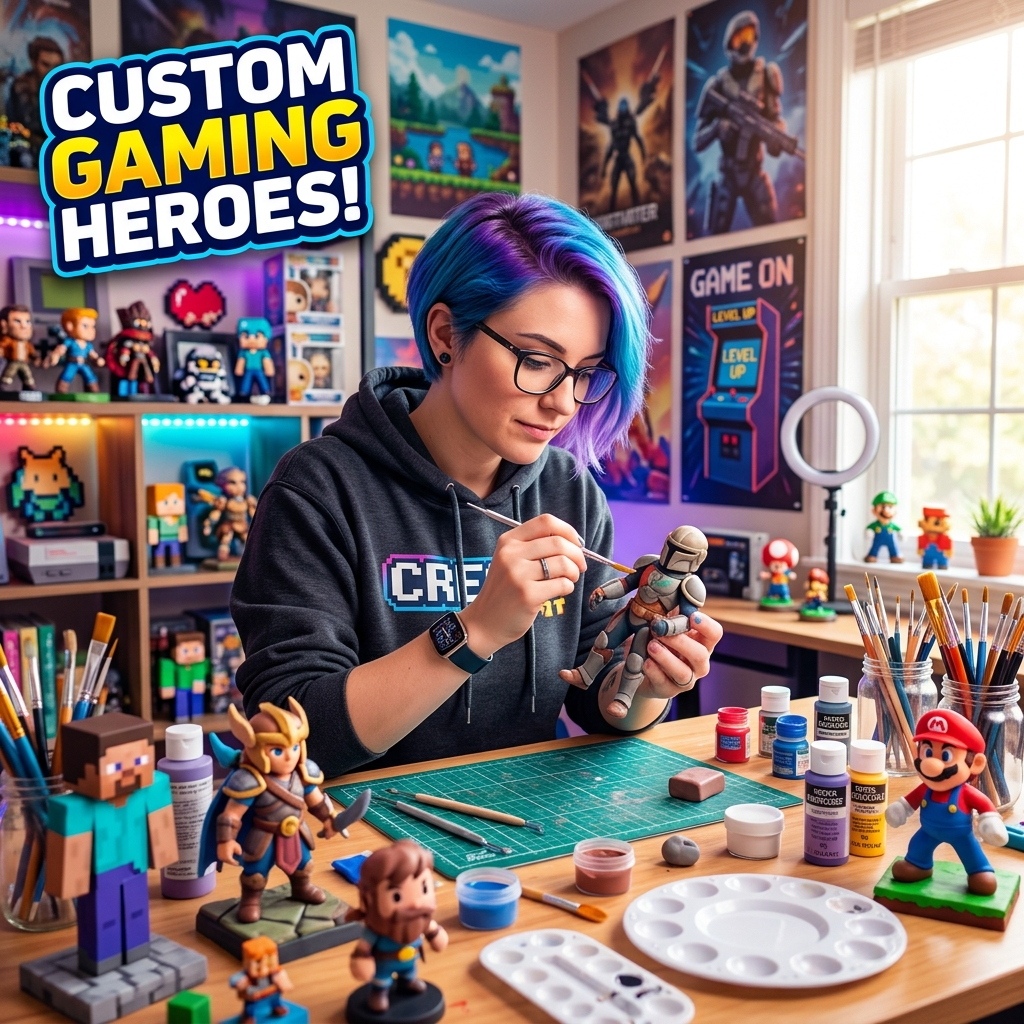
Video game figures are stupidly expensive right now. Like, have you even checked the prices on rare collectibles lately? It’s absolutely wild.
But here’s the thing. You don’t need to drop $200 on a limited edition statue when you can craft your own badass custom gaming figures at home.
I’ve seen some DIY video game figures that look better than official merch. Trust me, the gaming community is full of creative legends who’ve mastered this craft.
Why DIY Video Game Figures Are the Ultimate Move
Gaming collectibles shouldn’t require a second mortgage. The market is broken, and scalpers have made it worse.
Creating homemade video game toys gives you total control over your collection. Want a figure of that obscure character nobody makes? Done. Need a custom pose that doesn’t exist? Easy.
Plus, personalized video game merchandise just hits different. There’s something incredibly satisfying about displaying figures you actually made yourself.
I’ve tried buying from official sources like Amiibo, and while they’re cool, the selection is limited. Sometimes you gotta take matters into your own hands.
7 Insane DIY Video Game Figure Projects
Ready to start crafting video game figures? These tutorials range from beginner-friendly to absolute pro-level.
1. Clay Sculpting for Maximum Detail
Polymer clay is your best friend here. It’s cheap, easy to work with, and bakes in your regular oven.
Start with simple characters. Mario, Kirby, or any character with basic geometry works perfectly for beginners.
Video game figures made from clay can achieve insane detail if you’re patient. Use reference images from multiple angles and work slowly.
The key? Build an armature first using wire or aluminum foil. This gives your figure stability and prevents sagging during the baking process.
2. 3D Printing Custom Figures
Okay, this one requires some investment. But if you’re serious about video game figures, a 3D printer is absolutely worth it.
You can find free STL files online or learn basic 3D modeling. Sites like Thingiverse have thousands of gaming models ready to print.
The crossover potential is unlimited. Want your favorite fighting game character holding a weapon from another franchise? Make it happen.
Post-processing is crucial though. Sand your prints, prime them, and paint with acrylics for that professional finish.
3. Resin Casting for Professional Results
Resin casting takes your DIY video game figures to the next level. The results look straight-up commercial grade.
You’ll need silicone molds and two-part resin. It sounds complicated but it’s basically just mixing and pouring.
This method is perfect for making multiple copies. Create one master figure, make a mold, then cast as many as you want.
I’ve seen custom gaming figures made this way sell on Etsy for serious money. The quality is just that good.
4. Modified Action Figures (Kit Bashing)
Don’t want to start from scratch? Kit bashing is your answer.
Buy cheap action figures and customize them. Swap parts, repaint, add accessories. Suddenly you’ve got unique video game figures nobody else has.
This technique is OP for creating characters that don’t have official merchandise. Just find a figure with a similar body type and go wild.
Heat guns help reshape plastic parts. Epoxy putty fills gaps and adds custom details. It’s like playing with action figures but for adults.
5. Papercraft and Cardboard Builds
Zero budget? Papercraft is literally free.
Download templates, print them out, and assemble. Some easy video game figure tutorials use nothing but paper and glue.
The blocky aesthetic actually works for certain games. Minecraft characters? Perfect. Retro pixel art games? Chef’s kiss.
Reinforce with cardboard for larger builds. Coat with mod podge or resin for durability. These homemade video game toys are way more impressive than they sound.
6. Perler Bead Pixel Art Figures
Retro gaming fans, this one’s for you. Perler beads let you create 2D or 3D pixel art figures.
The process is meditative AF. Place beads on a pegboard following a pattern, then iron them to fuse everything together.
Video game figures from classic 8-bit and 16-bit games look incredible in this style. The pixelated aesthetic is intentional and nostalgic.
You can even layer multiple pieces to create 3D standing figures. Just waiting for new game releases to inspire your next project.
7. Wire Armature and Fabric Figures
This technique combines sculpture with sewing. Wire armatures provide the skeleton, fabric and felt create the details.
It’s perfect for characters with flowing clothes or capes. Think RPG heroes, fantasy characters, or anyone with complex outfits.
Custom gaming figures made this way have incredible posability. The wire skeleton means you can adjust poses anytime.
Check out detailed tutorials on Instructables for step-by-step guidance. The community there is super helpful.
Essential Materials for Crafting Video Game Figures
Let’s talk gear. You don’t need everything at once, but these tools make life easier.
Polymer clay, acrylic paints, and basic sculpting tools are your starter pack. Add brushes in multiple sizes and you’re already dangerous.
Superglue and epoxy are non-negotiable. Things will break. You’ll need to attach parts. Have strong adhesives ready.
Personalized video game merchandise requires patience more than expensive equipment. Start small, upgrade as you improve.
Pro Tips for Next-Level Results
Reference images are everything. Screenshot your favorite characters from multiple angles before starting.
Prime your figures before painting. This step is crucial for even color coverage and prevents paint from rubbing off.
Thin your paints. Multiple thin coats always beat one thick coat. Trust me on this.
Seal your finished video game figures with varnish. Matte finish for realistic looks, gloss for that anime-style shine.
Join online communities. Reddit, Discord servers, and Facebook groups are full of people sharing easy video game figure tutorials and answering questions.
The same creativity that goes into multiplayer game modes applies here. Experiment, fail, learn, repeat.
Where to Display Your Gaming Collectibles
Creating video game figures is only half the fun. Displaying them properly is the other half.
Glass display cases protect from dust and give that museum vibe. IKEA has affordable options that look surprisingly premium.
LED lighting makes everything look better. Seriously, add some strip lights behind your shelves and watch your collection transform.
Organize by game, by color, or by creation date. Your collection, your rules. Just make sure they’re visible and protected.
Common Mistakes to Avoid
Rushing the drying process ruins everything. Let paint dry completely between coats. I know it’s boring, but it matters.
Using cheap paints shows. Invest in decent acrylics. The difference is massive and they last way longer.
Skipping the primer is amateur hour. Don’t do it. Every professional will tell you the same thing.
Starting with complex characters leads to frustration. Begin with simple designs and build your skills gradually.
Video Game Figures: Quick Reference Guide
| Method | Difficulty | Cost | Time Required | Best For |
|---|---|---|---|---|
| Clay Sculpting | Medium | $20-50 | 3-8 hours | Detailed characters |
| 3D Printing | Medium-High | $200+ (printer) | 4-12 hours | Precise replicas |
| Resin Casting | High | $50-100 | 6-24 hours | Multiple copies |
| Kit Bashing | Low-Medium | $15-40 | 2-5 hours | Custom mashups |
| Papercraft | Low | $5-15 | 1-4 hours | Blocky designs |
| Perler Beads | Low | $10-25 | 1-3 hours | Pixel art styles |
| Wire & Fabric | Medium | $15-35 | 4-10 hours | Posable figures |
Frequently Asked Questions
What’s the easiest way to start making video game figures?
Papercraft or Perler beads, no contest. You need like $10 worth of materials and zero special skills. Just download a template and go. I started with papercraft Mario before moving to clay, and it built my confidence without any financial risk.
Can I sell custom gaming figures I make?
Legally? It’s complicated. Fan art exists in a gray area. Most companies don’t chase individual creators unless you’re making serious money. But technically, using copyrighted characters without permission can be risky. Original designs or parodies are safer. Some people sell on Etsy without issues, others get takedown notices. Your call.
How do I get video game figures to look professionally painted?
Thin your paints, use multiple coats, and seal everything. That’s the holy trinity. Also, invest in decent brushes—cheapo brushes leave streaks and lose bristles. Prime your figure first, use a wet palette to keep paints workable, and take your time. The difference between rushed paint jobs and patient ones is massive.
What’s the best material for durable homemade video game toys?
Resin is king for durability, but polymer clay is the best balance of durability and ease. Properly baked and sealed clay figures last forever. I’ve got clay figures from five years ago that still look perfect. Paper and fabric are fragile but work fine for display-only pieces.
Where can I find patterns for DIY video game figures?
Reddit, Pinterest, and YouTube are goldmines. Search for your specific character plus “tutorial” or “template.” For 3D printing, Thingiverse and MyMiniFactory have thousands of free files. Instagram artists often share process videos. The community is incredibly generous with sharing techniques and patterns.
How much time does crafting video game figures actually take?
Depends wildly on complexity. A simple Perler bead sprite? Maybe an hour. A detailed clay sculpture with painting? Anywhere from 6 to 20 hours spread across multiple days. Don’t rush it. This is supposed to be fun, not a speedrun. The best figures come from taking your time and enjoying the process.