
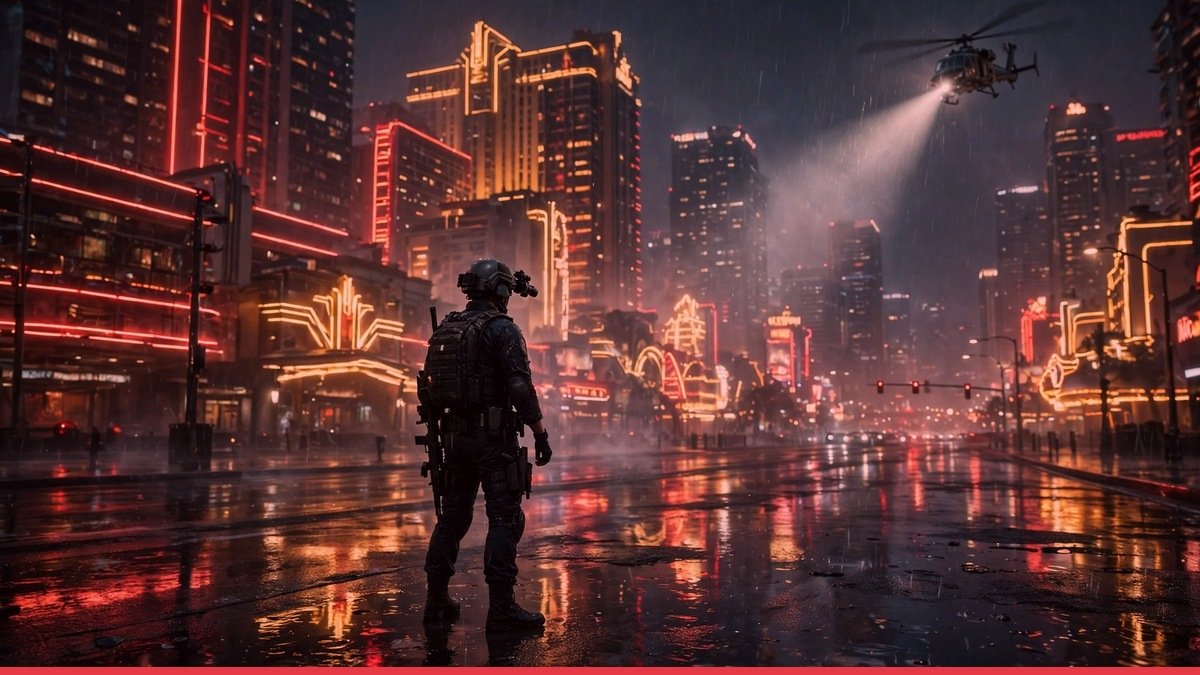
Yes — Rainbow Six Vegas is reportedly coming back. Insider Gaming’s Tom Henderson reported on November 13 that Ubisoft Montreal has greenlit a new Rainbow Six Vegas game, codenamed Spades, likely a full sequel rather than a remake. Ubisoft has announced nothing, though, and the project is early, so a reveal is probably years away.
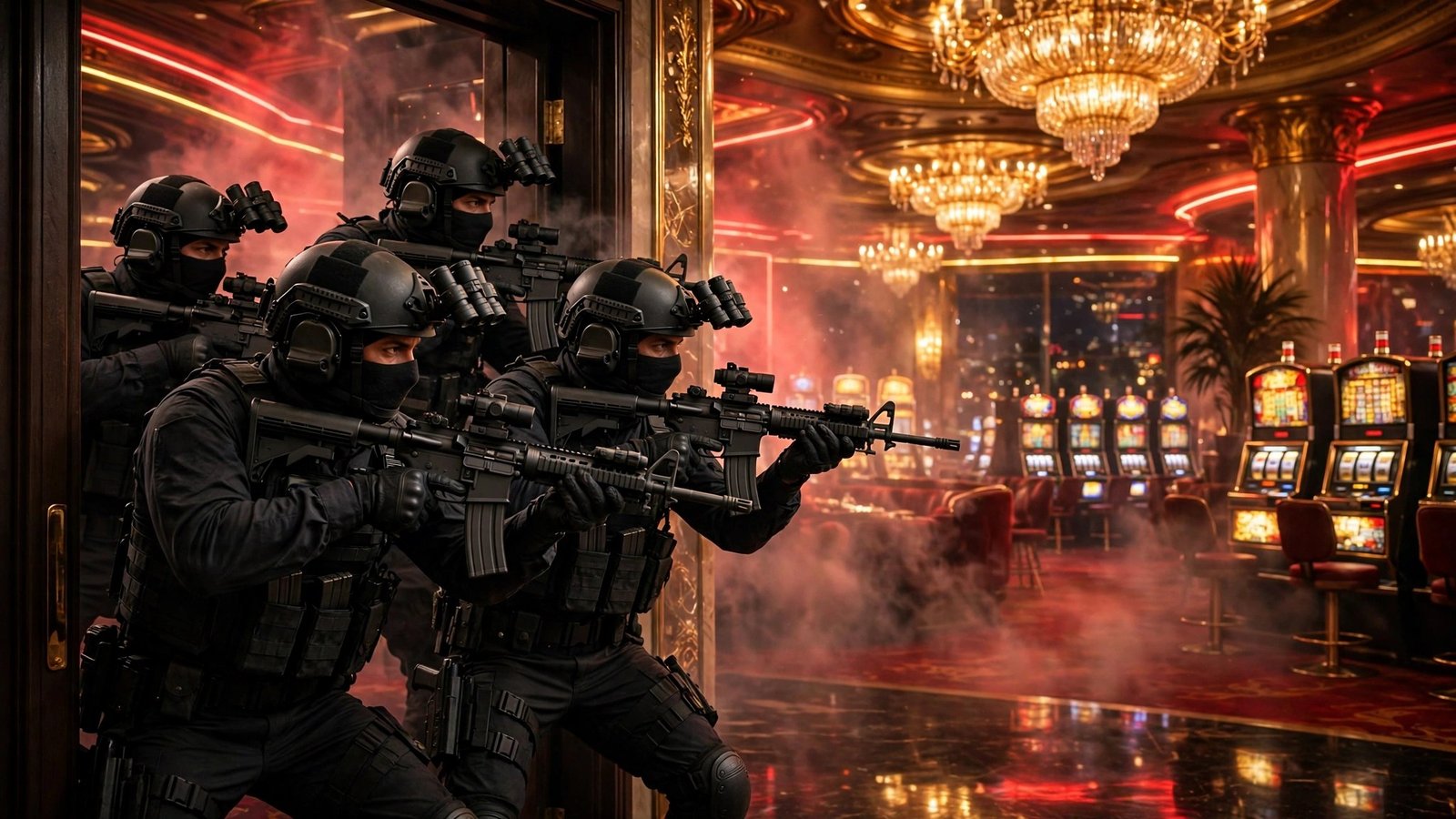
That’s the headline, and it’s a big one for anyone who played shooters on the Xbox 360. The last Rainbow Six Vegas game came out in 2008, and for 18 years the sub-series has sat on the shelf while the franchise went all-in on Siege’s live-service multiplayer. A return would mean something Siege never tried to be: a story-driven Rainbow Six campaign, built for a single player and a squad, in the loudest city on Earth.
But the gap between “reportedly in development” and “you can play it” is where most of these stories die. Early projects get cancelled. Codenames change. And Ubisoft has said nothing at all. So this article does three things: it lays out exactly what the report says and what it doesn’t, it explains why Vegas earned this kind of loyalty in the first place, and it gives you an honest verdict on whether to believe it.
What did Insider Gaming actually report?
Insider Gaming reported on November 13, 2026, that Ubisoft is in early development on a new Rainbow Six Vegas title, codenamed Spades. The report, written by Tom Henderson, said Ubisoft Montreal has greenlit the project as one of three new games recently spun up at the studio.
The wording matters here, because Henderson is careful with it. His sources said the new game is “likely Vegas 3 rather than a remake, but only time will tell,” and he wrote plainly that it’s unclear what the game will actually be. That’s not hedging for fun. At this stage, a greenlit project is a direction and a team, not a finished design. The report carries no gameplay details, no platforms, no release window, and no title — Rainbow Six Vegas 3 is the shape the sources expect, not a name Ubisoft has chosen.
What the report does pin down is the scale of the bet. Three new projects are starting at Ubisoft Montreal, and a second one is also set in the Rainbow Six universe, according to the same sources. That’s two Rainbow Six games in one studio’s new slate, which tells you how central the franchise has become to Ubisoft’s planning. The third project is unknown, and Henderson offered no details on it at all.
Coverage landed fast. Polygon, Push Square, ScreenRant, IGN, TheGamer, AltChar, DualShockers and KeenGamer all picked up the story within a day, and none of them could add anything Henderson didn’t already say — which is itself a signal. When a dozen outlets report the same five facts, the story is the report, not a pile of new information. If you see a site claiming platforms or a release date for this game, it’s guessing. Nobody has those details yet.
Is Rainbow Six Vegas coming back?
Probably — but “coming back” is doing a lot of work in that sentence. The report says a new Rainbow Six Vegas game is in early development at Ubisoft Montreal under the codename Spades, and sources lean toward a full sequel, Rainbow Six Vegas 3. Ubisoft has not confirmed any of it.
So the honest answer has two halves. The first half is encouraging: a greenlight means money, people and a plan, and Henderson has a strong track record on Ubisoft and Rainbow Six leaks — AltChar and Push Square both made that point when they covered the story. The second half is the one fans keep skipping. Early development is the most fragile stage a game ever passes through. Projects get reshaped, merged, paused or killed before anyone outside the building ever sees them, and the longer the road to reveal, the more chances something changes.
Here’s the frame that keeps me sane about reports like this. A greenlight is not a launch date, and it’s not even a promise of a launch. It’s Ubisoft deciding the idea is worth building right now. That decision is real news — the series has been absent since 2008, and Ubisoft has run more than a dozen Rainbow Six projects in the meantime without touching Vegas — but it’s the first step on a road that usually takes four or five years. If you want a date to circle, don’t. Circle the next Ubisoft showcase instead, and even then, don’t hold your breath.
Why does Rainbow Six Vegas still matter 18 years later?
Rainbow Six Vegas launched on Xbox 360 in November 2006, with PC following in December and PlayStation 3 in June 2007, and it sold more than 1.7 million copies by March 31, 2007. Its sequel, Rainbow Six Vegas 2, arrived on consoles in March 2008 and on PC in April 2008.
The reason is simple: Vegas was the last time Rainbow Six felt like a story you played instead of a match you queued for. You led Logan Keller and a two-person squad — Gabriel Nowak and Kan Akahashi — through a fictional Las Vegas under attack, hunting the terrorist Irena Morales and her mercenary army across casinos, a dam and a university campus. The campaign had a beginning, a middle and a cliffhanger ending that literally closed with the words “To Be Continued,” and then the sequel picked the thread up, filling in events from before, during and after the first game.
What made it play differently was the cover system. Vegas let you snap to cover in third person, peek around corners, and order your squad to stack up on a door or breach it — mechanics that felt new in 2006 and that the series has never quite returned to. Xbox Wire later called it one of the most memorable adventures on the platform, noting that many critics called it the best shooter on the Xbox 360 at the time. In early 2007 it became the first Xbox 360 title to join the Major League Gaming circuit, which tells you how seriously the competitive scene took it.
Then came the pivot. Rainbow Six Siege launched in 2015 as a multiplayer-only live-service game, and it swallowed the franchise whole — more than a decade of seasons, operators and esports. Siege is a great game, and it kept Rainbow Six alive and profitable. But it also meant the franchise stopped telling stories. No campaign, no squad banter, no casino heist at midnight. That’s the hole a new Rainbow Six Vegas would fill, and it’s why the report hit so hard: it’s not nostalgia for a logo, it’s nostalgia for a kind of game Ubisoft stopped making.
One more thing worth remembering. The Vegas games were commercial hits, not cult curiosities. The first game moved 1.7 million copies in about four months, and Ubisoft greenlit the sequel within a year — Vegas 2 shipped barely 16 months after the original. Compare that with today, when a single big game takes four or five years, and you start to see why Henderson says a reveal is years away. Today’s big shooter launches show the same stretched timelines.
What could a new Rainbow Six Vegas look like?
Nobody knows yet, and anyone who tells you otherwise is inventing it. The report contains no gameplay details, no setting confirmation and no engine information, so the honest version of this section is a list of informed guesses — clearly labelled as guesses — about what a modern Vegas game would probably need to be.
Start with the obvious: a 2026 greenlight means a game built for current hardware, not a remaster of 2006 assets. A full sequel, if that’s what Spades becomes, would almost certainly keep the two things that defined the originals — a story-driven campaign and squad-based tactics — because those are the two things Siege doesn’t offer. The cover system would need a rebuild, not a revival: third-person cover in a first-person shooter was novel in 2006, and modern players expect the kind of fluid movement that games like Black Ops 7 and Battlefield 6 are fighting over right now.
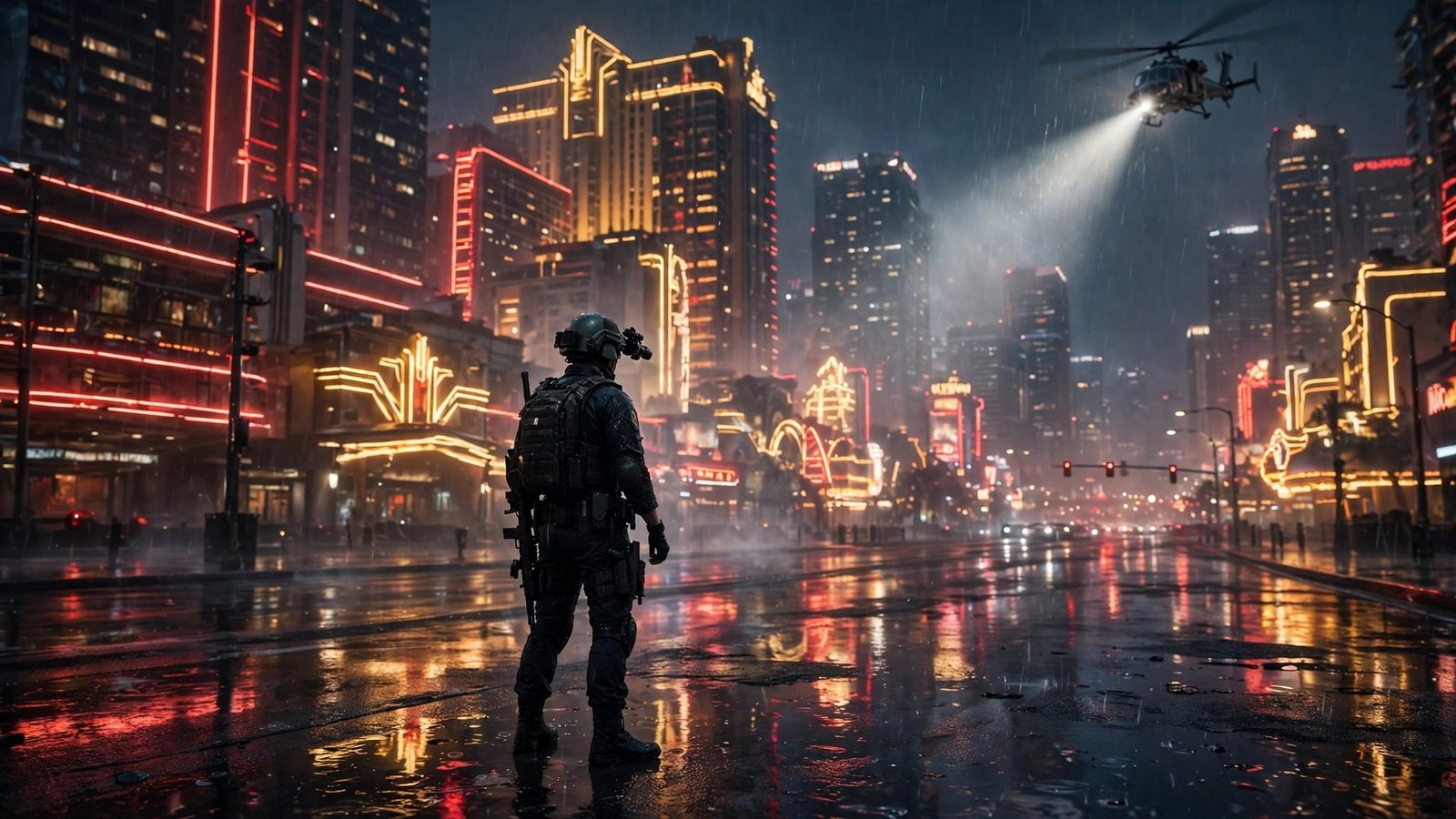
The setting is the other open question. Las Vegas is the identity of the sub-series — the name is on the box — but the original games already used the Strip, the casinos and the Hoover Dam. A sequel could return to the same city with a new threat, or it could do what Vegas 2 did and widen the map while keeping Vegas as the anchor. Either way, the fantasy that sold the originals wasn’t really “Las Vegas.” It was “counter-terrorism in places that look too glamorous for a gunfight.” Casinos, hotels, neon streets: the contrast between the glitz and the violence is the whole aesthetic, and it’s still an uncommon one in a genre full of grey military bases.
Then there’s the live-service question, and this is where the analysis gets uncomfortable. Ubisoft has spent a decade learning to run Rainbow Six as a service, and the temptation to bolt seasons, battle passes and operators onto a Vegas campaign will be enormous. The best version of this game is a focused 10-to-12-hour campaign with a co-op option and a tight multiplayer mode — the shape the originals had. The worst version is a campaign that exists to funnel you into a store. Nothing in the report says which one Ubisoft wants, and that choice will decide whether this revival is loved or merely tolerated.
Finally, the squad. The originals gave you two AI teammates you could actually order around, and the sequel upgraded their AI to make single-player harder and more rewarding. In 2026, that idea has more room to grow than it did in 2008: better AI teammates, drop-in co-op with friends taking the squad slots, and the kind of mission design that rewards planning instead of sprinting. If Spades keeps the squad at the center, it will feel like Rainbow Six again. If it drops the squad to chase the hero-shooter trend, it will just be another shooter with a familiar name.
What about Rainbow Six Tactics and the other Montreal projects?
Rainbow Six Tactics is the other Rainbow Six game with a date attached to it, and it’s the one that makes the Vegas report easier to believe. The tactical spin-off was announced in August 2026 with a planned launch in 2027 on PC, PlayStation 5 and Xbox Series X/S.
The second Montreal project matters too, even though we know almost nothing about it. Henderson’s sources described it only as another title set in the Rainbow Six universe, with no genre, no codename and no details. That vagueness is normal for a project this early — and it’s also a reminder that “Rainbow Six universe” covers a lot of ground now. It could be a Siege spin-off, a mobile game, a co-op shooter, or something nobody has guessed yet. What it proves is intent: Ubisoft isn’t placing one bet on Rainbow Six, it’s placing several.
All of this sits under Vantage Studios, the subsidiary Ubisoft formed in October 2025 to oversee its biggest franchises — Assassin’s Creed, Far Cry and Rainbow Six — with Tencent holding a 26.32% stake. Insider Gaming noted the timing deliberately: the Vegas greenlight came about a year after Vantage was created, and just a week after fresh rumors of two new Assassin’s Creed titles that Henderson said he could corroborate. The pattern is a company reorganizing its crown jewels under one roof and then spending. Vegas looks like one line in that budget, not a one-off whim.
For players, the practical takeaway is patience with a purpose. Tactics arrives first, in 2027, and it will show how Ubisoft wants Rainbow Six to feel outside Siege. If Tactics lands well, the case for a big Vegas campaign gets stronger inside the company. If it stumbles, the Vegas project still exists — but it exists in a colder room.
Should you believe the report?
Yes, with the right expectations. Tom Henderson’s reporting on Ubisoft has been reliable enough that Polygon, Push Square and AltChar all treated this story as credible within hours, and the details fit what we already know: Montreal is the Rainbow Six studio, Vantage Studios is spending, and Tactics proves the franchise is expanding.
But believing the report is not the same as believing you’ll play the game. Here’s the test I apply to every early-development leak: would I be surprised if this game never ships? And the answer is no. Ubisoft has cancelled high-profile projects before, and a game that is years from reveal has years of budget reviews, leadership changes and strategy shifts to survive. Push Square said it plainly in its coverage: don’t expect a public reveal for a number of years, if the game doesn’t get cancelled first.
So here’s the verdict. The report is likely real, the game is likely years away, and the only sensible move for a fan is to get excited quietly. Don’t pre-order anything — there’s nothing to pre-order. Don’t plan a build around it, don’t cancel your Siege grind, and don’t treat a codename as a promise. Follow Rainbow Six Tactics in 2027 instead: it’s real, it’s dated, and it will tell you more about where this franchise is heading than any leak can. And if Spades survives to its reveal, that day will be worth the wait — 18 years is a long time to keep a cliffhanger hanging.
Rainbow Six Vegas 3 — FAQ
Is Rainbow Six Vegas 3 confirmed?
No. Ubisoft has not announced anything. Insider Gaming reported on November 13, 2026, that a new Rainbow Six Vegas game is in early development at Ubisoft Montreal under the codename Spades, with sources saying it is likely Rainbow Six Vegas 3 rather than a remake — but that is a report, not a confirmation.
What is Rainbow Six Vegas codename Spades?
Spades is the reported internal codename for the new Rainbow Six Vegas project at Ubisoft Montreal. Codenames are working titles used during development; the final game may be called something else entirely, and Rainbow Six Vegas 3 is only the name sources expect, not an official title.
When will the new Rainbow Six Vegas come out?
There is no release window. The project is in early development, and Insider Gaming expects an official announcement to be several years away. Given modern AAA timelines, a release before 2029 or 2030 would be optimistic, and early projects can still be cancelled.
What platforms will Rainbow Six Vegas 3 be on?
Unknown. No platforms have been reported. Given the timeline, a current-generation release on PlayStation 5, Xbox Series X/S and PC is the most likely shape, but that is speculation — nothing has been confirmed or even rumored.
What happened in Rainbow Six Vegas 2 2008?
Rainbow Six Vegas 2, released on consoles in March 2008 and on PC in April 2008, continued the story of Logan Keller’s squad, covering events from before, during and after the first game. It expanded character customization, added the ACES progression system, improved squad and enemy AI, and kept the cover-based tactical gameplay that defined the original.
Can you still play the original Rainbow Six Vegas games?
Yes, the single-player campaigns are still playable. Both games are backward compatible on Xbox One and Xbox Series X/S, and the PC versions remain available. The multiplayer servers were shut down in 2021, so online play is gone, but the campaigns — the part that made Vegas matter — still work.
The bottom line: Rainbow Six Vegas is reportedly back after 18 years — but reportedly is the word that matters. Stay excited, stay skeptical, and keep an eye on Rainbow Six Tactics in 2027 for the first real sign of where the franchise is going.
While you wait, check out our Black Ops 7 vs Battlefield 6 showdown for the shooter debate splitting players right now, and our best gaming gear guide for 2026 to make sure your setup is ready for whatever Ubisoft announces next.
Source: Insider Gaming — Rainbow Six: Vegas Series Set to Return After Nearly Two Decades (Tom Henderson, November 13, 2026).