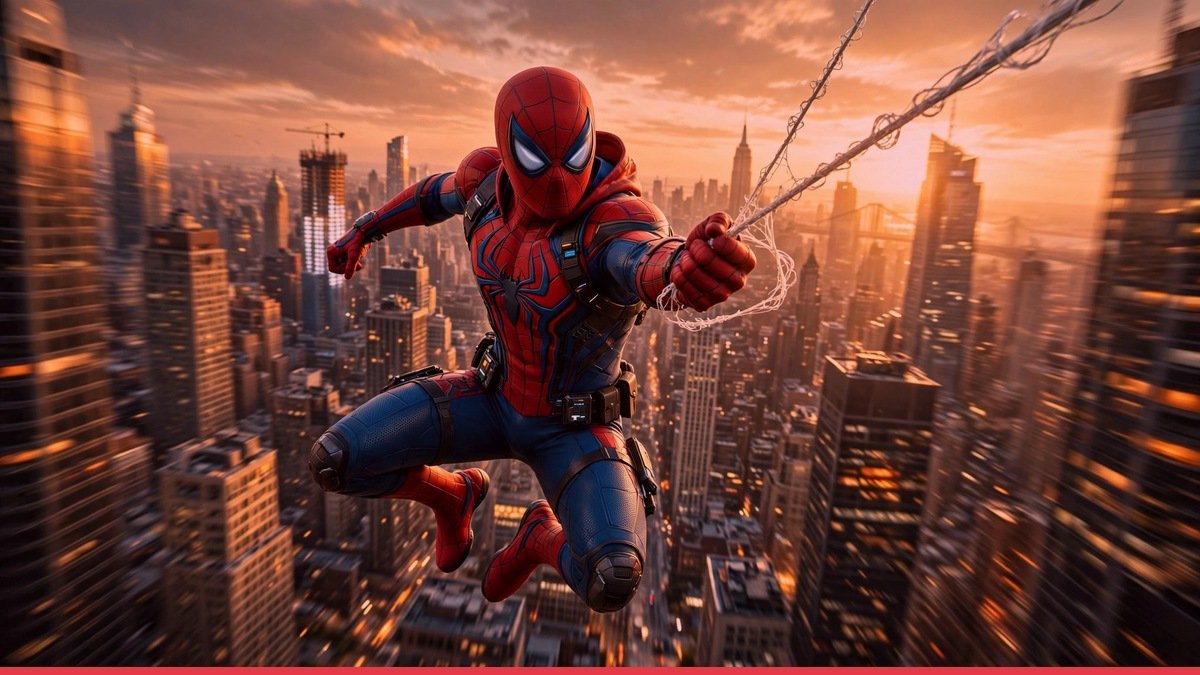
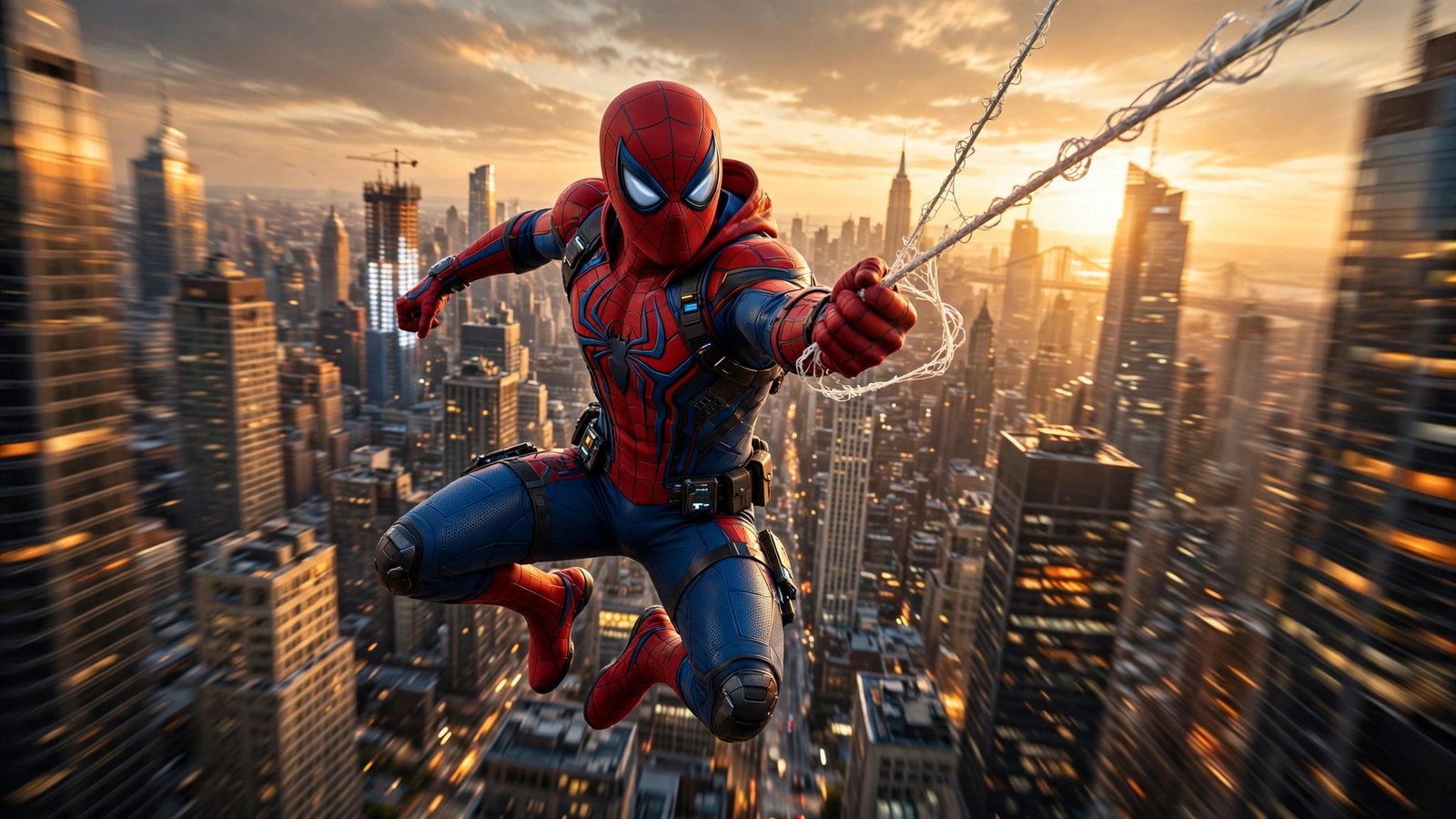
Friday night. You boot up Marvel’s Spider-Man 2, an update prompt is waiting, and twenty minutes later Manhattan looks different. Rooftops hold their edges as you dive between them. Distant windows stop shimmering. The suit’s webbing stays crisp at full swing speed, and nothing in the settings menu asks you to pay for it. That’s PS5 QSSR doing its job — Sony’s new AI upscaler for the regular PS5, now live in Spider-Man 2 and rolling out to five more games over the coming weeks.
Sony announced the six-game wave on November 13, 2026, on the PlayStation Blog, six weeks after QSSR debuted on October 1 in Marvel’s Wolverine and Ghost of Yotei. The headline number is the one that matters most: more than 100 million PS5 consoles are out in the world as of November 10, and every single one of them can run this. No new hardware, no Pro upgrade, no subscription. A free patch makes games you already own look sharper — with one catch the developers don’t hide. It costs your console a few milliseconds per frame, and in some modes that bill is worth paying attention to.
What is PS5 QSSR?
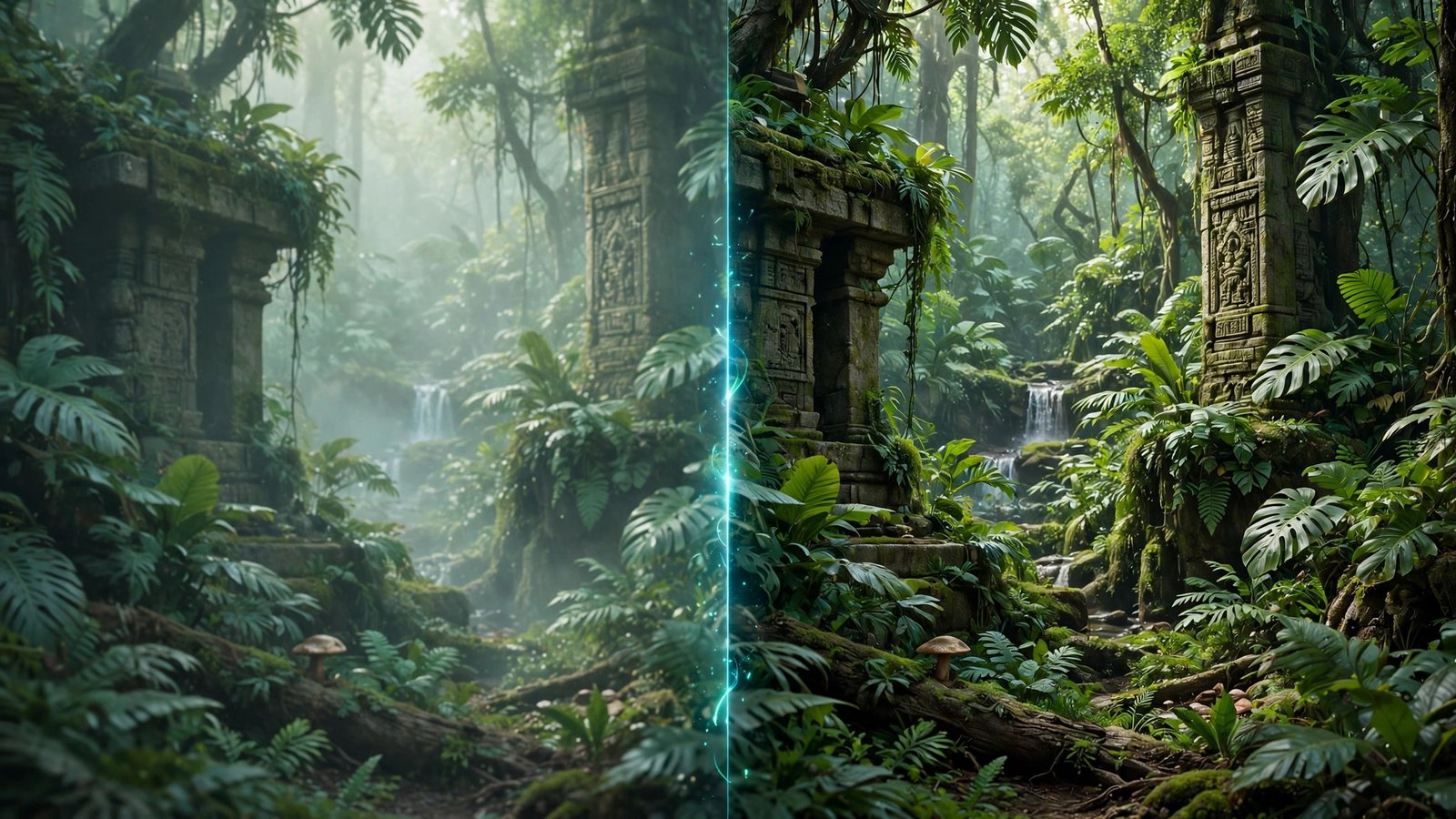
PS5 QSSR is Sony’s AI upscaling for the base PS5: a trained neural network that rebuilds a lower-resolution image into a sharper, steadier one, so games look closer to native 4K. Short for Quick Spectral Super Resolution, it arrived October 1, 2026, as a lighter version of the PS5 Pro’s PSSR, built through Project Amethyst with AMD.
Here’s the plain-English version. Your PS5 renders a game at, say, 864p or 1440p, because rendering at full 4K would tank the frame rate. Then an upscaler stretches that image to your TV’s resolution. Old upscalers mostly guess — they smear pixels and hope. QSSR guesses smarter: it learned from thousands of game frames what a sharp edge, a strand of hair, or a distant window is supposed to look like, then rebuilds the picture with that knowledge. Sony says the result brings sharper details, cleaner edges, and a more stable image than traditional upscalers, and the developers who’ve shipped it back that up in their own words.
Two things make QSSR different from a normal graphics option. First, it comes per game, through patches — there’s no system-wide switch that sharpens your whole library overnight. Second, it’s a software upgrade for hardware you already own. The PS5 turns six years old later this month, and Sony is squeezing more life out of the same box instead of asking you to buy a new one. That’s the story here, and it’s why the six-game list matters more than the tech demo.
PS5 QSSR vs PSSR
PS5 QSSR vs PSSR comes down to one sentence: PSSR is the full-strength upscaler built for the PS5 Pro’s dedicated machine-learning hardware, and QSSR is a streamlined version tuned to run on the base PS5’s general-purpose GPU. Sony still calls PSSR “the gold standard on PS5 Pro,” while QSSR brings most of the benefit to the 100-million-strong standard console.
Both grew out of Project Amethyst, and both share the same interface — that’s the detail that explains why this rollout is happening so fast. Any studio that already wired its game up for PSSR on Pro can bring QSSR to the base PS5 with far less work than building a new upscaler from scratch. Sony’s own post calls PSSR-supporting games a “natural” fit for the upgrade, and the six-game list proves it: Insomniac, Remedy, Embark, Hello Games, and Expression all had PSSR experience or a Pro version to build from.
| QSSR (base PS5) | PSSR (PS5 Pro) | |
|---|---|---|
| Console | Standard PS5 — 100M+ sold | PS5 Pro only |
| Hardware | Runs on the regular GPU, streamlined neural network | Dedicated machine-learning hardware |
| Image quality | Sharper detail and steadier image than old upscalers | Sony’s best — “the gold standard on PS5 Pro” |
| Cost | Free, per-game patch | Free, per-game patch (Pro required) |
| Games so far | 3 live, 5 more announced | 100+ titles and counting |
| Born from | Project Amethyst (Sony + AMD) | Project Amethyst (Sony + AMD) |
Pro owners shouldn’t feel shortchanged. PSSR stays the better upscaler, and nothing in Sony’s announcement takes anything away from it — the Pro’s hardware still does heavier AI work per frame. What changed is the floor. Before QSSR, base PS5 owners watched Pro owners get the sharp picture while they got the smeary one. Now the gap is a difference of degree, not a different league. If you own a Pro, keep playing the Pro version. If you own the standard console — and statistically, you do — QSSR is the first time Sony’s best image tech has come to you instead of asking you to come to it.
PS5 QSSR games list
The PS5 QSSR games list now holds eight titles: three live today and five more on the way. Marvel’s Wolverine and Ghost of Yotei got QSSR on October 1, 2026, Marvel’s Spider-Man 2 went live November 13, and Control Resonant, Arc Raiders, The Finals, No Man’s Sky, and Hell Let Loose: Vietnam follow over the coming weeks.
| Game | Developer | QSSR status | When |
|---|---|---|---|
| Marvel’s Wolverine | Insomniac Games | Live | October 1, 2026 |
| Ghost of Yotei | Sucker Punch | Live | October 1, 2026 |
| Marvel’s Spider-Man 2 | Insomniac Games | Live now | November 13, 2026 |
| Control Resonant | Remedy Entertainment | December update | December 2026 |
| Arc Raiders | Embark Studios | Coming soon | No date yet |
| The Finals | Embark Studios | Coming soon | No date yet |
| No Man’s Sky | Hello Games | In the next few weeks | No firm date yet |
| Hell Let Loose: Vietnam | Expression Games | Upcoming patch | No date yet |
Three of those eight are already playable with QSSR today, and the split tells you how Sony picked them. Wolverine and Ghost of Yotei were launch partners — the two games Sony used to prove the tech worked at all. Spider-Man 2 is the first game from the second wave, and it’s the one most PS5 owners actually have sitting on their home screen. The other five are the pipeline: one with a firm month, two sharing a studio and a “coming soon,” one with a founder promising weeks, and one with an open-ended patch window. None of them has a day-one date except Spider-Man 2, so treat the table above as Sony’s word, not a release calendar.
What jumps out is the range. A superhero blockbuster, a samurai epic, a reality-bending action game, two shooters from the same studio, a ten-year-old space explorer that never stops updating, and a Vietnam jungle shooter. That’s not a genre push — it’s a compatibility push. Sony picked games whose engines already spoke PSSR’s language, then let each studio say when its patch would be ready. If your favorite isn’t on the list, that doesn’t mean it’s rejected. Sony closed its post with the line that developers are “just getting started” and more games are coming in the following months, and the shared PSSR interface means the next batch should arrive faster than this one did. Sony named eight games and eight only — the list is the list, and everything else is a rumor until a studio says otherwise.
Spider-Man 2 QSSR update
The Spider-Man 2 QSSR update is live now on PS5, and it covers both Fidelity and Performance modes — you don’t have to pick a mode to get the sharper picture. Insomniac’s head of technology, Mike Fitzgerald, said the studio brought QSSR over after strong results in Marvel’s Wolverine, and players can download the patch today.
Why does the mode detail matter? Because most upscalers force a trade. Fidelity mode already targets the prettiest picture, so an upscaler there is polishing something good. Performance mode targets frame rate, so an upscaler there is doing rescue work — rebuilding a lower-resolution image while the game holds 60 frames per second. Fitzgerald confirming both modes means Insomniac trusts QSSR in the hard case. Swinging through Manhattan at speed is exactly where old upscalers fall apart: fine detail shimmers, distant geometry crawls, and the whole image buzzes.
Spider-Man 2 also makes sense as the poster child because of who already owns it. It’s a 2023 title, one of the best-selling PS5 exclusives ever, and it sits in millions of libraries — including plenty of players who finished the story and moved on. A free patch that makes a game you already own look better is the easiest reason to reinstall something, and Sony knows it. Once the update finishes downloading, our best PS5 games of 2026 roundup covers the rest of the library worth your time.
What does QSSR cost your frame rate?
QSSR costs a few milliseconds of GPU time per frame — roughly 1.5 to 1.8ms in Digital Foundry’s hands-on with Marvel’s Wolverine, as reported by GameSpot, and up to about 4.4ms at fidelity-mode settings, depending on the output resolution. That’s the honest price of the sharper picture, and whether it matters depends entirely on which mode you play in.
Do the math with me. At 60 frames per second, each frame gets 16.7 milliseconds of total budget. An extra 1.5 to 1.8ms is about a tenth of that budget — noticeable to a stopwatch, invisible to your eyes if the game still holds 60. Digital Foundry measured that cost in Wolverine’s uncapped performance mode, upscaling from 864p to 1440p, against Insomniac’s own existing upscaler. The image got cleaner and steadier, the frame rate didn’t fall off a cliff, and the trade landed on the right side. That’s the performance-mode story, and it’s a good one.
Fidelity mode is where the bill gets bigger. At higher output resolutions the cost climbs toward 4.4ms per frame — more than a quarter of a 60fps frame budget, or about an eighth of a 30fps frame’s 33.3ms. In a 30fps fidelity mode, the game has room to absorb it. In a 60fps target, it doesn’t. That’s why the smartest way to read Sony’s rollout is mode by mode, not game by game: performance mode gets a nearly free lunch, fidelity mode pays a real price for a prettier picture. Neither is a dealbreaker. Both deserve a glance at the frame-rate counter the first time you play with QSSR on — and five of the eight games still have no firm date, so the wait itself is the second cost.
Who should care — and who can skip it?
Care a lot if you own a base PS5 and play the games on the list. You just got a free graphics upgrade, and Spider-Man 2 alone is reason enough to download the patch. Care even more if you play in performance mode, where QSSR’s cost is smallest and its benefit — a steadier image at speed — is biggest.
Skip the hype if none of the eight games is on your playlist. QSSR changes nothing in a game that hasn’t been patched for it — your library looks exactly the same today as it did last week. Skip it too if you already own a Pro and play everything there; PSSR remains the better upscaler, and QSSR was never aimed at you. And if you play on a small TV or from across a big living room, be honest with yourself: the difference between a good upscaler and a great one shrinks with distance. The upgrade is real, but it’s a sharpness upgrade, not a new game.
One group sits in the middle: players eyeing the Pro. QSSR doesn’t kill the Pro’s case — the Pro still has stronger hardware, more PSSR-supported games, and headroom QSSR can’t match. What it does is raise the price of waiting. If your base PS5 now looks this good for free, the Pro has to earn its premium on something other than image quality alone.
How to get PS5 QSSR on your PS5
Getting QSSR on your PS5 takes no setup and no purchase: update the game, and the patch brings QSSR with it. Sony delivers the tech per game, not as a system update, so there’s nothing to enable in the console settings and nothing to download separately. For Spider-Man 2, the November 13 patch is live now.
What you see after that depends on the game. In Marvel’s Wolverine, Insomniac’s patch notes say QSSR runs on by default. In Ghost of Yotei, Sony describes it as an additional graphics option. Spider-Man 2 applies it in both Fidelity and Performance modes, per Insomniac. The pattern to expect: open the game’s graphics or display settings after patching, look for the upscaler option, and pick the mode you prefer. If a game doesn’t show a QSSR toggle, the patch may have it on by default — and if the game isn’t on the eight-title list yet, no setting will make it appear. For the rest of your setup, our Best Gaming Gear 2026 hub covers the displays and accessories that actually show off a sharper image.
What’s still missing?
What’s still missing is scale. Eight games is a strong start and a tiny library. PSSR on Pro covers 100+ titles; QSSR covers eight — three live, five incoming. Sony’s promise of more games “in the coming months” is the whole ballgame: if the next wave lands in early 2027 with twenty games, QSSR becomes the default PS5 experience.
The other open question is the Pro’s future. If QSSR keeps improving — and Project Amethyst is an ongoing collaboration, not a one-off — the base PS5 keeps closing the gap. Sony has every reason to keep both consoles attractive, which means PSSR on Pro should keep its lead. Watch the next PSSR update the way you watch the next QSSR wave: the two are siblings, and Sony’s balancing act between them decides what your console looks like in 2027.
FAQ
Is PS5 QSSR free?
Yes. QSSR arrives through free game patches — there’s no purchase, no subscription, and no new hardware. If you own a base PS5 and a game on the list, the update costs you download time and nothing else.
Do I need a PS5 Pro for QSSR?
No. QSSR is built for the standard PS5. The PS5 Pro keeps PSSR, which Sony calls the gold standard on Pro, while QSSR brings AI upscaling to the regular console you already own.
Which games support PS5 QSSR right now?
Three games have QSSR live today: Marvel’s Wolverine, Ghost of Yotei, and Marvel’s Spider-Man 2, which went live November 13, 2026. Five more are announced: Control Resonant in December, Arc Raiders and The Finals coming soon, No Man’s Sky in the next few weeks, and Hell Let Loose: Vietnam in an upcoming patch.
Does QSSR lower my frame rate?
It can cost a few milliseconds per frame — about 1.5 to 1.8ms in Digital Foundry’s Wolverine performance-mode test, and up to roughly 4.4ms at fidelity settings. In performance mode that cost is small against a 16.7ms frame budget at 60fps; in fidelity mode it’s bigger, so check your frame rate the first time you play with it on.
How is QSSR different from PSSR?
PSSR is the full-strength upscaler for PS5 Pro’s dedicated machine-learning hardware, while QSSR is a streamlined version tuned for the base PS5’s GPU. Both come from Project Amethyst, Sony’s collaboration with AMD, and both share the same interface — which is why PSSR games are the natural first candidates for QSSR.
Will more games get QSSR?
Sony says yes: developers are “just getting started,” with more games coming to PS5 in the following months. No other titles have been named yet, so the eight-game list in this article is the complete official lineup as of November 15, 2026.
Six years into the PS5’s life, Sony just handed 100 million console owners a free graphics upgrade — and the honest verdict on PS5 QSSR is that it’s real, it’s already good in Spider-Man 2, and it’s still early. The image is sharper, the cost in performance mode is small, and the list is short. Download the Spider-Man 2 patch tonight, keep an eye on Control Resonant in December, and judge QSSR by the next wave, not this one. If Sony’s second batch is bigger than its first, the base PS5’s best years might still be ahead of it.
Keep playing: pair the sharper picture with sound to match — our best PS5 headsets of 2026 — and browse the full catalog in the EWM PLAY shop.