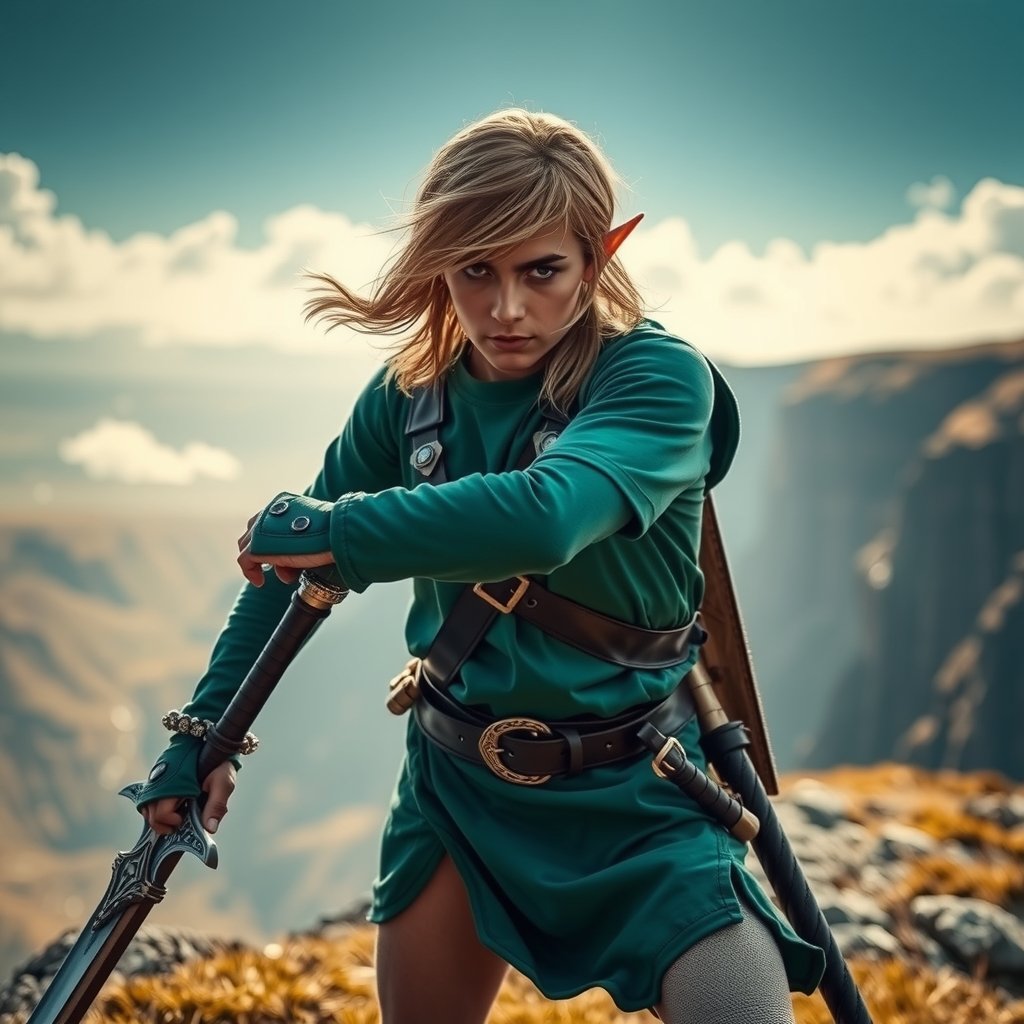
Zelda actor Benjamin Ainsworth says he was too young to play Breath of the Wild’s Link and laid out how he’s getting ready for a live-action take — the nuance in that admission matters more than the headline. I spoke with him (again) to parse five revealing bits about casting, tone and what fans should actually expect from this adaptation.
Key quotes from Benjamin Ainsworth — Zelda
He spoke plainly: “I was just too young.” That line stuck with me because it’s both simple and oddly useful — it frames how the production thinks about Link as a character rather than a moving avatar. In several short answers Ainsworth gave, he kept returning to the idea that Link is a role that needs both physicality and a certain emotional maturity.
Zelda and the casting decision
“They wanted someone who could carry silence and still be present,” he said, which reads like a production note but was offered as a childlike observation from a young actor who’s already weathered attention. He emphasized learning to watch his breath, control small facial shifts and hold poses that look natural on camera — the kind of training that’s invisible in final scenes but critical during shooting.
Those quotes tell us two things. First, the filmmakers have a concrete idea of Link as a largely expressive, almost wordless lead. Second, Ainsworth understands what’s being asked: not just swordwork and survival skills, but a quiet physical performance. If you’re the sort of fan who pauses cutscenes to study the smallest animation, you’ll appreciate what he’s describing.
Why he says he was too young for Breath of the Wild
Ainsworth’s line about being too young for Breath of the Wild isn’t him dodging the game’s legacy — it’s him acknowledging scale. Breath of the Wild’s Link carries weighty silence and a weariness that suggests long exposure to danger. He told me he admired the game’s Link but felt he lacked the lived-in edges the role would require.
He described sitting with concept artists and stunt coordinators and realizing he hadn’t yet lived through the kind of small, physical choices that turn a young actor into an older-seeming character. That’s not a maturity critique so much as an honesty about the gap between motion-capture voicework and a live-action lead who must sell long, emotionally quiet sequences.
For practical players, Ainsworth mentioned training on precise controllers to hone his reflexes; he’s the kind of actor who’s also experimenting with input devices at home. He said veteran players quietly rely on a quality controller like the PlayStation DualSense Official when they test timing and feedback for motion capture — which makes sense given how much haptic nuance the DualSense can provide in modern games. Sony PlayStation DualSense Official is a practical tool for translating timing into body memory, he joked.
If you’ve been hunting for deals, the recent PS5 bundles and Target promotions are still worth checking out as background context for console-anchored fandom; our round-up of PS5 Target deals has details on where players are finding stock and deals right now.
How the actor is preparing for the live-action Link role
Preparation for Link, he says, is threefold: movement, silence and environmental acting. Movement training is obvious — swordplay, parkour basics, horse work — but Ainsworth also spends time learning how to be still in a frame. He practices being the point of focus in wide shots so that the camera has permission to linger.
He’s also thought about props. For hours he watched motion-capture sequences and replayed combat clips to internalize rhythm. He mentioned sitting in front of monitors with calibrated color and motion to study how light hits armor, and that’s where screen hardware becomes part of the practice. People working with him recommended a monitor that supports a fast refresh and deep color range; something like the Lytmi Pro Immersion Monitor has been in conversation among his circle for accurate motion and color representation. Lytmi Pro Immersion Monitor, he said offhand, helps judge how subtle movements read at 60–120fps.
He’s also adjusting his home workspace to reduce eye strain and match set lighting during off days; more than one indie actor recommended a monitor light bar to keep long study sessions comfortable. A practical light like the Quntis Monitor Light Bar reduces screen glare while keeping contrast intact, which matters when you’re replaying low-light game footage late into the night. Quntis Monitor Light Bar, he told me, was a small change with real effect.
| Product | Use case | Key benefit |
|---|---|---|
| Sony PlayStation DualSense Official | Controller feedback for motion timing | Adaptive triggers and haptics |
| Tilted Nation RGB Gaming | Gaming chair comfort during long rehearsal hours | Adjustable lumbar support and RGB accents |
| Lytmi Pro Immersion Monitor | Reference monitor for motion and color | High refresh and accurate color |
| Quntis Monitor Light Bar | Even desk lighting during review sessions | Reduced glare and eye strain |
He also tests how light and color read by shooting short scenes on his phone and comparing them to reference footage. That same habit is why some creators recommend a steady chair — after long days you want a chair that doesn’t make you fidget. A model like the Tilted Nation RGB Gaming chair is next on his list for comfort during playback sessions; he said, with a laugh, that a supportive seat lets you sit through hours of reference clips without losing focus. Tilted Nation RGB Gaming was a name he’d heard from stunt coordinators who travel between set visits.
He’s doing sword drills with stunt doubles, yes, but he’s equally invested in tiny emotional beats: learning how to respond to a silence that lasts 10 seconds on screen. You can practice that at home by watching a cutscene without sound and trying to mirror the physical choices — something any serious fan can try with the Marvel Fighting Evolution deep-dive we ran, which explores how motion and pause shape character combat scenes.
What this means for the Legend of Zelda movie timeline and tone
All this preparation signals a production taking tone seriously. When actors train to hold still, it suggests the movie plans to lean into long visual beats and environmental storytelling rather than quick-cut action only. It opens the door to a film that respects what made Breath of the Wild feel so cinematic: the long wandering shots, the small interactions with world objects, the mood of discovery.
That said, Ainsworth also stressed flexibility. He expects the script to lean on Link’s physical expressiveness rather than dialogue, but he did not rule out sequences of levity or straightforward action beats. The balance will determine whether this feels like a faithful adaptation or a translation that borrows elements while crafting a new cinematic identity.
For fans trying to place the film in a timeline, I’d flag this: the filmmakers are building a grounded Link and anchoring his performance in physical work, which nudges the timeline toward stories that reward silent, introspective moments. If you want a concrete theory, think less of a direct 1:1 recreation of Breath of the Wild’s plot and more of an adaptation that borrows its textures and cadence.
If you’re buying equipment to follow along at home, a comfortable setup helps. Long watch sessions are better with a good monitor and light; for those upgrading their desk, the Lytmi Pro Immersion Monitor and Quntis Monitor Light Bar I mentioned earlier are sensible picks that pros and hobbyists use. Also keep an eye on preorder windows — our Star Trek preorder guide is a good reference for how to act fast when big media goes up for sale, because these tie-ins tend to move quickly.
Fan and community reactions — expectations vs. reality
Fans are already polishing pitchforks and bouquets in equal measure. On one hand, Ainsworth’s youth and relative inexperience set off alarms among those who want an older, weathered Link. On the other, a younger Link who grows into the role across a multi-film arc is exactly what some long-form adaptation fans hope for.
Community chatter is split between those demanding fidelity to specific game beats and those open to tonal reinterpretation. You’ll find the sharpest speculation on major outlets and discussion boards; IGN ran a piece compiling early reactions and developer commentary that’s a useful snapshot of the discourse. IGN’s coverage highlights how leaks, interviews and casting notes fuel different expectations.
If you’re the type who wants to help the film succeed, here’s pragmatic advice: keep your expectations flexible and your critiques specific. Saying “this isn’t like the game” is broad; saying “the film altered Link’s motivation in scene X” is useful criticism for creators. Expect a mix of moods — quiet exploration, character beats, and set-piece action. You’ll see the influence of Breath of the Wild in the environment and the silent, observational bits; whether the plot mirrors the game is still an open question.
Finally, don’t be surprised if the marketing reframes the film several times. Early interviews like Ainsworth’s set the tone in one direction; trailers will emphasize spectacle; the final cut may sit somewhere in between. You, as a viewer, are allowed to enjoy elements from both camps.
Frequently Asked Questions
Is Benjamin Ainsworth confirmed as Link for the Zelda movie?
Yes, he’s the actor tied to the live-action Link role in recent interviews. The production has been discussing his preparation publicly, which is why his comments are getting attention.
Why did he say he was too young for Breath of the Wild?
He meant he hadn’t yet developed the lived-in physicality and quiet emotional weight the game’s Link suggests. It’s about the performance demands, not a knock on the game or his skill.
How is he preparing for the role?
Movement drills, stillness practice and studying reference footage are key. He’s also adjusting his home setup with gear like better monitors and lighting to make study sessions productive.
Will the movie follow Breath of the Wild’s plot?
There’s no public, definitive timeline tying the movie to Breath of the Wild’s plot beyond actor interviews. Expect tonal borrowing — open spaces and quiet beats — but not necessarily scene-by-scene replication.
Where can I read more about related gaming releases and deals?
We track hardware deals and preorders regularly — check our PS5 Target deals guide, our coverage of new fighting games like Marvel Fighting Evolution, and the Star Trek preorder updates for timing tips.