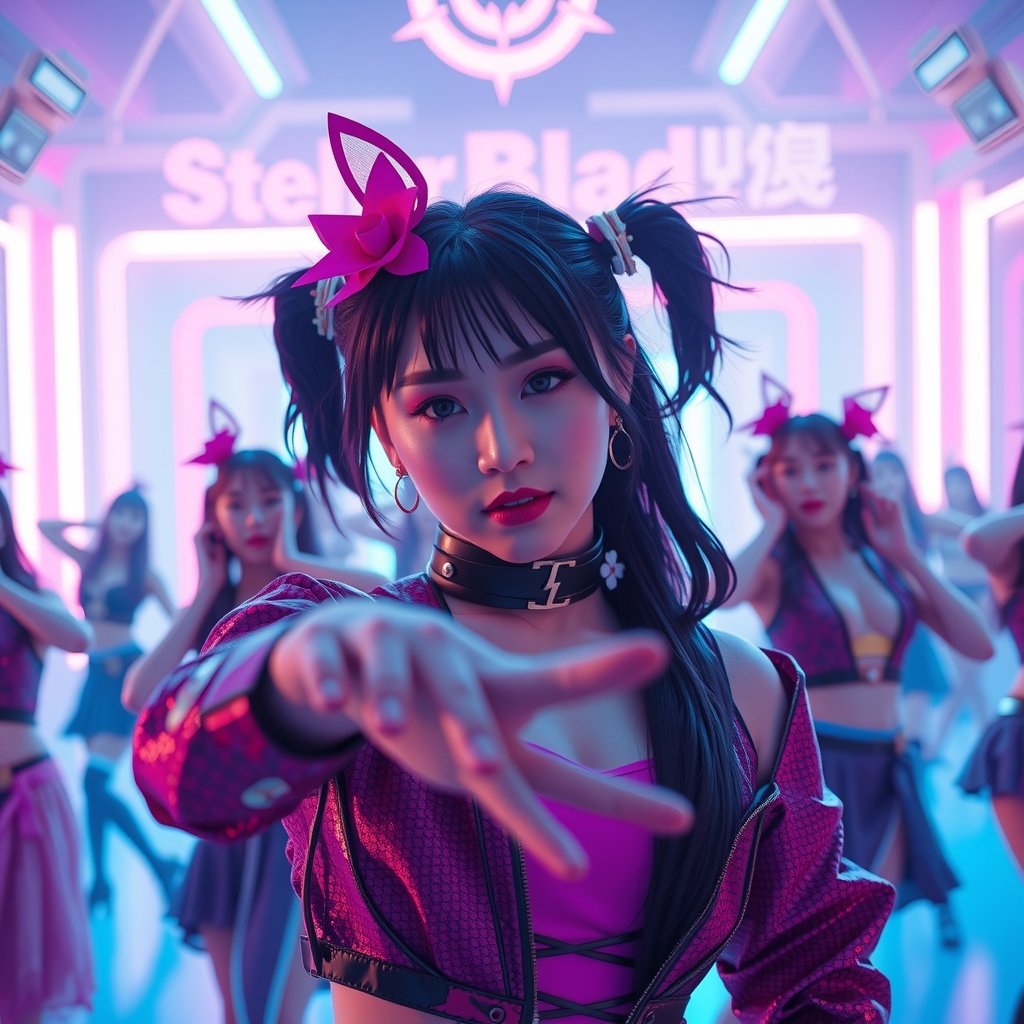
Stellar Blade landed in the middle of a mess this week when Shift Up quietly released an AI-generated K-Pop MV starring Evie and the reaction was immediate and loud. As someone who’s watched communities eat, spit, and reassemble their favorite franchises, this one stings because it hits at authenticity, labor, and what you expect from a studio’s public face.
What Shift Up released and why it matters
Why the Stellar Blade MV grabbed attention
Shift Up posted what was presented as a K-Pop-style music video that used the likeness of Evie, the playable lead in Stellar Blade, performing slick choreography against neon backdrops. The clip landed on official channels, looked polished at a glance, and ran like a normal promotional tie-in—until people started dissecting every frame.
The reason this matters is simple: Stellar Blade is a recent, high-profile release with a passionate fanbase that cares about craft. When something that feels manufactured is put in front of a community that prizes character, motion, and human performance, the reaction will be forceful. You can see that energy spill into threads, streams, and comment sections where long-form debates about art, ownership, and labor are happening now.
I should be clear about scale. This isn’t a minor misstep like a shaky trailer cut; the video was distributed on official channels and clearly meant to carry promotional weight for Stellar Blade. For players who bought the game and who watch every piece of lore and cinematics, this felt like a thin substitute for human artistry.
Why fans are upset — authenticity, credit, and labor concerns
The fire started around questions of authenticity. Fans expect performers—voice actors, motion-capture artists, choreographers—to be visible in the chain of creation. When the MV showed Evie dancing with impossible precision and zero credit given to humans, the community pushed back hard.
There are also credit and labor concerns. Longtime players of the genre are sensitive to how studios acknowledge creative teams. People point out that motion capture performers and choreographers are often freelance and vulnerable; replacing or masking their work with automation without transparent credit is a shortcut that reads as disrespectful. If you care about the people behind the scenes, this looks like an erosion of basic professional courtesy.
Some of the backlash is practical, too. Fans speculate the MV was cheaper and faster to produce because it used synthetic performers. That’s where hardware and your setup tie in: streamers and creators who want to react in high quality are buying gear. Veteran players quietly rely on the Collective Minds PS5 Dual Collective Minds PS5 Dual for reliable local capture during reaction edits, and thinking about what studios cut corners on affects how you consume follow-up content from them.
Beyond economics, there’s an argument about the cultural value of a character. Evie isn’t a faceless mascot; she’s a character people invested in. For many fans, watching a synthetic version of a beloved protagonist perform feels like a small theft. It matters to you because characters are why you spend hours and money in these worlds, and because a vocal minority will often set the tone for how the developer is perceived going forward.
How the MV was generated — AI techniques and visible evidence
Technically, this points to a pipeline built with several common components: a generative image model for facial likeness, motion synthesis or motion retargeting to map choreography onto a 3D model, and neural upscalers to polish the output. All of this is doable now with off-the-shelf tools and custom scripts; you don’t need a full mocap studio to fake something that looks good on first watch.
Fans and analysts who paused frame-by-frame noticed repeating pattern noise, odd hand positions, and hair clipping that never quite resolved. Those visual clues, combined with audio that relies on vocal synthesis layers rather than raw takes, build a convincing case that the production leaned heavily on automated elements. For comparison, industry write-ups from outlets like IGN have cataloged similar artifacts in other AI-assisted marketing flops. If you strip away the gloss, the MV reads like a sophisticated patch over hollowed creative work.
| Product | Use Case | Why It Matters |
|---|---|---|
| Collective Minds PS5 Dual | Capture and local testing | Simple to set up, reliable for capturing reactions to trailers or MVs |
| Sony PlayStation DualSense Official | General play and haptic feedback testing | Official compatibility; good for stress-testing in-game feel |
| Lytmi Pro Immersion Monitor | Color and motion fidelity | Helps spot artifacts and visual glitches in promotional videos |
| Xergur RGB Gaming Headphone | Audio clarity for analysis | Reveals unnatural audio stitching in synthetic vocals |
It’s worth noting that some defenders argue “AI was only an assist.” The counterpoint is that when a studio chooses to present synthetic output as if it were human-driven, transparency matters. People are not only angry about technique; they are angry about the framing.
Shift Up response, legal risks, and industry ethics
Shift Up’s public messaging so far has been cautious and tight; they issued a short statement thanking fans and promising to look into feedback, but they did not initially explain the creative process behind the video. That silence is costly. In the absence of clarity, rumor and worst-case assumptions fill the gaps.
Legally, companies that use likenesses, choreography, or recorded performances without clear contracts invite trouble. There are also questions around rights to synthetic renditions: who owns an AI-generated dance that copies a real choreographer’s moves? Some of those boundaries are being tested right now in court cases and negotiating rooms. The studio risks claims around unauthorized use, and publishers are watching how a backlash affects future partnerships with talent.
Ethically, this episode pushes a conversation the industry has been staring at for years: how much of the creative pipeline is replaceable before the value chain collapses? If studios can present an Evie MV without paying performers or giving visible credit, what incentive remains to hire human choreographers and mocap actors? You should care because those shifts affect not just marketing, but the livelihoods of people who make the cultural products you cherish.
On the tech side, you can also see practical consequences. Creators and streamers who want to reproduce or critique the clip need good gear; the PS5 deals roundup I keep an eye on is useful if you’re building a setup to analyze trailers or MVs frame-by-frame, and picking the right controller and capture gear can be a small hedge against missing critical details.
Impact on Stellar Blade, future marketing, and community trust
Where this lands for Stellar Blade is messy. The game itself is separate from the MV, but perception matters. Players often fold marketing into their judgment of a studio’s values. If Shift Up is seen as opaque or shortcut-happy, future announcements for DLC, collaborations, or live events will be met with skepticism. Trust is slow to build and fast to shatter.
Marketing wise, studios may take two routes after a backlash like this: double down on AI-driven content because it’s cheap and efficient, or step back and reinvest in transparent, human-centered campaigns. If you run social channels or report on games, you can already see some publishers choosing the latter path, commissioning behind-the-scenes pieces and credits to reestablish goodwill. That kind of PR therapy is expensive, but often the only thing that patches community trust.
For the fans who bought Stellar Blade, the immediate impact is emotional. You might feel cheated when a new piece of content doesn’t respect the same values that drew you to the game. For players who haven’t bought it yet, this controversy becomes part of the purchase calculus—some will wait to see how the studio responds, others will move on. The long-term commercial consequences depend on whether Shift Up treats this as a one-off mistake or a pattern.
Personally, I hope the industry uses this as a reset: credit clearly, disclose tools used, and respect labor. You don’t have to be technophobic to be against obscuring human work. And if you want to keep a close eye on how tie-in media shapes public perception, I wrote a piece that tracks similar shifts in franchise PR over time—it’s useful context if you’re thinking about how this controversy might ripple into other fandoms like the ongoing coverage of cinematic tie-ins; see my notes on the Zelda movie and cross-promotions here: Zelda Link movie analysis, and for how licensed fighter rosters play with fan expectations, this breakdown is helpful: Marvel fighting evolution.
The bottom line is blunt: Stellar Blade’s promotional MV put a bright, demonstrable example of AI-for-marketing in front of a fanbase that values craft. The studio’s next moves will decide whether this becomes a teachable moment or an ongoing stain on their relationship with players. If you care about the people who make games, watch how credits and contracts change over the next year—those are where the consequences will show up first.
Frequently Asked Questions
Was the Evie MV for Stellar Blade actually AI-generated?
Fans and analysts have found visual and audio artifacts consistent with heavy AI assistance, and the studio’s initial lack of detail fueled that conclusion. Shift Up hasn’t fully documented their pipeline publicly, which is why people reached the conclusions they did.
Is this illegal or just unethical?
It can be both; legality depends on contracts and rights for choreographers, performers, and likeness usage, while the ethics angle is about transparency and fair credit. Expect legal scrutiny and industry debates to continue as tools get better.
How will this affect Stellar Blade’s sales or future content?
Short-term sales probably won’t crash, but trust matters for long-term engagement and DLC goodwill. If Shift Up responds poorly, you may see more skepticism around future campaigns.
Can studios still use AI for promos responsibly?
Yes—if they disclose the tools used, credit human contributors, and avoid passing off synthetic work as human performance. Transparency goes a long way toward calming fans and avoiding backlash.
What should fans do if they want clearer crediting in the future?
Speak up, support creators who call out omissions, and reward studios that publish clear credits and behind-the-scenes features. If you vote with attention and money, studios notice—especially when you point to good examples of respectful marketing.