
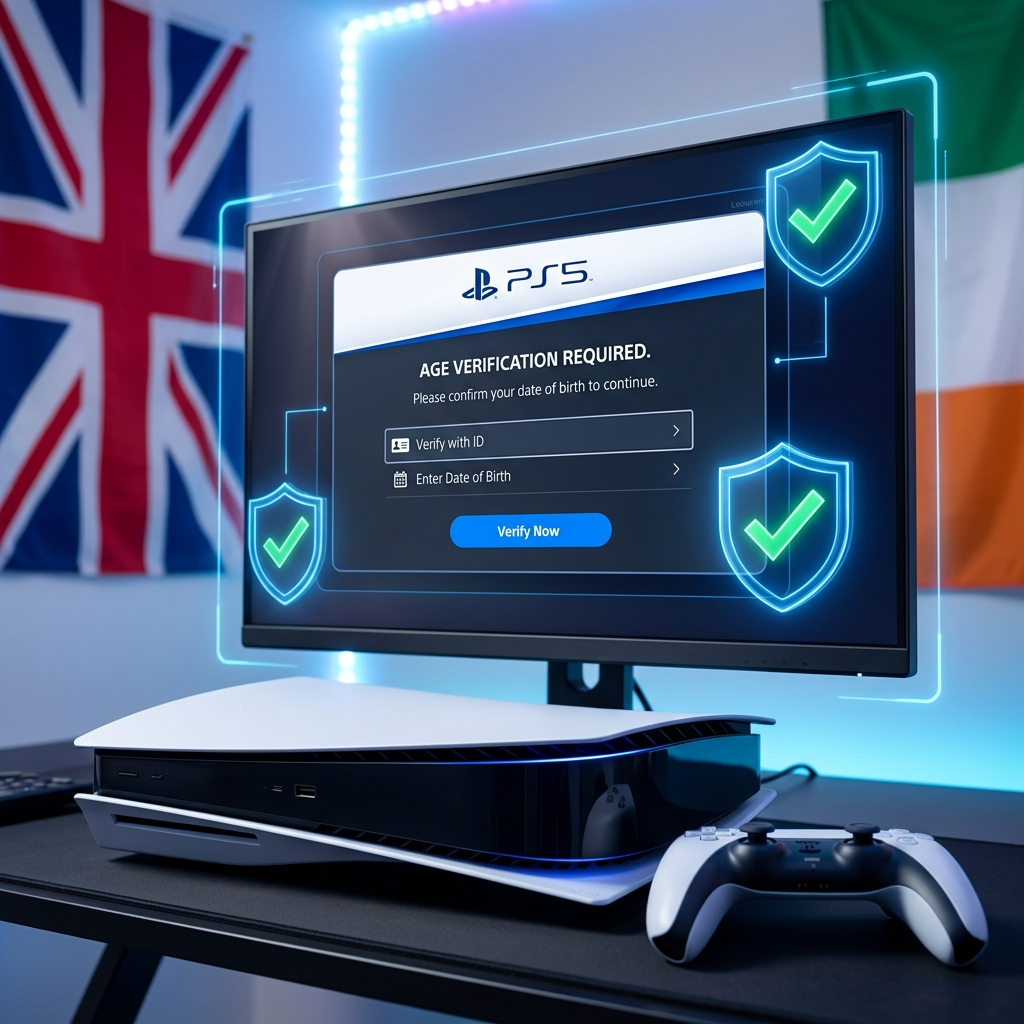
PlayStation age verification checks are rolling out across the UK and Ireland, and if you’re a gamer in these regions, you need to know what’s coming. Sony Interactive Entertainment just dropped a major policy shift that’s going to affect how millions of players access their PlayStation Network accounts. This isn’t just another corporate checkbox exercise—it’s a fundamental change to how we prove we’re old enough to game.
I’ve been tracking this story since the whispers started, and now that the official announcement is out, it’s time to break down everything you need to know. Whether you’re a parent managing your kid’s gaming time or a veteran gamer who just wants to play in peace, these changes are going to touch your PlayStation experience.
Why Sony Is Cracking Down on Age Verification in UK and Ireland
Let’s cut through the PR speak. Sony isn’t doing this because they suddenly became more concerned about child safety—though that’s definitely part of it. The real driver here is regulatory pressure. The UK’s Age Appropriate Design Code and Ireland’s increasingly strict digital safety regulations have put massive pressure on gaming companies to prove they’re protecting minors online.
The UK Digital Economy Act has been the sleeping giant in this conversation. It was enacted years ago, but enforcement is ramping up hard. Gaming platforms are no longer getting a free pass. Sony knows that non-compliance could mean hefty fines—we’re talking millions of pounds—and potential restrictions on operating in these lucrative markets.
But here’s where it gets interesting. This move also positions PlayStation as the “responsible” platform. While competitors might drag their feet, Sony is going all-in on safe gaming practices. Smart PR? Absolutely. But it also means we’re the guinea pigs for what could become the industry standard globally.
The timing is crucial too. With increasing scrutiny on loot boxes, in-game purchases, and online interactions, Sony is essentially saying, “Look, we’re taking this seriously before the government forces us to.” It’s a calculated move that could pay dividends in regulatory goodwill. For us? It means more hoops to jump through, but potentially a safer gaming environment for younger players.
The Verification Process: Step-by-Step Breakdown
Here’s where the rubber meets the road. Sony’s PlayStation age verification process isn’t a simple “Are you 18? Click yes” button anymore. They’ve implemented a multi-tiered system that’s actually pretty robust—and occasionally frustrating.
Initial Account Assessment
When you log into your PlayStation Network account, Sony’s system will flag accounts that need verification. This happens automatically based on the date of birth you provided when creating your account. No DOB? You’re getting flagged. Suspicious activity? Flagged. Account created years ago with minimal info? You guessed it—flagged.
The system prioritizes accounts attempting to access age-restricted content. Trying to buy that M-rated game or access online features? That’s your trigger. You’ll get a notification that you need to verify your age before proceeding. No verification, no access. Sony isn’t messing around.
Document Submission Requirements
This is where it gets real. Sony partnered with third-party verification services to handle the actual age checking. You’ll need to submit legitimate government-issued ID. We’re talking:
- Passport (most commonly accepted)
- Driver’s license (UK or Irish)
- National identity card
- Residence permit cards
The process happens through an encrypted portal. You’ll either upload photos of your ID or, in some cases, use your device’s camera to capture images in real-time. The system checks for authenticity markers—holograms, watermarks, the works. It’s the same tech banks use for digital onboarding, which is reassuring but also feels heavy-handed for a gaming platform.
Processing Time and What Happens Next
Here’s the part nobody tells you upfront: verification isn’t instant. Most checks process within 24-48 hours, but I’ve heard reports of it taking up to five business days during peak periods. That weekend gaming session you planned? Better verify in advance.
Once verified, your account gets permanently flagged as age-confirmed. You won’t need to do this again unless Sony suspects account compromise or sharing. The verification status travels with your account across all PlayStation devices—PS5, PS4, even the PlayStation app on your phone.
Failed verification? You get a limited number of retry attempts. After that, you’ll need to contact PlayStation Support directly. It’s a pain, but it prevents fraud and account abuse.
Pro-Gamer Tip: Verify your account during off-peak hours (weekday mornings) for faster processing. Keep your ID ready and ensure good lighting when taking photos—blurry submissions are the number one reason for verification delays. Also, make sure the name on your PlayStation account matches your ID exactly, or you’re in for a support ticket nightmare.
Impact on Users and Families: The Real Talk
Let’s be honest—this changes the game for a lot of households. If you’re a parent managing multiple accounts for your kids, you’re now looking at a more complex setup. The family management system on PlayStation gets both better and more complicated simultaneously.
For Adult Gamers
If you’re over 18 with proper documentation, this is a minor inconvenience. One-time verification, and you’re back to grinding. The bigger concern is privacy. You’re handing over government ID to a gaming corporation and their third-party verification partners. Sony claims they don’t store your actual ID images permanently—only verification tokens—but that’s a trust exercise some gamers aren’t comfortable with.
I get it. We’ve all seen data breaches. The idea of my passport details floating around Sony’s servers isn’t exactly comforting. But the reality is, this is becoming standard practice across digital services. Your banking app, social media, even some streaming services are heading this direction. Gaming is just catching up.
For Families and Parents
This is where age-appropriate gaming experiences actually get teeth. Parents can now confidently set up child accounts knowing that age restrictions will be enforced. Your 12-year-old can’t just lie about their age to access GTA VI or horror games that’ll give them nightmares.
The family manager role becomes more important. Parents need to verify their own accounts first, then they can manage sub-accounts for children. Each child account gets age-appropriate content filters automatically applied. It’s similar to what we’ve seen with other platforms cracking down on age requirements.
But here’s the catch: enforcement is only as good as the initial setup. If a kid has their own “adult” account from before these changes, that loophole exists until Sony forces re-verification. Smart kids will try to game the system. Vigilant parents need to stay on top of account management.
Edge Cases and Problems
What about gamers who don’t have government-issued ID? Refugees, individuals in transitional housing, young adults without driver’s licenses—they’re getting screwed by this system. Sony has alternative verification methods, but they’re poorly documented and require jumping through customer service hoops.
International accounts are another mess. If you’re a UK resident with a US PlayStation account (common for expats or import gamers), the verification process gets tangled. Similar issues arise for Irish accounts created under UK addresses before the region split.
Global Age Verification Policies: How PlayStation Stacks Up
PlayStation isn’t operating in a vacuum here. Let’s see how their approach compares to other major gaming platforms and international standards.
Xbox and Microsoft’s Approach
Microsoft has been doing age verification through their Microsoft account system for years, but it’s less stringent. They rely more on credit card verification and parental consent models. It’s easier to bypass, which is both a feature and a bug depending on your perspective. They’re likely watching Sony’s UK rollout closely to gauge player reaction before implementing something similar.
Nintendo’s Family-Focused Model
Nintendo takes a different angle. Their parental control app is robust, but actual age verification is lighter. They lean heavily on the assumption that parents will set up Switch accounts for their kids. It works because Nintendo’s brand is family-friendly, but it wouldn’t fly for PlayStation’s more mature content library.
European Union Standards
The EU is pushing for unified age verification across all digital services. Germany and France already have strict requirements. Spain and Italy are implementing similar systems. Sony’s UK and Ireland rollout is likely a testing ground for broader European implementation. Expect this to hit the entire EU by late 2024 or early 2025.
US and Global Markets
The US is the wild west by comparison. No federal age verification mandates for gaming platforms. Some states are pushing individual laws, but it’s fragmented. California’s privacy laws might eventually force similar changes, but we’re years away. Asia-Pacific regions vary wildly—China has extremely strict gaming regulations including real-name verification, while other markets remain relatively open.
Sony’s strategy seems to be: prove the system works in UK/Ireland, refine based on feedback, then roll out globally as regulations demand. It’s a phased approach that minimizes backlash while keeping regulators happy. The Sony Interactive Entertainment social responsibility page frames this as proactive protection rather than reactive compliance.
Privacy Concerns and Data Security
We need to talk about what happens to your data. Sony partners with age verification specialists who use AI and manual review to process IDs. These companies—names like Yoti and Jumio keep coming up—are specialists, but they’re also third parties handling your most sensitive documents.
According to Sony’s updated privacy policy, the verification process works like this: You submit your ID through an encrypted connection. The verification partner extracts necessary data (name, DOB, document authenticity markers) and sends a verification token back to Sony. The actual ID image is supposedly deleted within 24 hours.
Supposedly. That’s the word that keeps me up at night. We’re in an era where trust in digital systems is eroding. Every company claims they don’t store data, right up until the breach happens and we discover they actually kept everything.
Sony’s track record isn’t spotless. Remember the 2011 PlayStation Network breach? 77 million accounts compromised. They’ve massively upgraded security since then, but once burned, twice shy. The difference now is they claim the verification partners hold the liability, not Sony directly. Clever legal maneuvering, but cold comfort if your data leaks.
What This Means for the Future of Gaming
This is just the beginning. Age verification is coming for all digital entertainment. Gaming platforms are actually behind the curve compared to adult content sites and gambling platforms, which have had verification requirements for years.
The next frontier? Continuous verification. Systems that periodically recheck your age status, or AI that monitors behavior to flag potentially underage users bypassing verification. Sounds dystopian? Maybe. But it’s where the tech is heading.
We might also see blockchain-based identity solutions enter gaming. Decentralized ID verification where you control your own credentials and share proof of age without handing over documents. It’s years away from mainstream, but PlayStation and other platforms are definitely exploring it.
The bigger question is whether this actually protects kids or just creates a compliance theater. Determined minors will find workarounds—borrowing parents’ IDs, using fake documents, or accessing content through less regulated platforms. True online safety requires more than verification checkboxes. It needs education, parental involvement, and community standards that go beyond what any automated system can provide.
That said, making it harder for kids to stumble into inappropriate content is still progress. Perfect is the enemy of good. If PlayStation age verification stops even a fraction of underage exposure to mature content, it’s doing its job. The question is whether the trade-off in privacy and convenience is worth it. That’s a debate we’re going to be having for years.
Frequently Asked Questions
Do I need to verify my age if I’ve had my PlayStation account for years?
Yes, if you’re in the UK or Ireland. Sony is requiring verification for all existing accounts accessing age-restricted content, regardless of how long you’ve had your account. Accounts created with incomplete or suspicious age information are being prioritized for verification.
What happens if I don’t have a passport or driver’s license?
Sony accepts multiple forms of government-issued ID including national identity cards and residence permits. If you don’t have any of these, you’ll need to contact PlayStation Support for alternative verification methods. Options may include utility bills combined with other documents, but the process is more complicated.
Is my ID information stored permanently by Sony?
According to Sony’s privacy policy, the actual ID images are processed by third-party verification partners and deleted within 24 hours. Sony only retains a verification token confirming your age status, not the ID documents themselves. However, the verification partners may have their own data retention policies.
Will this age verification system expand to other regions?
Almost certainly. The UK and Ireland rollout is likely a pilot program. As other countries implement similar digital safety regulations, expect Sony to expand PlayStation age verification checks globally. The EU is the next probable target, followed by specific US states with stricter digital protection laws.
Can my child still play online multiplayer games after verification?
Yes, but with restrictions based on their verified age. Child accounts managed through family settings will have age-appropriate content filters applied automatically. They can play multiplayer games rated for their age group, but may have limited communication features and restricted access to user-generated content.
How long does the verification process take?
Most verifications complete within 24-48 hours. During peak periods or if there are issues with your submission, it can take up to five business days. Submit your verification well before you need access to age-restricted content to avoid disruption.
What if the verification system rejects my valid ID?
Common rejection reasons include poor photo quality, glare on the ID, or name mismatches between your ID and PlayStation account. You can resubmit with better photos. If repeated attempts fail, contact PlayStation Support with your reference number. They can manually review cases and provide guidance on fixing account name discrepancies.
The Bottom Line: Necessary Evolution or Overreach?
PlayStation age verification checks represent gaming’s maturation as an industry. We’re no longer the Wild West of entertainment. With that mainstream acceptance comes mainstream regulation. Is it annoying? Sure. Does it introduce privacy concerns? Absolutely. But it’s also a recognition that gaming is powerful, influential, and needs guardrails for younger players.
For adult gamers, this is a one-time hassle in exchange for a more regulated, potentially safer ecosystem. For families, it’s genuinely useful parental control tools with actual enforcement. For privacy advocates, it’s another erosion of digital anonymity that sets concerning precedents.
The implementation in UK and Ireland is just the opening salvo. Watch this space—within two years, most major gaming platforms will have similar systems globally. The age of clicking “Yes, I’m 18” without proof is ending. Whether that’s progress or overreach depends on where you stand on digital privacy versus child protection.
What I know for certain: Sony is making a calculated bet that players will accept these changes in exchange for market access and regulatory compliance. Early reactions are mixed—frustration at the process, appreciation for the intent, and widespread concern about data handling. The long-term success depends on whether Sony can prove the system works without major privacy breaches or user experience disasters.
One thing’s clear: gaming is growing up, and growing up means showing ID at the door. Get your documents ready. This is the new normal.