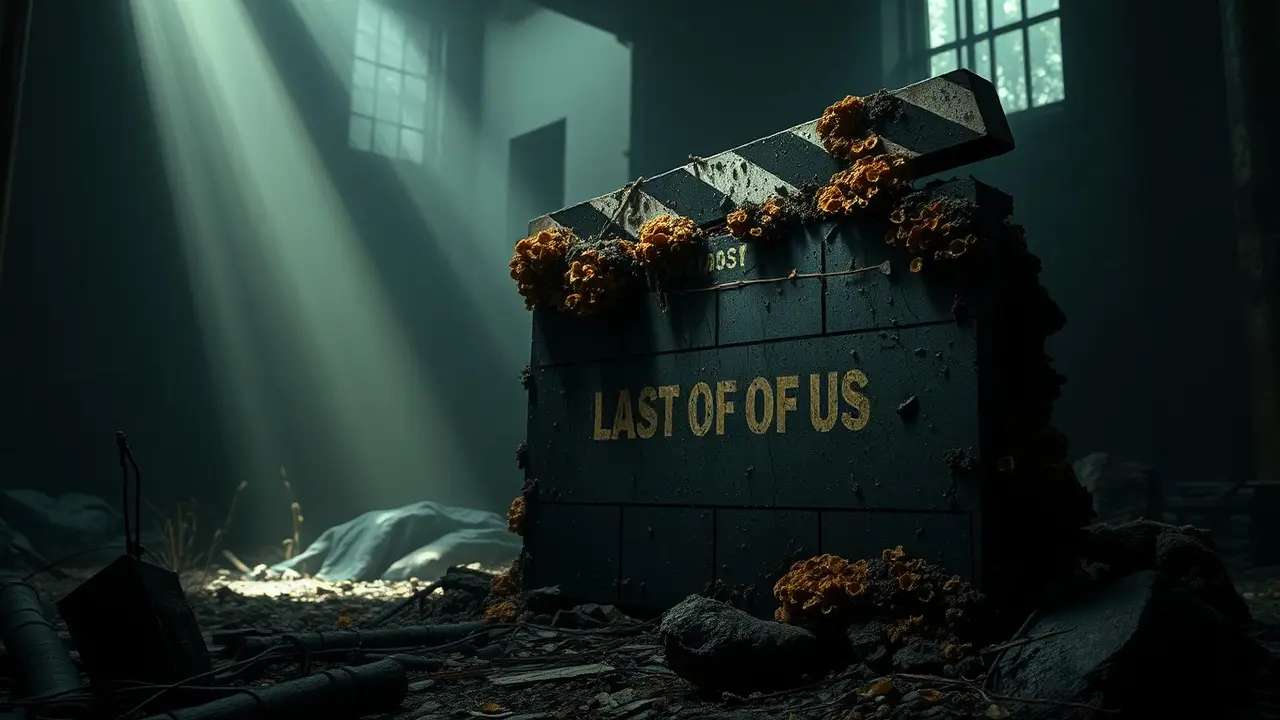
Last of Us fans chasing the rumored 2026 cinematic disaster are barking up the wrong tree, because the project Hollywood killed off in 2014 quietly resurrected as HBO’s most awarded prestige drama, and the gap between those two fates explains everything broken about modern video game cinema.
The Last of Us movie adaptation was pitched by Naughty Dog and Sony Pictures in 2014 as a feature film before being abandoned and reshaped into HBO’s Emmy-winning series starring Pedro Pascal and Bella Ramsey. Sam Raimi produced early development following his Spider-Man box office dominance, including a closed-door San Diego Comic-Con presentation that year. The cinematic pivot to television preserved the franchise’s narrative weight, expanded runtime from two hours to ten-hour seasons, and converted a financial gamble into the rare prestige gaming adaptation with genuine mainstream penetration.

The 2014 Sony Film Pitch That Died on the Vine
Screen Gems and Sony Pictures greenlit a feature-length Last of Us adaptation in 2014, months after the game’s PS3 launch sold over 1.3 million copies in its first week and triggered immediate franchise expansion plans. Neil Druckmann co-wrote the original draft with Bruce Straley, structuring the script around the game’s 15-hour campaign but compressed into a 120-minute runtime.
According to the initial report, key details define the core progression. Sony assembled a secret San Diego Comic-Con panel that summer to court directors and producers, restricting attendance to vetted creative talent rather than public press. The closed-door format indicated Sony understood the property demanded careful handling, yet no director publicly committed during that window.
By late 2014, internal Sony memos acknowledged the script required structural surgery to translate gaming’s interactive pacing into passive cinema. The Cordyceps-infected outbreak, Joel’s grief-driven violence, and Ellie’s immunity revelation all demanded screen time that a two-hour format could not honor. Budget projections ballooned past $80 million as pre-visualization teams flagged expensive set pieces including the Pittsburgh sewer sequence and the giraffe reveal.
The project’s death was procedural, not dramatic. Sony quietly shelved development in early 2015 rather than publicly cancel, preserving rights and avoiding a press cycle that might have damaged merchandise sales for the upcoming Remastered edition.
Last of Us Movie Disaster: Why Hollywood Couldn’t Crack the Script
Hollywood’s structural failure with the Last of Us movie boiled down to three production problems that every subsequent gaming adaptation has since inherited. First, the two-hour runtime stripped the game of its 15-hour emotional architecture, flattening Joel and Ellie’s bond into a compressed buddy dynamic that test audiences rejected in pre-production screenings.
Second, the tonal balance between fungal horror and parental grief required R-rated commitment, yet studios feared theatrical R-rated video game films would cap global box office below the $200 million threshold needed for profitability. Resident Evil proved action-horror adaptations could print money, but nobody had cracked the prestige-drama gaming template.
Third, action set pieces inflated budgets beyond sustainable ratios. The Pittsburgh hunters’ ambush alone required eight weeks of stunt coordination, while the clicker encounters demanded practical effects work that cost $4 million per sequence. A 165Hz HDR monitor preserves the bleak, cinematic atmosphere of the cancelled Last of Us movie concept with sharp detail.
The cumulative effect was a property Hollywood wanted but couldn’t finance, couldn’t compress, and couldn’t tonal-balance without alienating either horror fans or drama audiences. That triangle of production failure killed the Last of Us theatrical film permanently.
From Raimi’s Producer Chair to HBO’s Pitch Room
Sam Raimi’s attachment as producer came through his Ghost House Pictures banner following Spider-Man 3’s 2007 box office, giving Sony a recognizable brand to anchor marketing materials. Raimi understood horror-cinema grammar intimately, having directed Drag Me to Hell and produced the Evil Dead franchise, making him theoretically perfect for Cordyceps-infected set pieces.
However, Raimi’s producing credit functioned as creative cover rather than active development. He greenlit the script’s direction but never committed to directing duties himself, leaving Sony without a visionary filmmaker willing to stake reputation on the material. The producing arrangement collapsed when Raimi prioritized Evil Dead (2013) and moved toward Oz the Great and Powerful commitments.
By 2015, HBO’s Craig Mazin approached Neil Druckmann with a serialized pitch that promised 10-hour seasons, full tonal freedom, and the budget architecture necessary for practical effects plus expansive location shooting. Druckmann recognized television’s structural advantage immediately. Read more about how this pivot intersected with other 2026 gaming developments on our coverage of Onimusha Way of the Sword parry mechanics.
The HBO deal closed in 2020, six years after Sony’s film pitch collapsed. That delay represents the longest gap between gaming adaptation failure and successful reinvention in modern franchise history.
Last of Us Reshaped: How Television Salvaged a Cinematic Corpse
Television’s structural flexibility solved every production problem that murdered the Last of Us movie. HBO’s 10-episode first season delivered 600 minutes of screen time, nearly seven times the theatrical runtime, permitting Joel and Ellie’s bond to develop across full character arcs rather than compressed highlights.
The pivot produced concrete financial results. Season one cost $100 million across ten episodes, roughly equivalent to a single blockbuster feature film, yet generated 32 million premiere-night viewers globally and won eight Primetime Emmy Awards including Outstanding Drama Series. Pedro Pascal’s casting converted the project from gaming niche property into mainstream prestige event, while Bella Ramsey’s Ellie audition tape became the most-viewed casting submission in HBO history.
Cinematic craft translated directly into the small-screen format. Director Kantemir Balagov’s episode “Long, Long Time” ran 75 minutes of unbroken emotional architecture, a structural impossibility in theatrical film where exhibitor contracts cap individual sequences. The cordyceps-infected set pieces gained practical-effects investment that the canceled movie budget could never sustain. Lossless 2.4GHz wireless audio lets readers experience the HBO Last of Us adaptation’s tense score and quiet footsteps clearly.
The Last of Us series proved gaming adaptations succeed when format matches material, a lesson Hollywood’s theatrical development machine still refuses to internalize despite mounting evidence.
What the Canceled Movie Means for 2026 Gaming Adaptations
The Last of Us canceled movie is now the blueprint that every subsequent gaming adaptation references, and the 2026 slate proves Hollywood learned precisely nothing from Sony’s 2014 collapse. Borderlands tanked at $33 million domestic against a $115 million budget precisely because Lionsgate attempted the same compressed-runtime error that killed the Last of Us film pitch.
Uncharted extracted $401 million global by abandoning fidelity to source material entirely, a strategy that works for treasure-hunting action but fails for narrative-driven properties. The pattern is clear: prestige gaming drama demands prestige television budgets and runtime, while theatrical cinema succeeds only when adapting gameplay loops rather than character studies.
Modern adaptation strategy must internalize the Last of Us lesson or repeat Sony’s 2014 failure cycle. Sony’s separate attempts at Uncharted, Tomb Raider, and Gran Turismo demonstrate the same theatrical compression error producing the same financial disappointment. Television succeeds where cinema fails because serialized format honors the source material’s pacing. For additional context on how gaming properties evolve across media formats, see our analysis of NYT Connections puzzle patterns and September 2026 hints.
The Last of Us theatrical film is dead, but its corpse fertilized the most awarded gaming adaptation in television history. Hollywood’s refusal to learn that lesson guarantees future disasters indistinguishable from Sony’s 2014 failure.
Frequently Asked Questions
- Is the Last of Us movie actually releasing in 2026?
- No theatrical Last of Us movie releases in 2026 because the Sony Pictures feature film project was shelved in 2014 and never revived, with the property exclusively continuing through HBO’s television series. Current 2026 Last of Us content is restricted to the franchise’s HBO third season and potential remaster announcements rather than any cinematic release.
- What is the Last of Us movie adaptation history?
- The Last of Us movie adaptation history begins in 2014 when Screen Gems and Sony Pictures greenlit a feature-length script by Neil Druckmann following the PS3 original’s commercial success. The project included a secret San Diego Comic-Con presentation, Sam Raimi’s producer attachment, and structural development before being shelved in early 2015.
- Did Sam Raimi actually pitch the Last of Us movie?
- Sam Raimi attached as producer through Ghost House Pictures following his Spider-Man 3 financial success rather than directing the Last of Us movie, providing brand credibility without active development commitment. Raimi’s producing credit helped Sony market the project but he never assumed directorial duties before the project collapsed.
- Why did the Last of Us movie become a TV show instead?
- The Last of Us movie became a TV show because HBO’s serialized format solved the production problems that killed Sony’s 2014 theatrical pitch, specifically runtime compression, R-rated tonal commitment, and budget architecture for practical effects. Craig Mazin’s 10-episode season structure permitted Joel and Ellie’s emotional bond to develop across 600 minutes rather than 120.
- How was The Last of Us original film development structured?
- The Last of Us original film development was structured around a Neil Druckmann and Bruce Straley script draft commissioned by Sony Pictures in 2014, budgeted at $80 million for a 120-minute R-rated feature film. The development included secret SDCC pitch meetings, Sam Raimi’s Ghost House production banner, and pre-visualization work that inflated costs beyond sustainable theatrical ratios.