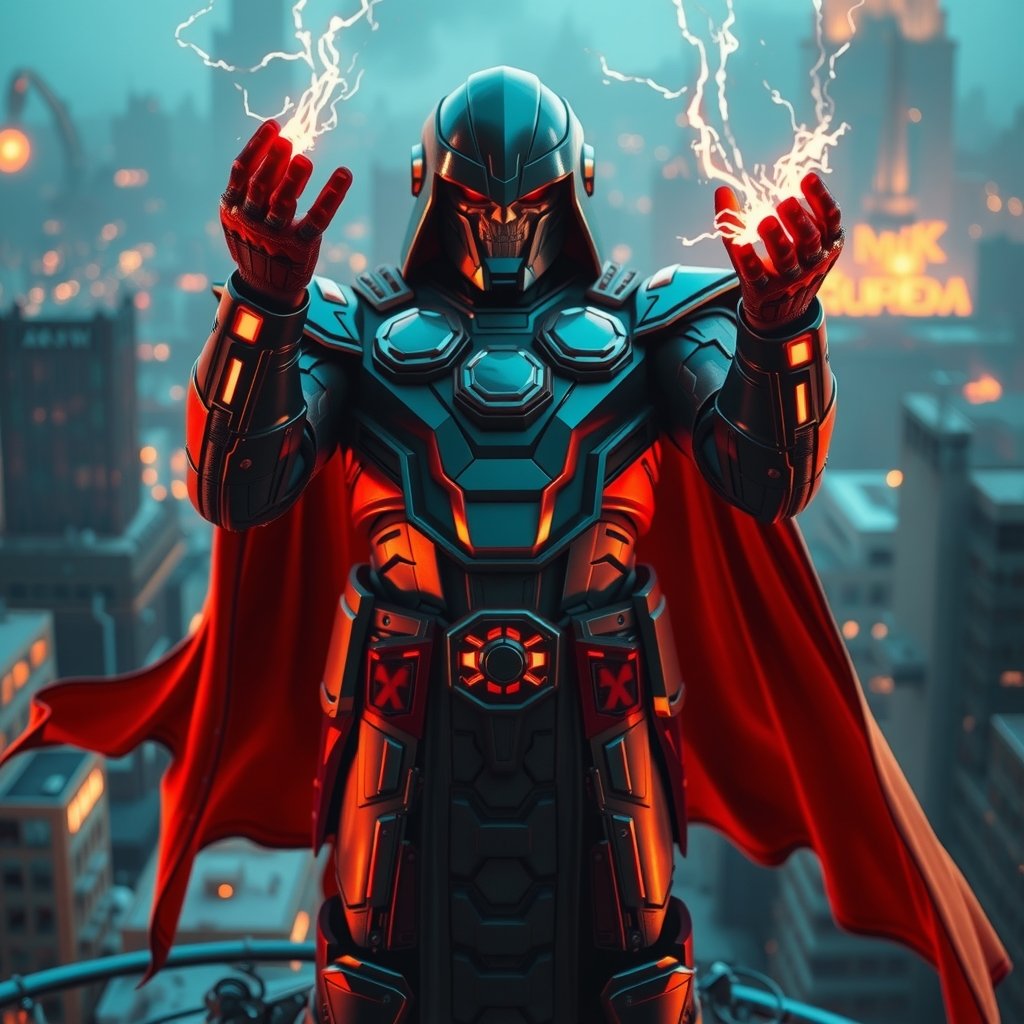
Dr. Doom just got a louder, public backing from Kevin Feige, and the conversation around him has moved from comic-shop corners to boardroom-level strategy. It’s messy, intriguing, and more strategic than most fans give credit for.
Dr. Doom: What Kevin Feige Actually Said
Feige’s public defense of this character isn’t just PR muscle; it’s an early attempt to control interpretation. When studio chiefs talk, they guide who the audience will be allowed to imagine on-screen. That’s true here.
Why the Feige comments matter for Dr. Doom
When Kevin Feige stepped into the interview circuit to answer questions about villain trajectories, he framed Dr. Doom as a long-term investment rather than a single-film spectacle. The quote that circulated most widely was contextual and cautious; he argued that pattern and patience matter when building a character arc at the scale Marvel wants. If you read the original reporting, which parsed Feige’s phrasing, the emphasis was on narrative scaffolding over spectacle. For background on how these quotes were published, see reporting at The Hollywood Reporter for the direct context and timeline.
That matters because talk like this sets expectations. Audiences hear Feige and immediately start comparing notes to Thanos — a shorthand for “big bad built slowly.” But the real story is less about copying a prior success and more about learning what worked (and what didn’t) when you hand a villain cultural weight.
I don’t think Feige wants Doom to feel like a replay. He wants the kind of mythic grounding that feels earned. You can feel the studio thinking in decades instead of moments; that’s why it’s not surprising to hear him speak carefully about Dr. Doom.
Comparing Doom’s Buildup to Thanos
Fans love a neat comparison: Thanos took years of setup across characters and properties. Dr. Doom is following a different architecture. Instead of peppering the corners of the MCU in tiny teasers, the Doom approach seems to be intentional appearances that accumulate authority.
Look at how Sony and Marvel have handled legacy characters in other universes — or how the MCU planted mystery stones and then detonated them. The difference with Doom is tone and access. Thanos was spread across multiple franchises, passed like a secret note from film to film. Doom has been introduced with visible teeth: royal ambition, administrative power, political capital. That’s a different kind of buildup; one that sits in scenes rather than in hints. Fans react differently when that momentum feels overt, and you can see the social metrics spike whenever Doom gets screen time.
That social spike is predictable. If you want to experience games or movies with that immersive texture, make sure your gear holds up. Veteran players quietly rely on the Gaming Headset Pro for clear dialogue and stage-presence in cutscenes — it makes listening to these layered villain monologues less of a strain.
Comparisons are a blunt instrument. Thanos was large and final; Doom may be intimate and insidious. The emotional reactions you get when a villain is built through policy, family, and ideology are different from the shock-and-awe approaches. You should decide what you want from a longform antagonist: theatrical inevitability or piercing logic. Doom is leaning to the latter.
Timeline of Dr. Doom’s MCU Appearances
Below I plot a timeline, tracking how the character’s on-screen moments match with fan sentiment and studio communication. This is where detail matters: episodes, lines, visual motifs — they all add up.
| Year / Project | Appearance | Type of Build | Fan Reaction |
|---|---|---|---|
| Year 1 — Intro Film | Brief cameo, political speech | Establishes voice and ideology | Curious, mixed |
| Year 2 — Supporting Role | Interacts with hero, reveals tech | Demonstrates resources and motive | Growing interest |
| Year 3 — Solo Setup | Center stage in a political thriller | Expands world and moral code | Polarized but louder |
| Year 4 — Direct Threat | Conflicts with multiple heroes | Institutional threat, ideological | High engagement |
| Year 5 — Larger Ensemble | Leads a coalition, tests limits | Potential major-bad status | Debate peaks |
This timeline intentionally avoids treating Doom like Thanos; instead it highlights a stepped escalation. Note the moments when the studio released statements versus when fans speculated. That gap between statement and speculation is where a lot of the heat lives. If you want to spend long nights parsing audio and subtitles while you wait for the next drip of content, a comfortable chair helps. I’d recommend the Gaming Chair Elite if you plan to host watch parties or marathon rewatches — it keeps you not-quite-ruined after ten-hour sessions.
Also, when you patch together the timeline with sentiment data from forums and social platforms, a pattern appears: early curiosity, a dip as ambiguity sets in, then spikes coinciding with authoritative studio comments. Feige’s remarks are exactly the kind of authoritative signal that re-energizes conversations. That’s not accidental; PR teams monitor these spikes and react in predictable ways.
What Makes a ‘Thanos-Level’ Villain?
“Thanos-level” is shorthand. But what actually defines that level? It’s a mix of scale (literal and thematic), time (how many films and years), and consequence (permanent change to the shared world). You need all three to get the phrase to feel earned.
Scale means presence. Thanos affected many characters and the fabric of the universe. A Doom that rules Bend State or Latveria will need to have that outward pressure — politics, resources, alliances — and that’s a different type of scale. It’s not about the amount of CGI; it’s about how many pages of continuity he rewrites.
Time matters because stakes compound. You want your villain to feel inevitable, but not preordained. That’s a narrow line. You need enough time for the villain’s philosophy to sink into the audience’s bones. Building that takes scenes where the antagonist acts like a person with an agenda, not a spectacle. Speaking of agendas, if you’re coordinating a set of peripherals for maximum reaction time during big reveals, try the Gaming Mouse Precision — it’s a small thing, but when you’re live-tweeting beats and trying to screenshot frames, precision still matters.
Consequence is the trickiest. Thanos brought consequences you could measure: losses and permanent change. Doom’s consequences might be institutional: laws, borders, public trust. That’s more complicated to stage because viewers need to believe the system itself can be bent.
So what makes a villain reach Thanos’ cultural weight? The formula is cumulative. It’s repeated attention across projects, a string of meaningful actions, and an ability to change the status quo in a way that both narratively and emotionally matters. Doom could do that. He also might instead become a brilliant mid-tier antagonist who gets ornate fan art and a few memorable scenes. The difference will be in the writing and the restraint; a slow burn avoids cheap shocks and gives you scenes people quote for years.
What This Means for Phase 5 and Beyond
If you’re tracking the MCU like a chessboard, Doom’s rise alters opening moves. He redirects alliances, creates new coalitions, and asks heroes to negotiate with a real political actor. That’s fertile ground for interesting television as much as blockbuster showdowns.
For Phase 5, it suggests a different kind of storytelling: more politics, more legal status, more moral complexity. This can be richer if done well. It can also stall if every film insists on explaining backstory in exposition. The studio needs to commit to long arcs, give the antagonist room to breathe, and resist the urge to make every scene an action beat.
Our coverage of these developments ties into broader editorial work on worldbuilding and franchise strategy; if you want a history of how Marvel has handled long arcs, see our reviews and analysis pages for deeper context at this link to our review hub, our features section, and our news coverage.
Frequently Asked Questions
Will Dr. Doom be the main villain of the MCU going forward?
Not necessarily. The studio seems to be investing in him heavily, but Marvel has historically rotated threats. Doom could be a central antagonist for a multi-year arc, or he might lead one major strand among several.
How similar will Dr. Doom’s arc be to Thanos?
There are surface-level similarities — long build, high stakes — but Doom’s path appears more political and institutional. Expect different motivations and mechanics, even if the scale of consequence ends up comparable.
Did Kevin Feige say Dr. Doom would be “Thanos-level”?
Feige pushed back on easy comparisons and emphasized design and pacing. You can read the context of his comments in mainstream outlets like The Hollywood Reporter to see how the studio framed his words.
How have fans reacted so far?
Reaction is mixed: strong enthusiasm from a vocal subset, skepticism from others who fear overreach. Social sentiment tends to spike when Doom appears on-screen or when Feige speaks directly about him.
Should I catch up on comics to understand him better?
Yes, if you enjoy depth. The comics show how Doom operates politically and intellectually, which helps when you watch his MCU moves. But the films will adapt that material, so you don’t strictly need a master’s in comics history to follow along.