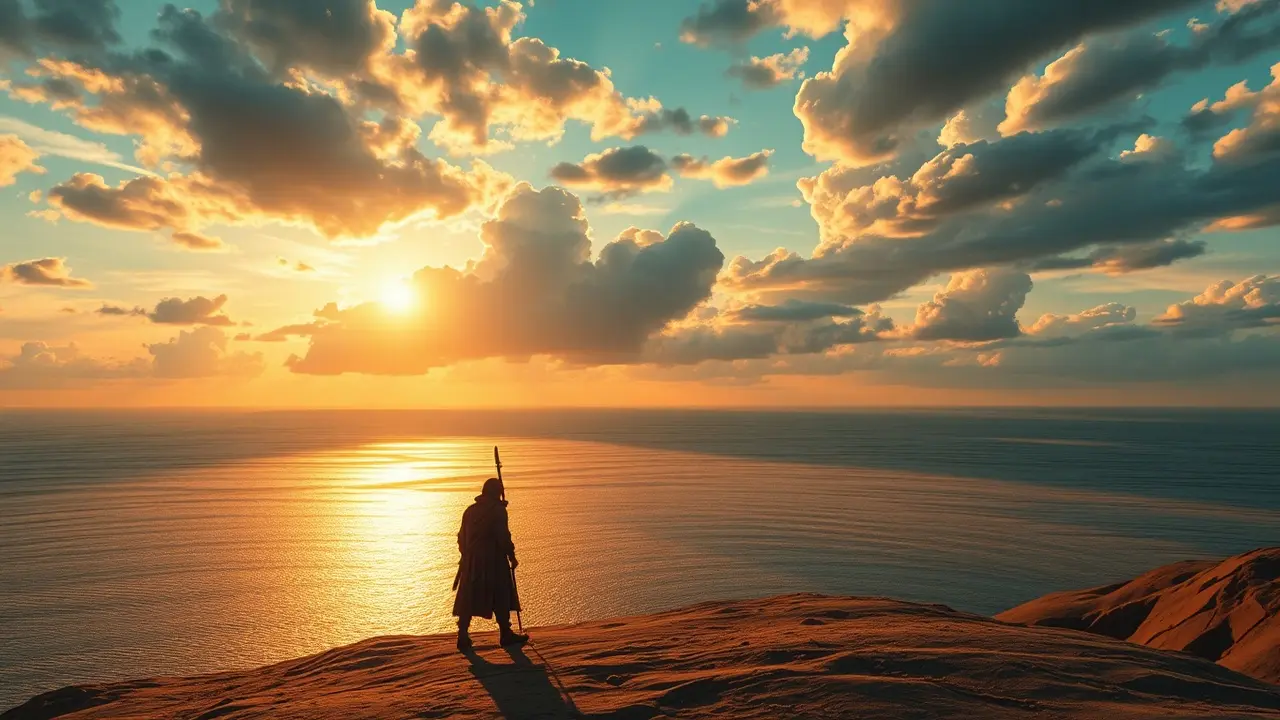
Daba emerged from the mist of indie obscurity this September, as the long-teased Daba Land of Water Scar finally received a substantial new gameplay showcase during the State of Play September 2026 presentation. For years, curious observers have followed every cryptic screenshot and environmental tease from the small studio behind this ambitious project, and the latest footage finally provides enough technical detail to judge the game on merit rather than mystique. What we witnessed was not merely an aesthetic reveal but a structural confirmation of how combat, traversal, and narrative pacing will function in a title that openly borrows from genre titans while attempting to forge a distinct identity. The showcase represents a pivotal moment for a development team that has now shifted from concept vapor to tangible product, and the broader implications for the indie scene are worth unpacking.
The State of Play Showcase and Its Immediate Impact
The State of Play September 2026 broadcast delivered an unusually heavy cadence of indie titles, but the Daba segment carved out a distinct emotional register. Rather than relying on bombastic set-pieces, the developers opted for a slow-burn vertical slice that followed a wandering guardian through flooded ravines, collapsed highways, and ancestral temples reclaimed by creeping vegetation. According to the initial report, key facts dictate the situation, and the report confirms that the build shown was running on actual current-generation console hardware rather than pre-rendered cinematics disguised as gameplay.
This distinction matters enormously for any investigative assessment. Too often, State of Play segments feature heavily edited sizzle reels that obscure frame-rate instability, pop-in, and texture loading issues. By committing to a near-continuous four-minute uninterrupted slice, the team behind Daba Land of Water Scar effectively invited scrutiny, and early frame-by-frame breakdowns from technical analysts have already identified dynamic resolution scaling that hovers between 1080p and 1440p depending on particle density. That transparency is rare in the indie sphere and signals confidence from a studio that historically kept its promotional cycle under tight wraps.
Reaction across streaming platforms was immediate and polarized. Long-time followers of the project expressed relief at finally witnessing tangible hookshots, inventory management, and dialogue trees in motion. Skeptics, conversely, noted familiar animation timing patterns that echo FromSoftware’s catalogue, raising questions about whether Daba will be celebrated as homage or dismissed as derivation. The middle ground, occupied by most critics, simply awaits a hands-on preview to render final judgment.
Decoding Daba: Environmental Storytelling in a Scarred World
The world-building approach in Daba Land of Water Scar relies heavily on geography as emotional architecture. The revealed map segments showcase a civilization that clearly suffered a cataclysmic drought long ago, evidenced by petrified aqueducts, dried lakebeds exposing skeletal remnants of fauna, and wind-blasted dunes that have swallowed entire settlements. Each vista functions as a tombstone for a vanished culture, and the titular water scar is treated less as a geographical feature than as a scar across living memory. Players will not simply explore ruins; they will read them like fragmented diaries.
What separates this approach from generic post-apocalyptic kitsch is the deliberate pacing of revelation. Audio logs are not plastered across every corpse. Instead, environmental cues whisper their lore through the angle of fallen pillars, the discoloration of stained glass, and the migration patterns of spectral wildlife that seem to follow the protagonist at a respectful distance. This restraint elevates the material considerably and suggests a development team that has internalized the lessons of masters like Fumito Ueda and Jenova Chen. The integration of Elite Gaming Headset would enhance the experience further, because subtle directional whispers and echoing cave acoustics carry crucial narrative weight.
What remains unclear is whether the world will reward thorough exploration with meaningful mechanical payoff or merely aesthetic appreciation. Several hidden compartments visible in the footage suggest upgrade materials, but the developers have yet to confirm whether optional areas will introduce unique traversal challenges or simply offer cosmetic variations on established encounters. This question will likely define whether Daba becomes a cult classic or merely a beautifully decorated corridor.
Combat Systems and Traversal Mechanics Exposed
The combat reveal finally dispelled months of speculation about whether Daba Land of Water Scar would lean into melee aggression, ranged tactical positioning, or stealth-based evasion. The answer, refreshingly, is all three in carefully measured doses. The showcased protagonist wields a transforming implement that shifts between a short blade, a hooked chain, and a thrown disc capable of activating distant mechanisms. Stamina management governs aggressive options, while a dedicated resource pool governs the magical abilities tied to water restoration rituals.
Traversal appears to be the true star. The verticality of the revealed environments suggests a Sonic Frontiers-style web of interconnected zones that reward momentum and route planning. A satisfying clip showed the protagonist shattering a frozen waterfall, sliding down the resulting ice ramp, and chaining directly into a combat encounter against a towering automaton. That fluid transition between locomotion and conflict is notoriously difficult to tune, and if the developers can maintain that responsiveness across the full campaign, they will have achieved something genuinely impressive. Within the broader 2026 landscape of industry trends, this kind of design ambition deserves recognition.
Stealth options also received explicit attention. Multiple clips demonstrated the protagonist submerging in shallow pools to bypass laser grids, and luring enemies into collapsing terrain for environmental kills. These systems feel reminiscent of Tenchu’s patience mixed with Sekiro’s precision, an intriguing fusion that should appeal to players who appreciate methodical encounters over twitch reflexes. The risk is that balancing three distinct combat verbs across fifty hours of content may stretch the design team thin, a recurring pitfall in ambitious indie productions.
Technical Performance of Daba and Visual Fidelity Analysis
Pixel-peeping the State of Play September 2026 footage reveals a thoughtfully optimized engine that prioritizes art direction over raw polygon throughput. Surfaces employ stylized painterly textures rather than photorealistic noise, allowing the GPU to allocate resources toward particle systems, volumetric fog, and dynamic lighting. Water surfaces refract convincingly without dominating the frame budget, and god rays piercing through ruined cathedral ceilings provide some of the most striking visual moments of the broadcast. Compared to other recent controversial reveals in the broader industry, Daba’s technical restraint feels refreshingly honest.
Frame pacing appears stable in the captured footage, hovering around the targeted sixty frames per second on console hardware, though certain combat-heavy sequences exhibit momentary dips during particle explosions. This is typical for ambitious projects at this stage of optimization, and most analysts expect these issues to be resolved through patches. The UI remains unobtrusive, with minimalist glyphs replacing traditional health bars and ammo counters, encouraging immersion without sacrificing clarity. Players pairing this experience with a Fast Response Monitor would benefit from smoother frame transitions during the most demanding encounters.
Loading transitions appear handled through contextual animations rather than traditional loading screens. Opening doors, climbing ladders, and descending rope bridges all serve as natural masking layers for asset streaming, which is a smart solution for a game with substantial vertical scope. Whether this approach will hold up across a full playthrough remains untested, but the architecture suggests a team that has internalized modern streaming best practices rather than retrofitted legacy solutions.
Industry Positioning and the Indie Scene in 2026
Where Daba ultimately lands in the broader cultural conversation depends heavily on its commercial performance and critical reception upon launch. The indie landscape in 2026 is crowded with ambitious projects attempting to balance artistic vision with mechanical depth, and many of them have stumbled by overpromising and underdelivering. The developers behind Daba Land of Water Scar have wisely avoided hype inflation, letting the State of Play footage speak for itself. That restraint alone positions the project favorably against competitors that saturate social media with cryptic teasers and inflated release windows.
Distribution strategy will matter enormously. Should the team pursue a traditional retail release with a moderate price point, they may attract a broader audience willing to take a chance on unfamiliar intellectual property. Conversely, a premium pricing model would position the title against established AAA tentpoles, which carries reputational risk. Marketing materials have yet to confirm either path, but industry observers note that recent studio shifts within the publishing landscape may influence the final decision.
Community engagement metrics following the showcase suggest a healthy pre-launch momentum. Wishlist numbers surged across major storefronts within hours of broadcast, and developer-led Discord channels reported record membership growth. Whether that enthusiasm translates into sustained post-launch support will depend on the team’s responsiveness to feedback, the depth of post-release content, and the inevitable wave of comparison videos that will dissect every design choice. For now, Daba Land of Water Scar stands as one of the most promising debuts of the year, and its journey from cryptic concept to confirmed release date deserves close monitoring.
Frequently Asked Questions
- When will Daba Land of Water Scar officially release?
- The developers confirmed a targeted launch window for the upcoming fiscal year, though a precise calendar date remains undisclosed. Expect narrowing of that window as console certification and final polish milestones approach. Pre-order campaigns are expected to commence shortly after the State of Play September 2026 momentum stabilizes.
- Will the game support current-generation consoles exclusively?
- The showcased footage was captured on current-generation hardware, suggesting that older legacy platforms will not receive native versions. A cloud streaming option may extend accessibility, but nothing has been officially confirmed beyond primary console support.
- What genres does the combat draw inspiration from?
- Designers have cited a blend of methodical samurai combat, acrobatic platforming, and environmental puzzle solving. The resulting hybrid prioritizes patience and observation over twitch reflexes, appealing to players who appreciate deliberate challenge.
- Is there multiplayer functionality in the title?
- All publicly available materials describe a purely single-player campaign. Cooperative modes have not been announced, though the developers have hinted that post-launch updates could expand the experience if demand warrants additional investment.
- How large is the explorable map according to current estimates?
- While exact square mileage remains unconfirmed, vertical layered zone design suggests substantial playable area. Analysts estimate roughly forty to sixty hours of content for completionists, contingent on hidden secrets and optional boss encounters.