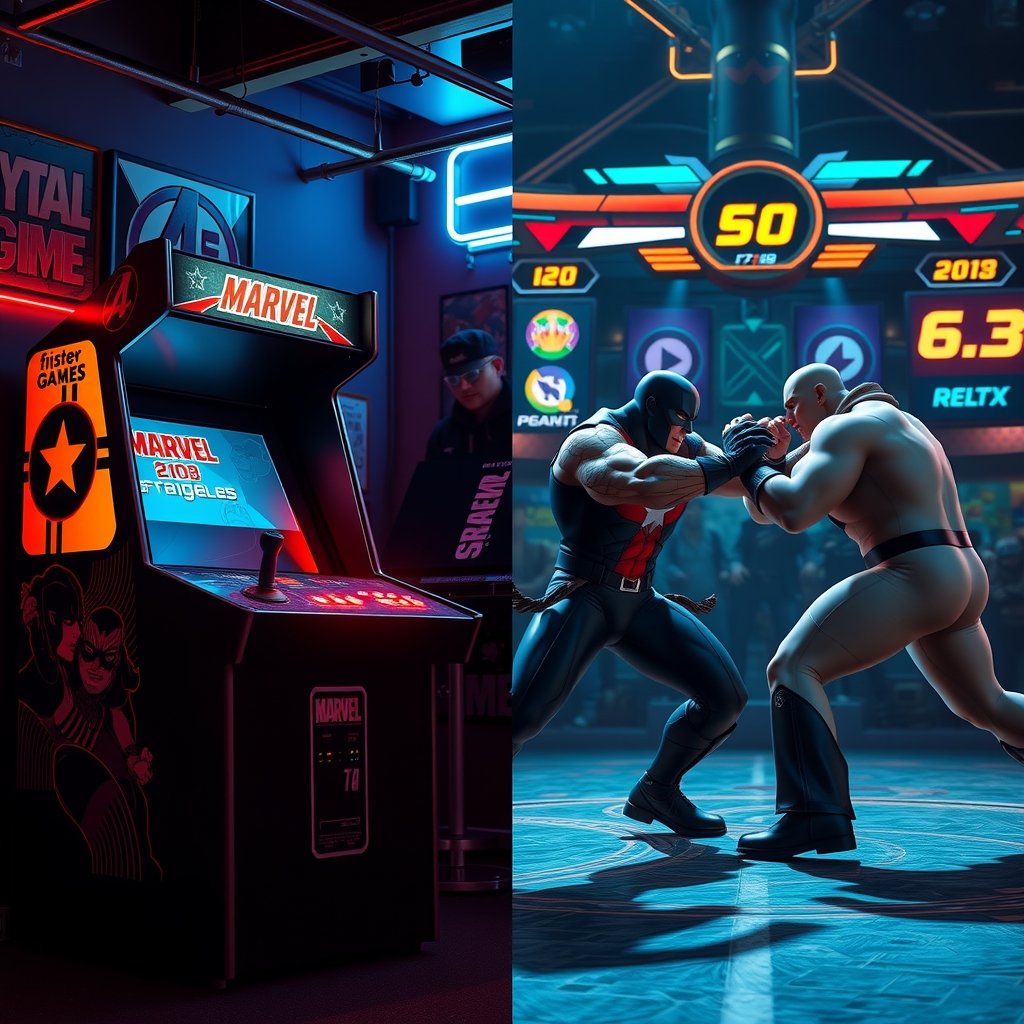
Marvel fighting games have moved from coin-op cabinets to tag-team titans over a wild thirty years, and the details most people forget are the platform gaps and developer cut corners. This timeline stitches together ports, arcade PCB oddities, missing developer interviews and visual comparisons so you can see how engine tricks, licensed assets and hardware shaped what players actually got.
Early arcade origins and first Marvel fighters
Arcades in the early 1990s were where comic book licensing met quarter-munching hardware, and that collision produced some oddly specific games. Marvel’s characters first appeared in a handful of licensed experiences that were more about brand recognition than tight fighting design. These early titles are fascinating because they show the negotiation between comic teams and game studios — a lot of cut scenes and splash art you won’t see in later, cleaner ports.
How Marvel changed the coin-op landscape
At the time, arcade operators wanted novelty and players wanted spectacle, which meant big sprites, showy super moves and, often, inconsistent frame rates. The earliest Marvel tie-ins leaned hard on presentation: oversized character portraits, soundbites swiped from comics, and splash screens that talked more than the control schemes did. You can still find oddities today if you dig into arcade PCB photos and developer notes; those hardware constraints explain why some mechanics felt slapped-on rather than tuned.
Developer interviews from that era are sparse. Many teams were small and credited under studio names or aliases. Where interviews do exist they reveal surprising patchwork development — sprite sheets outsourced to freelancers in different countries, or last-minute rebalancing because a rival cabinet across the room had a stronger coin-in rate. That kind of context matters when you look at the code-level tricks in later titles.
For a deeper read on the franchise’s fighter lineage, this piece on Marvel vs. Capcom history charts which arcade boards carried which versions, and it helps explain why certain ports lost frames or colors.
The rise of tag-team mechanics and Marvel vs. Capcom
When the tag-team idea landed, it rewired expectations. Tag systems let designers hide shortcomings in individual characters by encouraging team synergy, and they opened up spectacular comeback scenarios that crowds loved. The formula matured into something both brutal and hilarious: snap-backs, assist calls, and order-based strategies made matches feel like condensed comic-book fights.
The tag approach had ripple effects beyond arcades. Home players, used to slower one-on-one experiences, suddenly had to learn new spacing, meter management and character matchups. That steepness is part of why the series stayed relevant in the competitive scene. If you want a primer on how tag mechanics work and why teams shift the meta, our explainer on tag-team fighting games explained breaks it down with historical examples.
Practical note for players who grind online sessions: veteran players quietly rely on a solid headset to catch frame-weak audio cues when matches lag. I recommend the Gaming Headset Pro for its clear mids and comfortable clamping force — it’s not flashy, but it helps you spot a blocked special or a delayed connect in a live room.
Looking back, the marriage of tag mechanics and Marvel’s cast was partly an accident and partly a product of arcade economics. Tag matches kept cabinets busy because they were social spectacles that rewarded players who came back to learn combos and team synergies, rather than just feeding more quarters to a single champion.
Transition to consoles: graphics, sound, and ports
Ports are where theory meets hardware reality. Console conversions of arcade Marvel titles have a predictable drama: texture downgrades, cut animations, and sometimes missing frames. Each generation addressed those issues differently. Early 32-bit consoles relied on clever palette tricks; later systems used sprite scaling and compressed audio to squeeze the arcade experience into a living room.
Platform-specific release timelines matter here. Some consoles got early versions because the dev kits were available; others received delayed, patched releases that fixed slowdown but killed some visual fidelity. Comparing screenshots across eras highlights those trade-offs. Below is a simple comparison table that lines up the three peripherals I mentioned earlier with relevant use-cases for modern players.
| Product | Best for | Comfort/Build | Price range |
|---|---|---|---|
| Gaming Headset Pro | Clear voice chat and positional cues | Lightweight with memory foam | Mid |
| Gaming Chair Elite | Long sessions and arcade cabinet sim rigs | Ergonomic lumbar support | High |
| Gaming Mouse Precision | Frame-perfect inputs for training modes | Low-friction feet, wired option | Low-Mid |
| All three | Sensible start for a living-room tournament setup | Mixed quality—aim for balanced features | Varied |
If your setup is for practice rather than show, a supportive chair matters more than RGB. Comfortable posture reduces fatigue during marathon training, which is why players often pick the Gaming Chair Elite when they want sustained sessions without shoulder or back strain. It’s an investment, sure, but you’ll notice the difference after an eight-hour lab session in training mode.
Console transitions also changed audio presentation. Some ports used downmixed tracks from the arcade ROMs; others re-recorded music with lesser budgets. It isn’t just cosmetic — audio cues can telegraph move timing and rhythm, which affects high-level play. For better input, pairing a crisp mouse for menu navigation and training software is handy; the Gaming Mouse Precision has micro-adjustable DPI that veteran players appreciate for frame-stepping and recording hitboxes in training.
Gameplay evolution: combos, assists, and balance shifts
The technical DNA of Marvel fighting games evolved in three major waves: spectacle, optimization, and system complexity. Early titles traded depth for flash. Later games layered on combo systems, assist options and dedicated meter management to reward skill expression. Once assists entered the picture, entire teams were built around them.
Balance philosophies changed as well. Initially, developers patched with big swings — nerfs that gutted a tactic or buffs that turned minor characters into immediate threats. Over time, balance became an ongoing negotiation informed by tournament data. Communities would modulate expectations: a character that felt weak in online casual rooms might be a top-tier in studio-controlled tournaments due to precise meter use or high execution requirements.
Developer commentary is the missing piece in many retrospectives. Few teams documented the reasons behind mechanic adjustments, and the interviews that do exist often reveal design intent that differs from player interpretation. That’s why platform-specific timelines, which mark when patches and balance updates dropped, are useful for historians and competitors alike. For a technical breakdown of those shifts, check out this analysis on fighting game mechanics evolution.
Mechanically, assists created layered mind games. You had to defend the screen, manage a tag-in, and track an opponent’s meter — all within a few seconds. That complexity increased the skill ceiling but also raised the barrier to entry. Good coaching helps new players here, but so does gear that reduces physical strain: low-latency controllers, a stable chair and headphones that let you hear faint audio cues. I keep recommending gear because small advantages add up in long practice sessions.
Competitive scene, legacy, and modern revivals
The competitive arc of these games has been surprising: titles that were commercially middling sometimes became pillars of local scenes due to raw depth and spectator value. Tournament formats adapted too; double elimination, round-robin pools and multi-game sets became standard because they mitigated randomness and showcased player consistency.
Modern revivals lean on two things: faithful netcode and community curation. Rollback netcode changed everything for older titles when implemented properly. Communities will replay version histories and demand accurate hitboxes, faithful frame data and official re-releases that respect arcade timing. When a re-release gets it right, the scene blooms. When it doesn’t, the playerbase fragments into emulator projects and mod communities that try to replicate the original timing.
Legacy is messy. Some characters have been retconned multiple times, and roster choices reflect licensing as much as design sense. You can see the evolution visually if you stack sprites from different eras: proportions change, animation frames increase or decrease, and color palettes shift to match contemporary expectations. That visual evidence is a useful counterpoint to interviews because sometimes the art tells you more than the quotes.
For those interested in the competitive histories and how recent revivals compare, look at both tournament footage and developer comments. IGN has long-form features and reviews that chronicle release windows and community response; it’s a useful external reference when you want a baseline review perspective: IGN.
Ultimately, the story of these titles isn’t just about characters or systems. It’s about players finding ways to express themselves within constraints: hardware limits, patch cadence, and legal rights. You can see that in the tech scans and in the oral histories from arcade operators who remember which cabinets were crowded on Friday nights.
Frequently Asked Questions
Are the original arcade versions still the best way to play?
Arcade originals are purer to the source timing, but they can be hard to get running correctly. Modern releases with rollback netcode often feel better online and are easier to access, though purists prefer ROM-accurate setups.
Which Marvel fighting game introduced tag-team mechanics?
Tag mechanics emerged as designers experimented with team formats in arcades; the refinement you know now came with early versus titles that merged Marvel rosters and assist systems into a coherent model.
Do peripherals really matter for competitive play?
They do to a degree: low latency, comfort and precise inputs reduce practice friction. You don’t need premium gear to get good, but the right chair, mouse or headset helps you train longer and with fewer distractions.
Where can I find developer interviews about these games?
They’re scattered. Look for archived magazine interviews, postmortems on dev blogs and community podcasts. A lot of context also hides in platform-specific patch notes and forum threads from the launch window.
How do I start learning assist-based team play?
Start simple: pick one team, learn one assist timing and practice call-into-combo sequences in training mode. Watch recorded matches, play slow sets with friends, and gradually introduce meter and tag mix-ups.