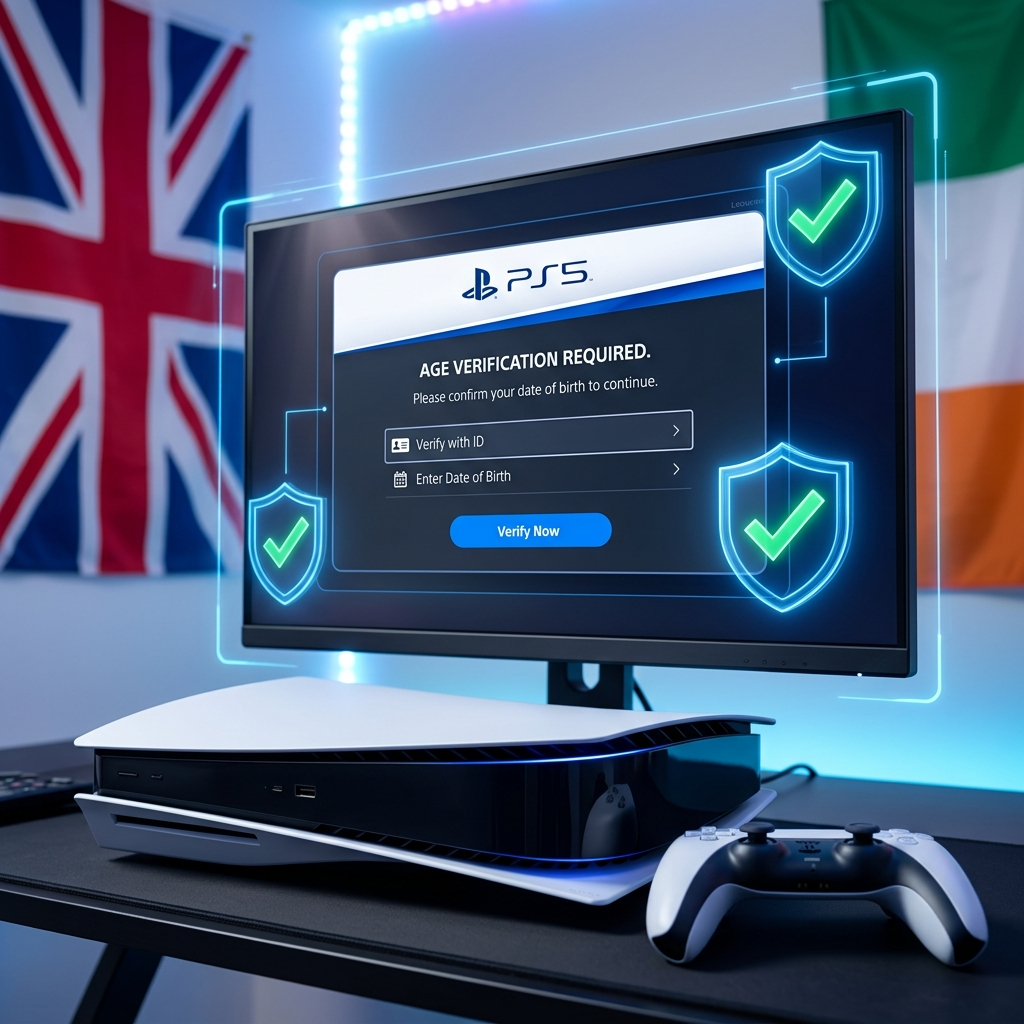
PlayStation Age Verification Checks: 7 Essential Facts You Must Know
If you’ve been gaming on PlayStation lately, you might have noticed something new popping up on your screen. Sony is rolling out PlayStation age verification checks across the UK and Ireland, and it’s causing quite a stir in the gaming community. Whether you’re a parent managing your kid’s gaming time or a young adult who just wants to jump into the latest titles without hassle, this new system affects everyone in the PlayStation ecosystem.
Look, I get it. Nobody likes being asked to prove their age when they’re just trying to relax with some gaming after a long day. But before you start raging in the comments, let’s break down exactly what’s happening, why Sony is doing this, and most importantly, what it means for your gaming experience. Trust me, there’s more to this story than meets the eye.
1. Understanding PlayStation Age Verification Checks: What’s Actually Happening?
The PlayStation age verification system isn’t just Sony being difficult for the sake of it. This is a comprehensive initiative by Sony Interactive Entertainment to ensure that gamers accessing age-restricted content are actually old enough to do so. Think of it as the digital equivalent of showing your ID at a movie theater, except it’s happening right on your console or in your PlayStation account.
Here’s the deal: when you try to access certain games, content, or features that have age restrictions, PlayStation’s system will now prompt you to verify your age. This isn’t a random check that happens every time you boot up God of War or The Last of Us. Once you’ve verified your age, you’re generally good to go for future sessions. The system is designed to be as non-intrusive as possible while still meeting regulatory requirements.
The verification process uses Sony Interactive Entertainment age check protocols that comply with UK and Irish regulations. These checks are particularly stringent for content rated 18+ or for accessing certain online features where age restrictions apply. It’s worth noting that this system is separate from parental controls, which remain a powerful tool for families managing multiple accounts.
2. Why the UK and Ireland? The Legal Landscape Driving Change
Age verification UK requirements have become increasingly strict, and Sony is responding to regulatory pressure that’s been building for years. The UK’s Digital Economy Act and subsequent online safety legislation have made it clear that digital platforms need to take age verification seriously. Companies that fail to comply face hefty fines and potential operational restrictions.
Similarly, age verification Ireland measures are following suit, with Irish authorities taking a more proactive stance on protecting minors online. The reality is that both countries are at the forefront of digital safety regulation in Europe, which makes them the perfect testing ground for Sony’s enhanced verification systems.
But here’s what most articles won’t tell you: this isn’t just about following rules. Sony is actually positioning itself ahead of what’s likely to become a global standard. The UK legislation is being watched closely by regulators worldwide. By implementing robust age verification now in these markets, Sony is future-proofing its platform against regulatory changes that are almost certainly coming to other regions.
There’s also a competitive angle here. With gaming increasingly under scrutiny for its impact on young people, companies that demonstrate strong commitment to safe gaming practices are building trust with both regulators and parents. This isn’t just compliance theater; it’s strategic positioning in an industry where corporate responsibility is becoming a key differentiator.
3. The Step-by-Step Verification Process: What to Expect
Alright, let’s get practical. What actually happens when you’re asked to verify your age on PlayStation? I’ve broken down the entire process so you know exactly what to expect.
Initial Prompt and Account Review
When you attempt to access age-restricted content, the system first checks your existing account information. If your PlayStation account already has a verified date of birth that meets the age requirement, you might not see any additional prompts at all. This is where having accurate information in your PlayStation profile actually works in your favor.
Document Verification Options
If additional verification is needed, you’ll be presented with several options. Sony has partnered with third-party age verification services that can confirm your age through various methods:
- Government-issued ID: You can upload a photo of your driver’s license, passport, or national ID card. The system uses secure encryption and doesn’t store your actual ID image long-term.
- Credit card verification: Since credit cards are only issued to adults, confirming you have one in your name can serve as age verification. You won’t be charged for this check.
- Database matching: In some cases, the system can verify your age by cross-referencing your information with existing databases, though this option isn’t available to everyone.
Privacy and Data Protection
Here’s something crucial that deserves more attention: your data protection during this process. Sony’s verification partners are required to comply with GDPR and UK data protection laws. This means your information must be handled securely, used only for verification purposes, and deleted according to strict retention policies. The verification service sees only what’s necessary to confirm your age, and this data doesn’t get sold or shared with third parties for marketing purposes.
Timeline and Confirmation
Most verifications happen instantly or within a few minutes. In rare cases where manual review is needed, you might wait up to 24 hours. Once verified, your account is flagged as age-confirmed, and you shouldn’t need to repeat the process unless there are specific compliance reasons or account security concerns that trigger a re-verification.
Expert Gaming Tip: Before you start the age verification process, make sure you’re in a well-lit area if you’re uploading ID documents. Poor photo quality is the number one reason for verification delays. Also, ensure the date of birth on your PlayStation account matches your actual ID; mismatches will cause the verification to fail and may require contacting PlayStation support to resolve.
4. Impact on Users and Families: The Real-World Consequences
Let’s talk about how this actually affects your gaming life. For adult gamers, the impact is minimal once you’ve completed verification. You verify once, maybe twice if you use multiple accounts, and then you’re back to gaming as usual. The bigger story is what this means for families and younger gamers.
For Parents: New Tools and Responsibilities
Parents now have clearer boundaries when it comes to managing what their kids can access. The PlayStation user age verification system works in tandem with existing parental controls, creating a two-layer protection system. You can set up family accounts where each child has age-appropriate access automatically managed based on their verified age.
This actually simplifies things for many families. Instead of constantly monitoring what games your kid is downloading or which online features they’re accessing, the system handles much of this automatically. Of course, parental controls still give you granular control over spending, playtime, and communication features.
For Younger Gamers: Frustration or Protection?
If you’re under 18, this system might feel restrictive at first. You won’t be able to access M-rated games or certain online features without proper verification showing you meet age requirements. But here’s the thing: this is actually creating age-appropriate gaming experiences that protect you from content that might be genuinely harmful or inappropriate.
The gaming industry has learned hard lessons from past controversies involving minors accessing inappropriate content. These safeguards, while sometimes inconvenient, are designed to prevent scenarios that could lead to much harsher restrictions down the line. It’s better to have smart verification systems than to risk government-mandated lockdowns on gaming content.
Account Sharing and Multiple Users
One area causing confusion is households with shared PlayStations. If multiple people use the same console, each account will need separate verification based on that user’s age. You can’t just verify once for the console; it’s account-based. This makes sense from a safety perspective but does mean a bit more setup time for families with several gamers under one roof.
Similar challenges have been discussed in how the internet has changed our trust mechanisms, where digital verification systems are becoming the new normal across various platforms.
5. Global Context: How PlayStation Compares to Other Platforms
Sony isn’t operating in a vacuum here. Let’s look at how PlayStation’s approach stacks up against what other gaming platforms are doing worldwide.
Xbox and Microsoft’s Approach
Microsoft has implemented similar age verification systems on Xbox, particularly in European markets. Their approach uses Microsoft account age data and also offers ID verification through third-party services. The main difference is timing; Microsoft rolled out their system slightly earlier in some regions, which means they’ve had more time to refine the user experience.
Nintendo’s Family-First Strategy
Nintendo has taken a different angle, focusing heavily on parental controls through their smartphone app. While they do age verification for account creation, their system is less about verifying adults and more about empowering parents to control access. This fits Nintendo’s family-friendly brand positioning but may face regulatory challenges as laws become more stringent.
Steam and PC Gaming Platforms
Valve’s Steam has used a self-declaration age gate for years, where you simply enter your birth date before viewing mature content. However, this system is increasingly viewed as inadequate by regulators. Steam and other PC platforms will likely need to implement more robust verification similar to PlayStation’s system, especially if they want to operate in markets with strict digital safety laws.
Mobile Gaming’s Wild West
Mobile gaming platforms have been slower to implement comprehensive age verification, partly because the app store operators (Apple and Google) handle some of this at the OS level. However, in-game purchases and access to mature content on mobile remain areas of concern that regulators are eyeing closely.
Sony’s proactive stance with their Sony Interactive Entertainment age check system actually puts them ahead of the curve. While some gamers might grumble about the extra steps, this could protect PlayStation from more draconian measures that governments might impose on less compliant platforms. You can read more about Sony’s broader commitment to digital responsibility in their corporate social responsibility initiatives.
The challenge of verification systems ties into broader issues of online authenticity and trust that platforms across the internet are grappling with.
6. Frequently Asked Questions About PlayStation Age Verification
Do I need to verify my age every time I play an 18+ game?
No, age verification is typically a one-time process per account. Once your age has been verified and confirmed, you won’t need to repeat the process for future gaming sessions unless there’s a specific reason that triggers re-verification, such as account security concerns or policy updates. The system remembers your verified status, allowing you to access age-restricted content freely once you’ve completed the initial verification.
Is my personal information safe during the verification process?
Yes, Sony uses third-party verification services that comply with GDPR and UK data protection regulations. Your identification documents are encrypted during transmission and are not permanently stored by Sony or the verification partner beyond what’s legally required for compliance purposes. The verification service only receives the minimum information necessary to confirm your age, and this data is not shared with third parties for marketing or other purposes. Your privacy is protected throughout the entire process.
What happens if I’m under 18 and want to play mature-rated games?
If you’re under the age requirement for specific content, you won’t be able to access it through the standard verification process. However, parents or guardians can manage access through PlayStation’s parental control features. A parent with a verified adult account can adjust settings on child accounts within the family management system, though Sony recommends respecting age ratings as they’re designed to protect younger gamers from inappropriate content. The decision ultimately rests with parents, but the default system will restrict access based on verified age.
7. Looking Ahead: The Future of Age Verification in Gaming
So where does this all lead? The implementation of PlayStation age verification checks in the UK and Ireland is just the beginning of a much larger shift in how the gaming industry handles age-appropriate content access.
Expansion to Other Markets
Don’t be surprised when this system rolls out to other European countries, North America, and eventually global markets. As regulations tighten worldwide, Sony will likely use the UK and Ireland as a blueprint for implementation elsewhere. The lessons learned from these initial markets will help smooth out the process for gamers in other regions.
Technology Evolution
Future iterations of age verification might use more sophisticated technology. We’re already seeing experiments with facial recognition age estimation, blockchain-based identity verification, and AI-powered systems that can verify age without requiring sensitive documents. These technologies could make the process even more seamless while maintaining strong privacy protections.
Industry-Wide Standards
There’s a growing push for unified age verification standards across the gaming industry. Rather than having different systems for PlayStation, Xbox, Nintendo, and PC platforms, we might see interoperable verification where proving your age once works across multiple platforms. This would significantly improve user experience while maintaining the safety benefits of verification.
The Balance Between Safety and Freedom
The ultimate goal is creating truly safe gaming environments without turning every gaming session into a bureaucratic nightmare. Sony and other platform holders are walking a tightrope between regulatory compliance, parental expectations, and gamer satisfaction. The success of these systems will depend on finding that sweet spot where protection doesn’t come at the cost of enjoyment.
The evolution of these verification systems reflects broader conversations about digital trust and authenticity online, issues that extend far beyond gaming into every corner of our digital lives.
Key Takeaways for PlayStation Gamers
As we wrap this up, here’s what you absolutely need to remember about PlayStation’s age verification system:
- It’s mandatory, not optional: If you’re accessing age-restricted content in the UK or Ireland, you’ll need to verify your age. This is a compliance requirement, not a feature you can disable.
- One-time process: Once you’ve verified, you’re done. No need to repeatedly prove your age for every game.
- Multiple verification methods: Sony offers several ways to verify, so you can choose the method you’re most comfortable with.
- Privacy is protected: Your data is handled according to strict legal standards and won’t be misused or sold.
- Family management works alongside verification: Parents can use both age verification and parental controls to create safe gaming environments for kids.
- This is the future: Age verification is coming to gaming platforms worldwide. PlayStation is just leading the charge.
The gaming landscape is evolving, and with it, the systems designed to keep it safe and accessible for everyone. While PlayStation age verification checks might seem like an inconvenience at first, they’re part of a broader effort to ensure gaming remains a positive force in our lives. By implementing these systems proactively, Sony is helping to shape a future where age-appropriate gaming experiences are the norm, not the exception.
Whether you’re a parent seeking peace of mind, a young gamer navigating age restrictions, or an adult who just wants to game without hassle, understanding this system helps you make the most of your PlayStation experience. Stay informed, complete your verification when prompted, and keep gaming.